 English
 Lietuvių
 Latviešu
 Eesti
 Polski
 Русский
 Українська
 Deutsch
 Nederlands
 Čeština
 Slovenčina
 Svenska
 Norsk
 Dansk
 Suomi


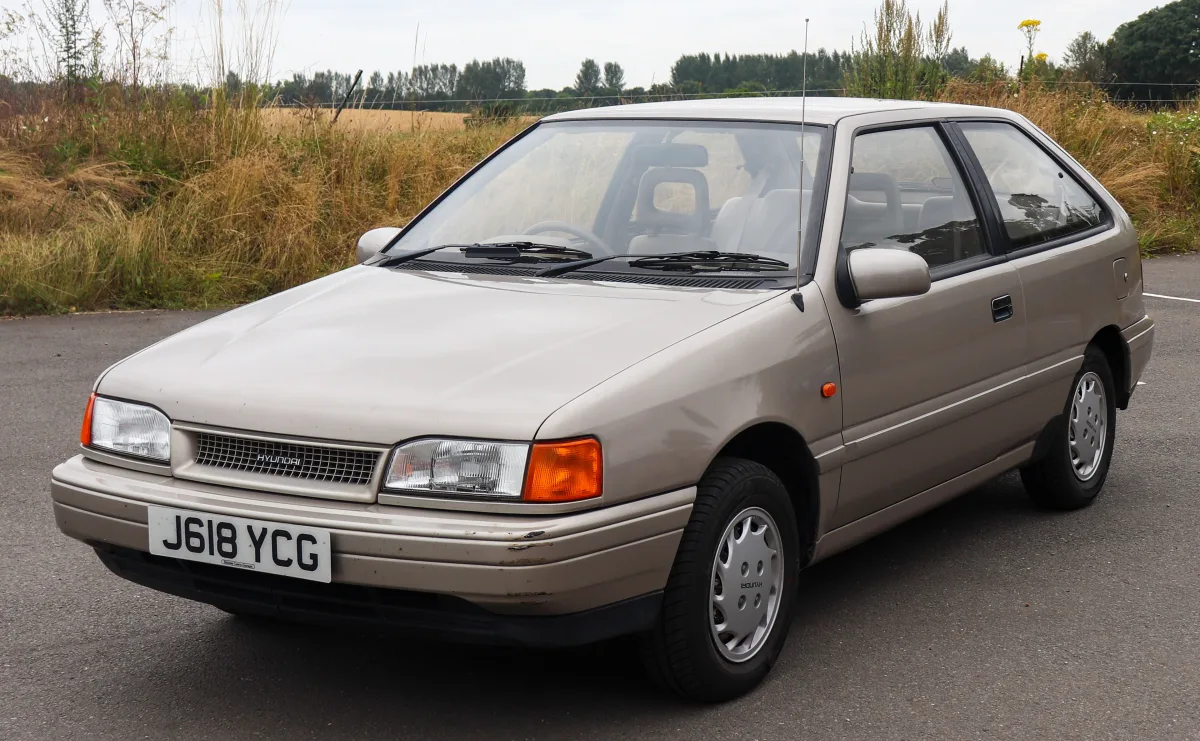
Hyundai Pony: generations, engines and what to check when buying
The Hyundai Pony was the first mass-produced Hyundai car from South Korea, manufactured from 1975 to 1990 (later generations even longer). We look at the generations, engines, and what you need to know when buying this rare classic car.






Pony in brief
The Pony debuted in 1975 and became Hyundai's first mass-produced model. The body design was created by the Italian studio 'Italdesign Giugiaro', while the technology was largely sourced from Mitsubishi.
For export, the Pony was also offered in Europe, but sales were modest, making it a very rare car in Lithuania today. It's more of a collector's choice than a daily driver.
Generations — what's the difference
The first two generations (1975–1985) feature rear-wheel drive and the distinctive Giugiaro design. From 1985, the Pony Excel (X1) and later X2 switched to front-wheel drive and more modern body shapes.
The first-generation Pony is considered rare and collectible, while later generations (X1, X2) are more common and easier to use. Your choice depends not only on the year but also on the specific condition of the car.
Engines and transmissions
Pony engines are small petrol units, roughly 1.2–1.6 litres in capacity, and in the earlier generations, they were of Mitsubishi origin. Power output is modest; check specific details in the car's documentation.
The transmission is usually a 4 or 5-speed manual, with some versions featuring an automatic.
What to check when buying a used Pony
The main issues are age and corrosion: sills, floors, arches, door bottoms, and the rear end. Some body parts are hard to find, so choose the best-preserved car.
Check the engine (oil leaks, distribution mechanism, fuel system), gearbox, suspension, and electrical equipment. Before buying, find out the availability of spare parts.


Trim levels
Names and equipment vary by market and year; we list the most common trims found in Europe.
Pony (I karta)
1975–1982First-generation Pony with rear-wheel drive.
- Petrol engine (around 1.2–1.6 l)
- Rear-wheel drive
- Often — 4-speed manual gearbox
Pony II
1982–1985Refreshed second generation.
- Petrol engine
- Rear-wheel drive
- Updated body and interior
Pony Excel (X1)
1985–1989Third generation with front-wheel drive.
- Petrol engine
- Front-wheel drive
- Often — 4 or 5-speed gearbox
Pony X2
from 1989Latest generation with front-wheel drive.
- Petrol engine
- Front-wheel drive
- Often — hatchback body style
Comparison of Pony car generations
| I–II karta | X1 | X2 | |
|---|---|---|---|
| Who it's for | For collectors | For retro enthusiasts | For those wanting a simple, retro car |
| Transmission | Rear-wheel drive | Front-wheel drive | Front-wheel drive |
| Engine | Small petrol engines | Small petrol engines | Small petrol engines |
| Price in the used market (relatively) | Mid-range | Budget | Budget |
For most buyers, the simplest choice is a later model in good condition. Early Ponys are for collectors.
Pros
- A rare and unique classic car
- Designed by Giugiaro
- Simple construction
- Low price in the used market
Cons
- Body corrosion and hard-to-find parts
- Limited availability in Lithuania
- Modest power and basic features
Frequently asked questions
Who designed the Hyundai Pony?
The body design was created by the Italian studio 'Italdesign Giugiaro'.
Does the Pony have front-wheel drive?
Early models have rear-wheel drive, and from 1985 onwards, front-wheel drive.
Was the Pony ever sold in Europe?
Yes, but sales were modest, making it a rare car today.
Updated 2026-10-19 · Trim levels and equipment vary by market and model year — check the equipment of the specific car. · Translated automatically


