 English
 Lietuvių
 Latviešu
 Eesti
 Polski
 Русский
 Українська
 Deutsch
 Nederlands
 Čeština
 Slovenčina
 Svenska
 Norsk
 Dansk
 Suomi


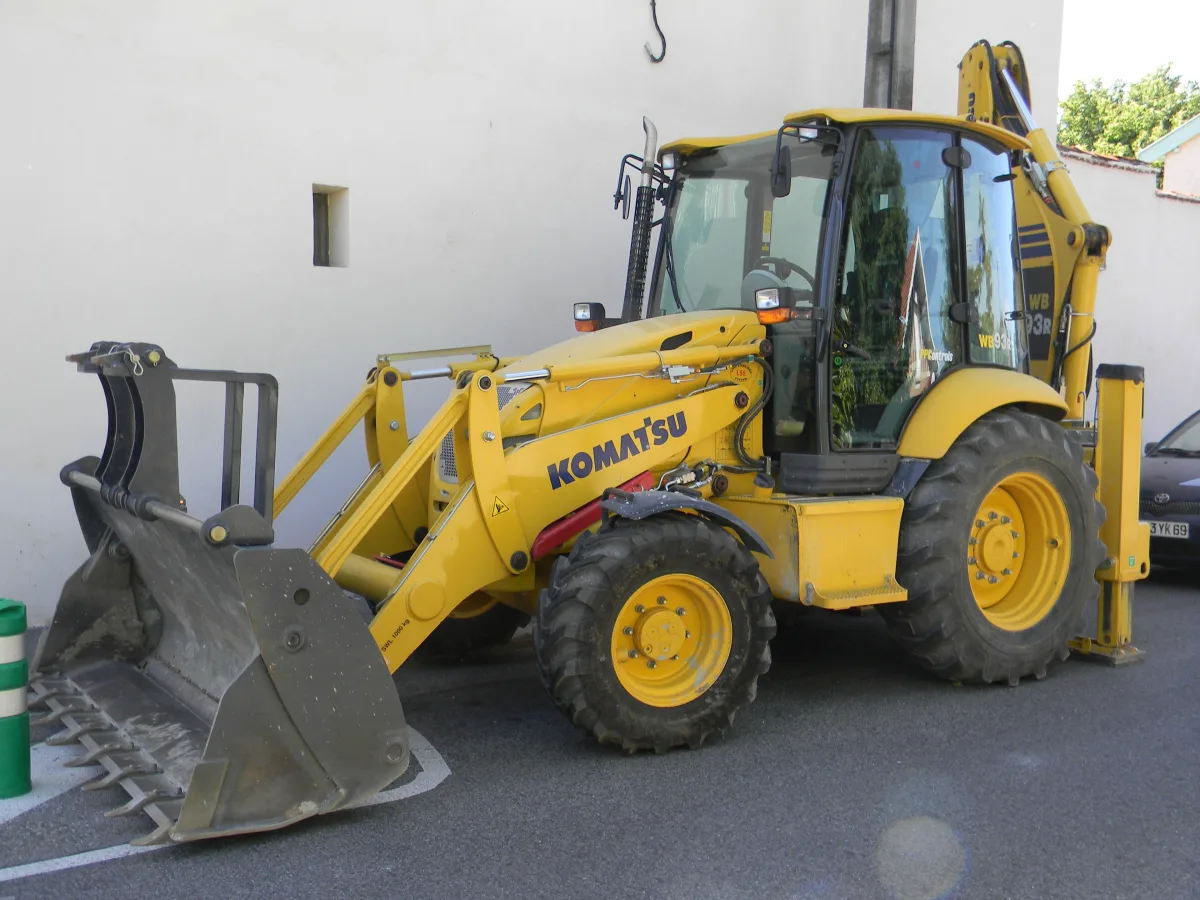
Komatsu WB93: excavator-loader, generations and inspection
Komatsu WB93 — the Komatsu excavator-loader, used for road, communication, and construction work. We review the WB93R series, engines, transmission, and what to check when buying a used WB93.






WB93 in brief
Komatsu WB93R — a versatile machine with a front loader bucket and a rear excavating arm. It's used for digging, loading, road, and communication work, making it suitable for both construction companies and municipal services.
Digging depth — over 5 m. The supply of these machines in the used market is smaller than that of JCB 3CX or Cat 428, so prices can sometimes be more affordable.
Series — what's the difference
Older versions are simpler, with less electronics. Newer ones have a more modern engine, a more comfortable cabin, and better hydraulics. Some machines have a sliding side excavating arm, while others have a fixed one.
The hydraulics also differ: some have additional lines for a hammer or other attachments. Before purchasing, it's essential to determine the exact series and year of manufacture.
Engines and transmission
The WB93 is powered by a four-cylinder diesel engine. Newer versions feature systems that meet stricter emission standards, and their condition is crucial.
The transmission is either mechanical reverse or Powershift. The choice depends on the version: Powershift is more convenient for frequent forward and reverse driving, while mechanical is simpler and cheaper.
What to check when buying a used WB93
Check the engine hours, cold start, smoke, and leaks. Test the transmission and brakes: the shifts should be smooth, with no juddering or strange noises.
Inspect the suspension components and boot hinges and seals (play is a common issue), cylinder leaks, and the condition of the stabilizer bar.


Versions and trims
Names and equipment vary by market and production year; we list the versions most commonly found in Europe.
WB93R-2
older seriesSimpler technology, lower price.
- Often — simpler electronics
- Often — high mileage
- A pre-purchase inspection is essential
WB93R-5
newer seriesAn improved generation.
- A more comfortable cabin
- Often — additional hydraulics
- A more economical engine
WB93R su kūju
depending on the trimReady for work with hydraulic ram.
- Additional hydraulic lines
- Suitable for dismantling work
- Hydraulics must be checked
WB93R su šoniniu slinkimu
depending on the trimLifting device drifts to the side.
- Easier to work against walls
- Often — additional hydraulics
- Check the drift of the sliding mechanism
Comparison of WB93R versions
| WB93R-2 | WB93R-5 | Su kūju | |
|---|---|---|---|
| Who it's for | For budget work | For everyday use | For dismantling |
| Engine technology | Older | Modern | By generation |
| Hydraulics | Base | Often added | Optional |
| Price in the used market (relatively) | € | €€ | €€ |
A budget construction company might be suited to a WB93R-2 with a good history. If you're working intensively, it's worth seeking out a newer version.
Pros
- Versatility — digging and loading in one machine
- Reliable Komatsu technology
- Often more affordable than some competitors
- Simple maintenance
Cons
- Less choice than JCB and Cat
- Playtime for buckets and forks on older machines
- Some parts might take longer to find
Frequently asked questions
How does the WB93 differ from the JCB 3CX?
Both machines are excavator-loaders, but they differ in specification, cab and offering. The 3CX is more popular, while the WB93 can sometimes be more accessible.
Is it worth buying a WB93 with Powershift?
Yes, if the transmission operates smoothly. Powershift is more convenient for loader work, but repairs can be more expensive than those for a mechanical reverse.
What are the most common WB93 problems?
Most often — play in the bushings and pins, hydraulic leaks and transmission wear. You'll mostly notice these during an inspection.
Updated 2026-10-21 · Trim levels and equipment vary by market and model year — check the equipment of the specific car. · Translated automatically


