 English
 Lietuvių
 Latviešu
 Eesti
 Polski
 Русский
 Українська
 Deutsch
 Nederlands
 Čeština
 Slovenčina
 Svenska
 Norsk
 Dansk
 Suomi


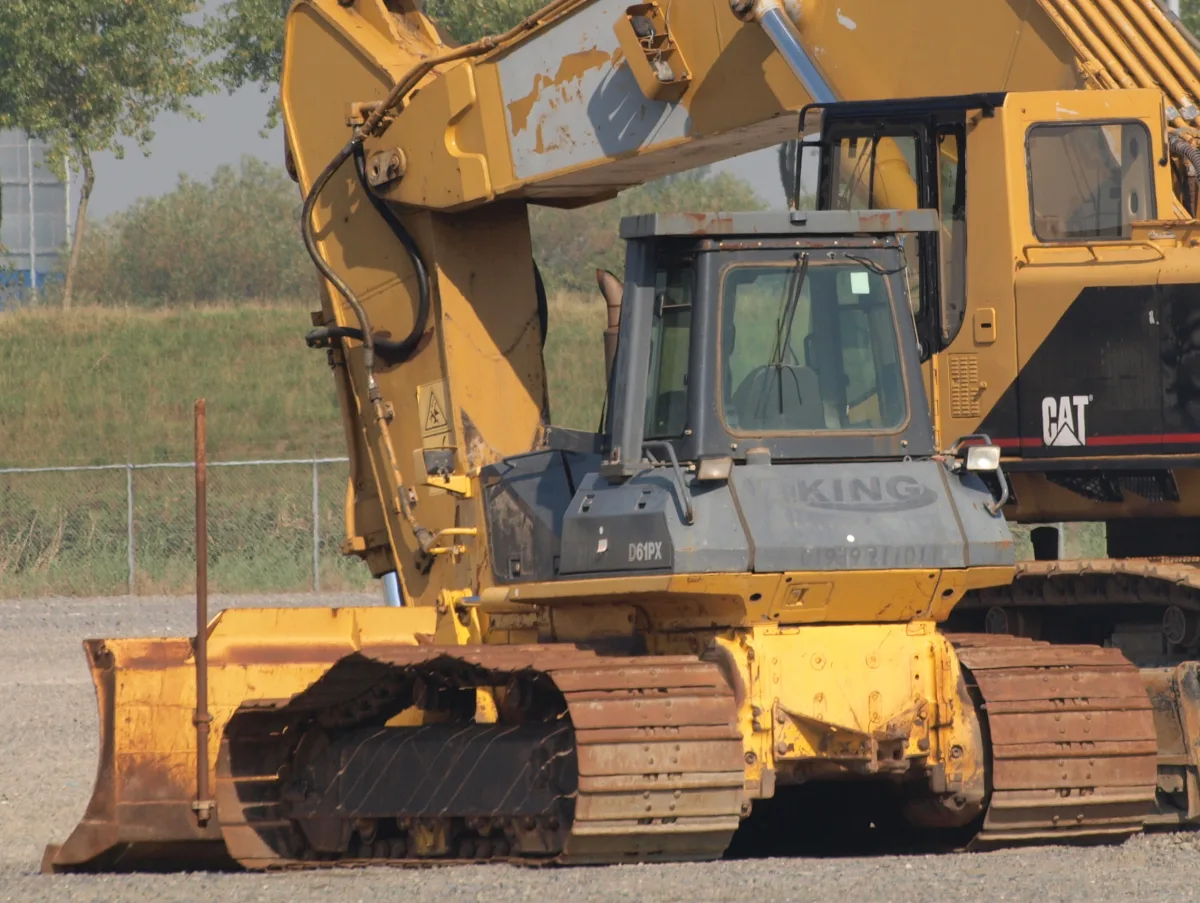
Komatsu D61: tracked bulldozer, series and inspection
Komatsu D61 — the mid-range series of tracked bulldozers, used for earthworks, road construction and grading. We look at the D61EX and D61PX versions, key features and what to check when buying a used D61.






D61 in brief
Komatsu D61 — a mid-range tracked bulldozer used for grading, pushing soil, road construction and other tasks. Often competes with the Cat D6.
This series has been in production since 1985, so you'll find different generations on the used market. The machine is valued for its reliability and relatively straightforward maintenance.
Versions — what's the difference
D61EX — the standard version with narrower tracks, suitable for hard ground. D61PX — with wider tracks (LGP), designed for soft ground, as it reduces ground pressure.
Newer versions come with a more modern engine and advanced electronics, and some feature an automatic blade control system (iMC). Before purchasing, it's essential to determine the exact version and year of manufacture.
Engine and key components
The D61 is powered by a six-cylinder Komatsu diesel engine. Engines in newer versions meet stricter emission standards, so they come with additional cleaning systems.
The transmission is either hydrostatic or Powershift, depending on the generation. Key components: undercarriage (tracks, rollers, idlers, drive sprockets), final drives, hydraulics and blade with cylinders.
What to check when buying a used D61
Check the engine hours, service history, smoke, cold start, and oil leaks. Test the gearbox and handling: movements should be smooth, with no juddering.
Inspect the vehicle thoroughly — tyres, wheels, and hubcaps, as their replacement can be very expensive. Check the cylinder head, gaskets, and seals, final drive condition, and whether there are any cracks in the chassis.


Versions and trims
Names and equipment vary by market and year of production; we list the versions most commonly found in Europe.
D61EX
base trimNarrower tyres for hard surfaces.
- Often — a straight or universal blade
- Greater manoeuvrability
- Lower price
D61PX
LGP versionWider tyres for soft surfaces.
- Less ground pressure
- Better stability
- Wider vehicle
D61 su ripperiu
depending on the trimWith rear diff lock.
- Suitable for tough terrain.
- Often — hydraulic ripper.
- Check the ripper's wear.
D61EXi / PXi
Newer generation.With automatic blade control system.
- Often — iMC control.
- More advanced electronics.
- Greater precision.
D61 version comparison.
| D61EX | D61PX | D61EXi / PXi | |
|---|---|---|---|
| Who it's for. | Tough terrain. | Soft terrain. | For precise and efficient work. |
| Tracks | Standard | Wide | By version |
| Electronics | Basic | Basic | Advanced |
| Price in the used market (relatively) | Mid-range | Mid-range | High-end |
The D61EX with a good history often suits tough terrain. For softer ground, go for the D61PX, and if precision is key, opt for the newer version with an automatic control system.
Pros
- Robust and reliable construction
- Good supply of Komatsu parts and services
- Several version options
- Holds its value well
Cons
- Very expensive maintenance
- Newer versions have more complex electronics
- Transport requires specialist equipment
Frequently asked questions
How does the D61EX differ from the D61PX?
The EX has narrower tracks, suitable for hard terrain. The PX has wider tracks (LGP), suitable for soft terrain, as it reduces ground pressure.
What is the weight of a Komatsu D61?
Operating weight depends on the version — roughly around a dozen tonnes. Check the exact weight in the specific machine's documents.
Is it worth buying a D61 with high mileage?
Yes, if there is a service history and the undercarriage and final drive have been checked. Without a history, high mileage is a risk.
Updated 2026-10-21 · Trim levels and equipment vary by market and model year — check the equipment of the specific car. · Translated automatically


