 English
 Lietuvių
 Latviešu
 Eesti
 Polski
 Русский
 Українська
 Deutsch
 Nederlands
 Čeština
 Slovenčina
 Svenska
 Norsk
 Dansk
 Suomi


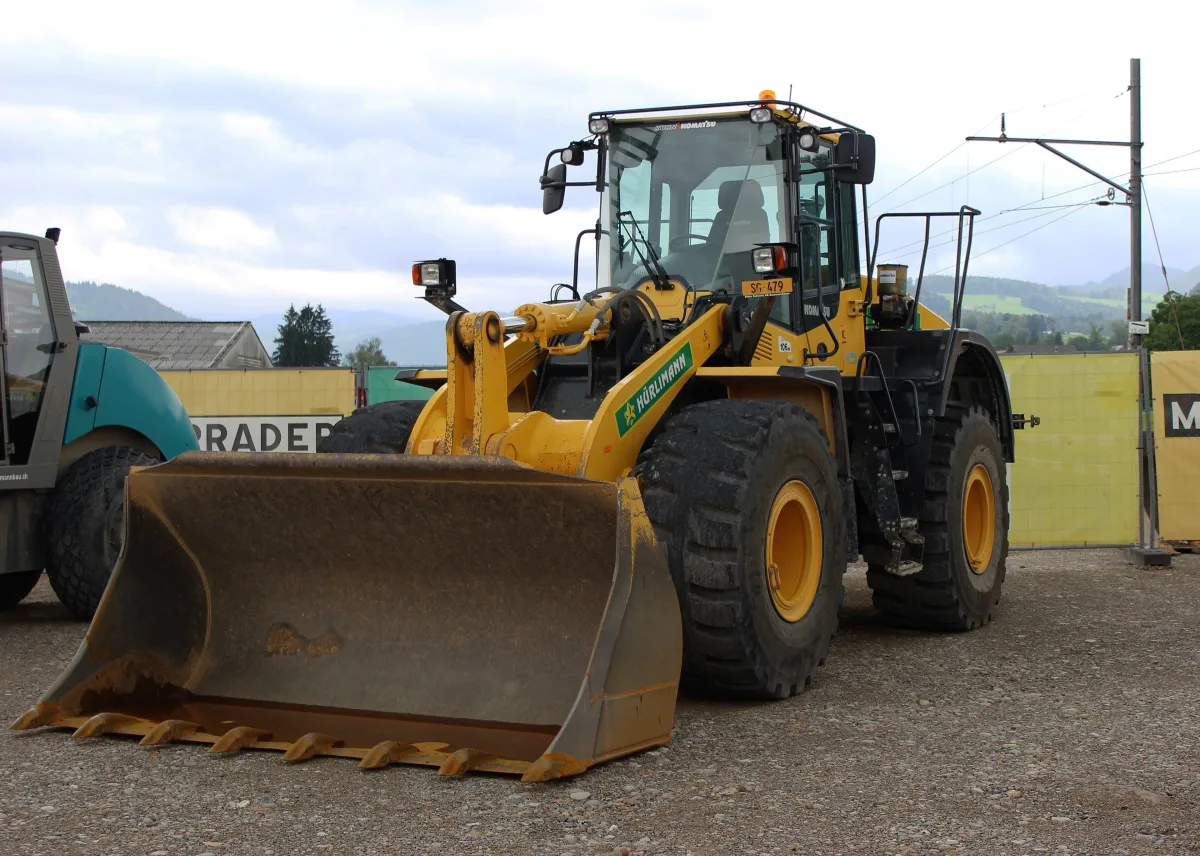
Komatsu WA380: wheel loader, generations and inspection
Komatsu WA380 — a mid to large-sized wheel loader with an operating weight of roughly 18–20 t. We review the -6, -7, and -8 series, key components, and what to check when buying a used WA380.






WA380 in brief
WA380 — a versatile wheel loader for quarries, gravel pits, construction, and municipal services. It handles heavy materials, loads trucks, and works with buckets or other attachments.
Thanks to its mid-size, this loader is larger than the WA320 but more manoeuvrable than the largest models. There's a wide range available in the used market.
Series — what's the difference
Older versions (-3, -5) are simpler, with less electronics. Newer -6, -7, and -8 series feature a more economical engine, a more comfortable cab, and advanced electronics.
Some machines have a Z (Z-linkage) lift arm, better suited for digging, while others have a parallel lift arm, designed for pallets and buckets. It's worth finding out the configuration of the machine before purchasing.
Engine and key components
The WA380 is powered by a six-cylinder Komatsu diesel engine. Newer versions feature systems that meet stricter Stage standards, the condition of which is important to the buyer.
Key components: automatic transmission with torque converter, axles, frame articulation joint, lift arm, bucket cylinders, hydraulic pump, braking system, tyres.
What to check when buying a used WA380
Check the engine hours, service history, smoke, cold start, and oil leaks. Test the gearbox — shifts should be smooth, with no grinding or slipping.
Inspect the chassis joints, lift gate hinges and seals, shock absorbers, tires, and brakes. Check the chassis and shocks for cracks and wear.


Generations and trims
Names and equipment vary by market and production year; we list the versions most commonly found in Europe.
WA380-5
-5 seriesAn older, more basic generation.
- Often — simpler electronics
- Lower price
- A thorough inspection is essential
WA380-6
-6 seriesAn improved generation with better comfort.
- A more comfortable cabin
- Often — a more economical engine
- Often — KOMTRAX
WA380-7
-7 seriesModern version with stricter standards.
- Often — SCR and particle filter
- More advanced electronics
- More efficient hydraulics
WA380-8
8 seriesThe latest version.
- Often — advanced control system
- Larger screen
- Optional extra features
Comparison of WA380 series
| WA380-5 | WA380-6 | WA380-7 | |
|---|---|---|---|
| Who it's for | For budget work | For daily use | For intensive and efficient work |
| Engine technology | Older | Mid-age | Modern |
| Electronics | Basic | Mid-range | Advanced |
| Price in the used market (relatively) | Mid-range | Mid-range | High-end |
For budget work, the WA380-5 or -6 with a good history often fits the bill. If fuel efficiency and modern systems are important, look for the -7 or newer.
Pros
- High power and bucket capacity
- Reliable Komatsu technology
- Good parts and service availability
- Holds its value well
Cons
- Newer versions require maintenance for SCR and particulate filters
- Expensive maintenance for tyres and gearbox
- The vehicle requires heavy-duty transport
Frequently asked questions
How much does a Komatsu WA380 weigh?
Operating weight is roughly 18–20 t, depending on the series and trim. Check the exact weight in the documents.
How does the WA380 differ from the WA320?
The WA380 is larger, more powerful and has a bigger bucket capacity. The WA320 is more manoeuvrable and cheaper.
What is KOMTRAX?
It's Komatsu's remote monitoring, showing the machine's working hours, location and other data. It makes it easier to verify the actual usage history.
Updated 2026-10-21 · Trim levels and equipment vary by market and model year — check the equipment of the specific car. · Translated automatically


