 English
 Lietuvių
 Latviešu
 Eesti
 Polski
 Русский
 Українська
 Deutsch
 Nederlands
 Čeština
 Slovenčina
 Svenska
 Norsk
 Dansk
 Suomi


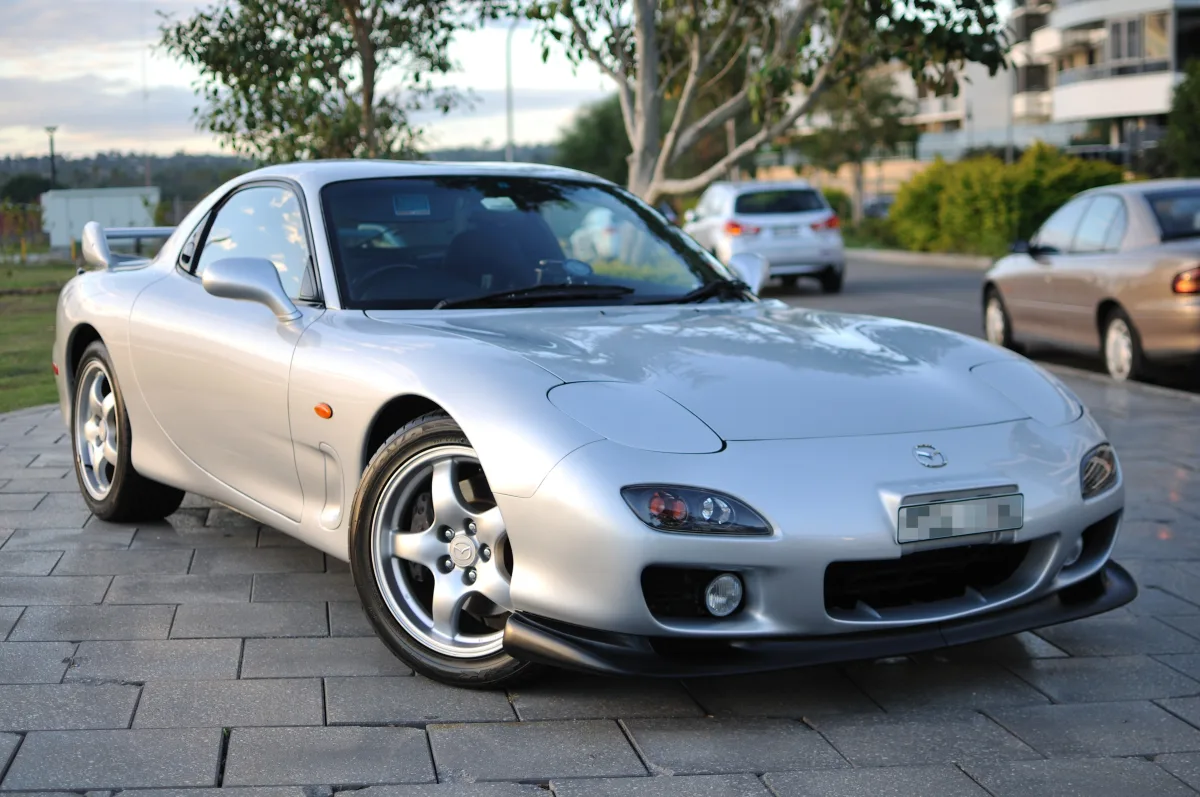
Mazda RX-7: generations, Wankel engine and what to know before buying
Mazda RX-7 — a sporty car produced from 1978 to 2002 with a Wankel (rotary) engine, one of the most iconic Japanese sports models. In this article, we'll look at the three generations, engines, and what to check before buying a used RX-7.






RX-7 in brief
The RX-7 is Mazda's sporty coupe with a rotary Wankel engine — that's what sets it apart from many competitors. Over 24 years of production, three generations were made, each with its own character and fanbase.
This car is praised for its lightweight, well-balanced body, direct steering, and distinctive engine sound. In Lithuania, the RX-7 is rare, with most of the cars available imported from Japan or the USA.
Generations — what sets them apart
The first generation (FB / SA22C, 1978–1985) is a simpler, angular coupe with a 12A rotary engine. The second (FC, 1985–1992) features a more modern design and a 13B engine, as well as a turbo version and a convertible. The third (FD, 1992–2002) is the most rounded and powerful generation with twin sequential turbochargers.
The FD was officially sold in Europe in limited numbers, so most of the cars found there are imports. It's considered one of the most beautiful and hardest to maintain generations, highly sought after by collectors.
Engines and transmissions
All generations of the RX-7 feature a rotary Wankel engine: the first has a 12A, the second and third have a 13B. The FC turbo version produced around 180–200 hp, while the FD managed about 250 hp or more, depending on the market.
The most common gearbox is a 5-speed manual, with an automatic option available for some versions. The car is rear-wheel drive.
What to check when buying a used RX-7
The key question is the condition of the rotary engine: check the compression, inspect for excessive oil and fuel consumption, and ask if the engine has been rebuilt. Rotary engine apex seals wear out and repairs can be expensive.
The body should be free of rust and signs of previous accidents, and the cooling system and turbo vacuum lines should operate smoothly. Proper vacuum system operation is especially crucial for the FD. Consider hiring an RX-7 specialist before purchasing.


Trim levels
Names and equipment vary by market and year; we list the most commonly found trims in Europe.
RX-7 (FB / SA22C)
1978–1992First-generation coupe with a 12A rotary engine.
- Basic body
- 12A rotary engine
- Lightweight construction
RX-7 (FC)
1985–1992Second-generation coupe with a 13B engine.
- 13B rotary engine
- More modern design
- Often — the turbo version
RX-7 FC kabrioletas
1988–1992Open FC version.
- Convertible body
- 13B engine
- Retractable roof
RX-7 (FD)
1992–2002Third generation with twin sequential turbochargers.
- 13B-REW engine
- Around 250 HP or more
- Light, balanced body
Comparing RX-7 generations
| FB | FC | FD | |
|---|---|---|---|
| Who it's for | For classic enthusiasts | The most versatile choice | For enthusiasts and collectors |
| Engine | 12A rotary | 13B rotary, sometimes turbo | 13B-REW twin turbo |
| Power (approx.) | Around 100 HP | Around 150–200 HP | Around 250 HP or more |
| Transmission | Rear-wheel drive | Rear-wheel drive | Rear-wheel drive |
| Price in the used market (relatively) | Mid-range | Mid-range | High-end |
For most buyers, the FC is the most realistic choice. The FD is pricier and more complex, but highly sought after.
Pros
- Distinctive rotary engine and sound
- Light, direct steering
- Recognizable design with collector potential
- Balanced handling
Cons
- Rotary engine maintenance and running costs
- High oil and fuel consumption
- Rust and plenty of imported cars with murky histories
Frequently asked questions
What is a Wankel engine?
It's a rotary engine where a triangular rotor spins instead of pistons. It's compact and smooth, but some of its components wear out faster and can be expensive to replace.
Which RX-7 generation is the best?
The FD is most sought-after for its design and power, but it's pricey and complex. The FC is more accessible and a simpler choice.
Is the RX-7 suitable for daily driving?
Limitedly: the rotary engine has high oil and fuel consumption, and maintenance requires a specialist. Mostly used as a fun car.
Updated 2026-10-19 · Trim levels and equipment vary by market and model year — check the equipment of the specific car. · Translated automatically


