 English
 Lietuvių
 Latviešu
 Eesti
 Polski
 Русский
 Українська
 Deutsch
 Nederlands
 Čeština
 Slovenčina
 Svenska
 Norsk
 Dansk
 Suomi


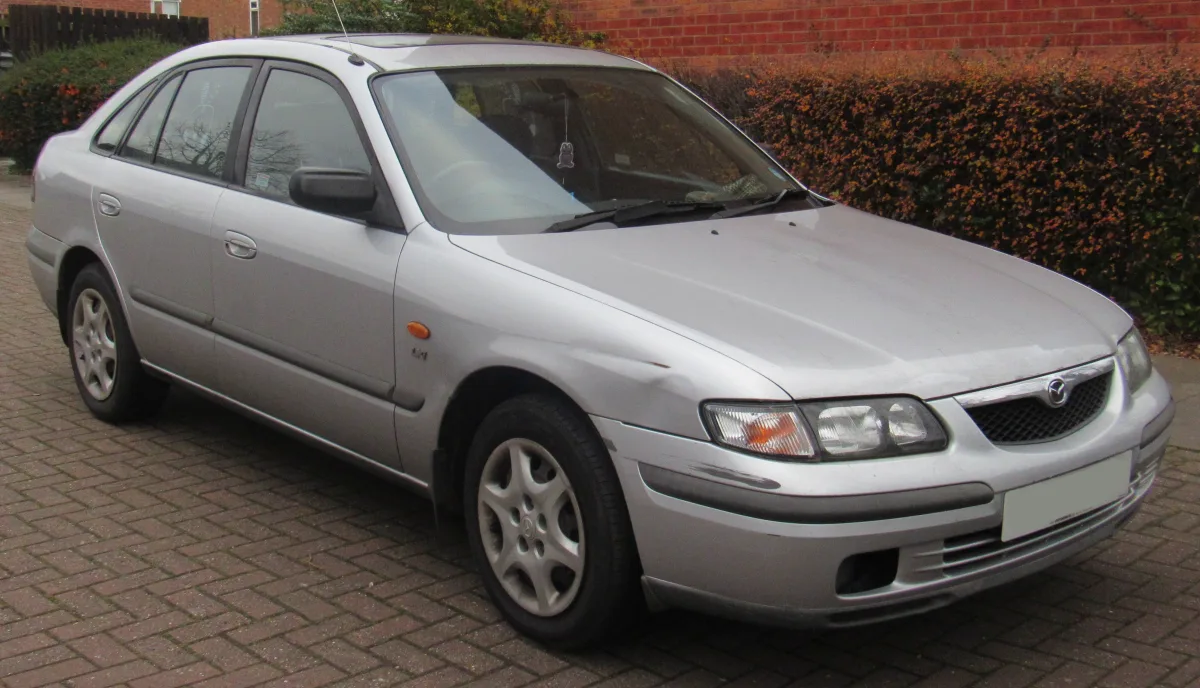
Mazda 626: generations, engines and trims
Mazda 626 — a mid-size family car that was once one of the most popular Japanese models in Europe for many years. We're looking at the two most commonly found generations on the used market (GE and GF), the engines, and what to check when buying a used 626.






626 in brief
The Mazda 626 was produced over several generations from 1978 to 2002, and in Europe, it was appreciated for its reliability, simple technology, and comfortable interior. Body styles offered included a sedan, hatchback, and estate.
Today, the most common generations on the used market are the last two: GE (1991–1997) and GF (1997–2002). Both have their fans thanks to their reputation for longevity.
Which generation to choose
The GE generation (1991–1997) features rounded shapes and simple technology. There are still some available, but rust is common, and the trim level is basic.
The GF generation (1997–2002) is newer, offers better safety and more features, and was updated in 2000. If you're after a newer, better-equipped car — go for the GF.
Engines and gearboxes
Petrol engines are most commonly 1.8 and 2.0-litre (around 90–115hp), with the GE generation also offering a 2.5 V6 that produces around 165hp. They're simple and reliable if well-maintained.
The 2.0-litre turbodiesel (DITD, around 100hp) is economical but not particularly quick. It's suitable for long distances.
The gearbox is either manual or automatic.
What to check when buying a used 626
Most importantly — the body: check for dents, wheel arches, door sills, and the boot floor. Rust is a common issue for these Mazdas.
Check the history of the engine drive belt replacement, cooling system, and timing chain. For a diesel DITD, check the turbocharger and fuel system.
Inspect the suspension, brakes, and electrical equipment. Test the automatic transmission while driving, and check the service history via documents.


Versions
Names and equipment vary by market and year; we list the most commonly encountered versions.
1.8 benzinas
GE, GFThe simplest and most affordable choice.
- Around 90 HP
- Often comes with more basic equipment
- Suitable for everyday driving
2.0 benzinas
GE, GFThe most popular choice — a good balance of power and economy.
- Around 115 HP
- Often includes more comfort features
- Manual or automatic transmission
2.0 DITD dyzelis
GE, GFAn economical diesel option.
- Around 100 HP
- Lower fuel consumption
- Ideal for long distances
Comparing versions
| 1.8 benzinas | 2.0 benzinas | 2.0 DITD dyzelis | |
|---|---|---|---|
| Who it's for | For economical driving | For daily driving | For long distances |
| Power | Around 90 HP | Around 115 HP | Around 100 HP |
| Fuel consumption | Average | Slightly higher | Lowest |
| Gearbox | Mostly manual | Manual or automatic | Manual |
| Price in the used market (relatively) | € | € | € |
The price of this older model largely depends on its condition. For most buyers, a 2.0-litre petrol GF car with a good body and service history is a solid choice.
Pros
- Simple technology and a reputation for reliability
- Spacious, comfortable interior
- Choice of sedan, hatchback, and estate
- Not expensive in the used market
Cons
- Corrosion is a common issue
- It's an old car, minor faults are inevitable
- Safety levels lag behind modern cars
Frequently asked questions
Which Mazda 626 generation is best?
For most buyers, the GF (1997–2002) is the pick, as it's newer and better equipped. However, the specific condition of the car is key.
Is the Mazda 626 reliable?
It has a good reputation, but it's an old car, so a lot depends on its upkeep and body condition.
Which 626 engine is the best?
Most will find the 2.0 petrol suitable for its simplicity. The 2.0 DITD is chosen for its economy, but it's not particularly quick.
Updated 2026-10-19 · Trim levels and equipment vary by market and model year — check the equipment of the specific car. · Translated automatically


