 English
 Lietuvių
 Latviešu
 Eesti
 Polski
 Русский
 Українська
 Deutsch
 Nederlands
 Čeština
 Slovenčina
 Svenska
 Norsk
 Dansk
 Suomi


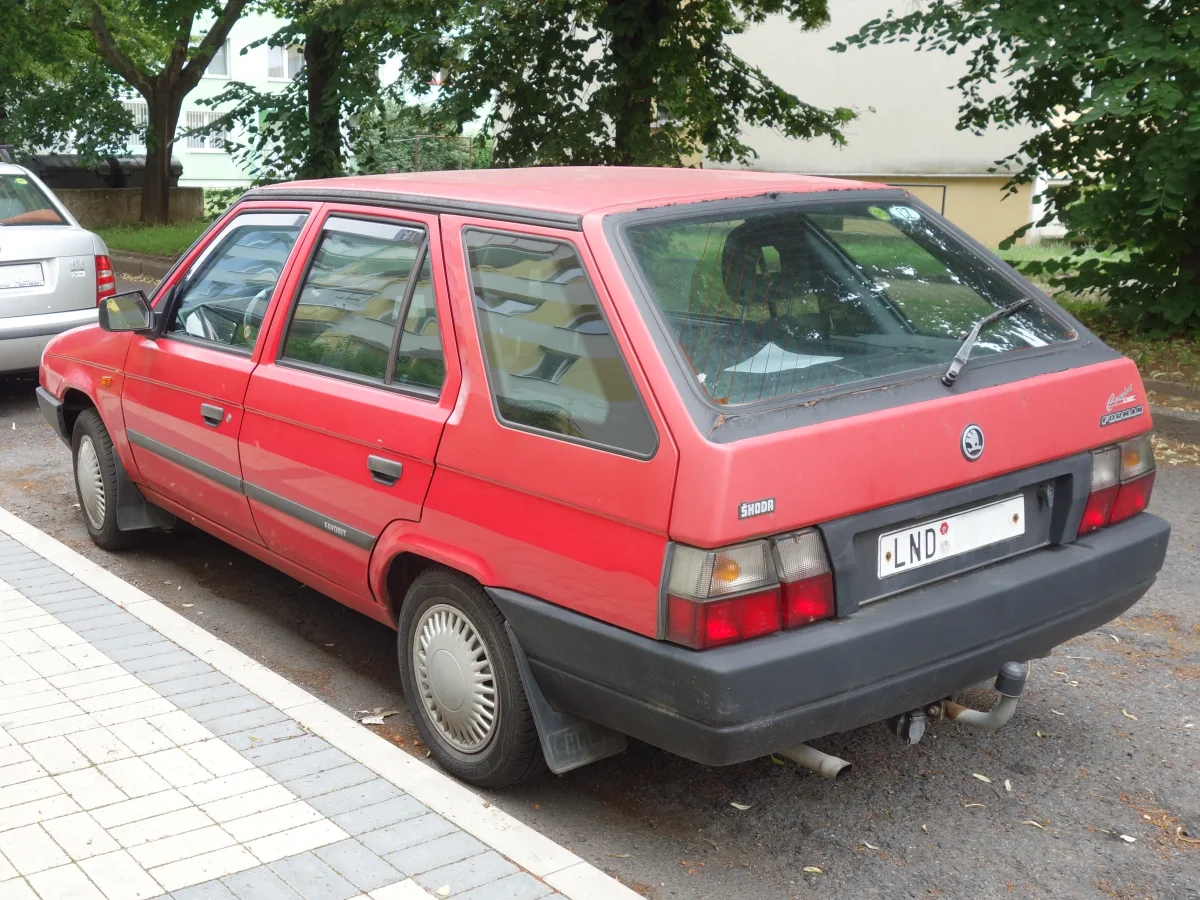
Škoda Forman: Favorit Estate, engines and what the buyer should know
The Škoda Forman (1991–1995) — Škoda Favorit Estate, offering more cargo space in the same simple, proven technology. We look at the engines, trims and what to check before buying this classic car.






Forman in brief
The Forman is the estate version of the Favorit hatchback: longer rear, larger boot and more practical interior. The front and other tech remain the same as the Favorit.
Today, it's an affordable, simple classic car that enthusiasts mainly buy. Most remaining Formans are old, so the condition of the body and mechanics is crucial.
Forman and Favorit
The Forman appeared in 1991 and was produced alongside the Favorit. The main differences are in the body — the estate offered more cargo space for families or small businesses.
Technically, the Forman and Favorit are very similar, so parts often fit both. When choosing, the condition of the specific car and its service history are key.
Engines and gearboxes
The Forman is powered by a 1.3-litre petrol engine, with power ranging from around 50 to 70 hp depending on the trim and year. Later versions featured fuel injection and a catalytic converter.
The gearbox is manual, with four or five speeds. The design is simple, and some work can be done independently.
What to check when buying a used Forman
First, inspect the body: look for dents, wheel arches, door sills, boot floor and rear arches. Corrosion is the main risk with cars of this age.
Check the engine's operation, carburettor or fuel injection system, clutch and gearbox. Test the brakes and suspension.
Ask for the documents and ensure the car can be registered in Lithuania. Original, well-maintained examples are valued higher.


Versions
Names and equipment vary by market and year; we list the most commonly encountered names in Europe.
Karbiuratorinis
Earlier yearsEarlier version with carburettor.
- Simple construction
- Fairly easy to repair
- Higher running costs
Su įpurškimu
Later yearsLater version with fuel injection and catalytic converter.
- Better environmental impact
- Slightly better running costs
- More complex system
Comparison of versions
| Karbiuratorinis | Su įpurškimu | |
|---|---|---|
| Who's it for? | For the classic car enthusiast | For those seeking a cleaner, more modern option |
| Body style | Estate | Estate |
| Engine type | Carburettor | Fuel injection |
| Price in the used market (relatively) | € | € |
It's a bargain-basement classic estate. Pick the best-condition examples, not a specific version.
Pros
- Simple, sturdy construction
- Cheap to maintain and parts are easy to find
- More cargo space than a hatchback
- An authentic classic car
Cons
- Corrosion risk
- Plush comfort and safety
- Modest engine power
Frequently asked questions
How does the Forman differ from the Favorit?
The Forman is the Favorit's estate version with more boot space. The front end and mechanics are very similar.
Is the Forman suitable for daily use?
It can be, if the car is in good condition, but due to its age, it will require more maintenance than a modern car.
Are the Forman and Felicia Combi the same?
No. The Felicia Combi is a later, improved model, while the Forman is the Favorit estate.
Updated 2026-10-19 · Trim levels and equipment vary by market and model year — check the equipment of the specific car. · Translated automatically


