 English
 Lietuvių
 Latviešu
 Eesti
 Polski
 Русский
 Українська
 Deutsch
 Nederlands
 Čeština
 Slovenčina
 Svenska
 Norsk
 Dansk
 Suomi


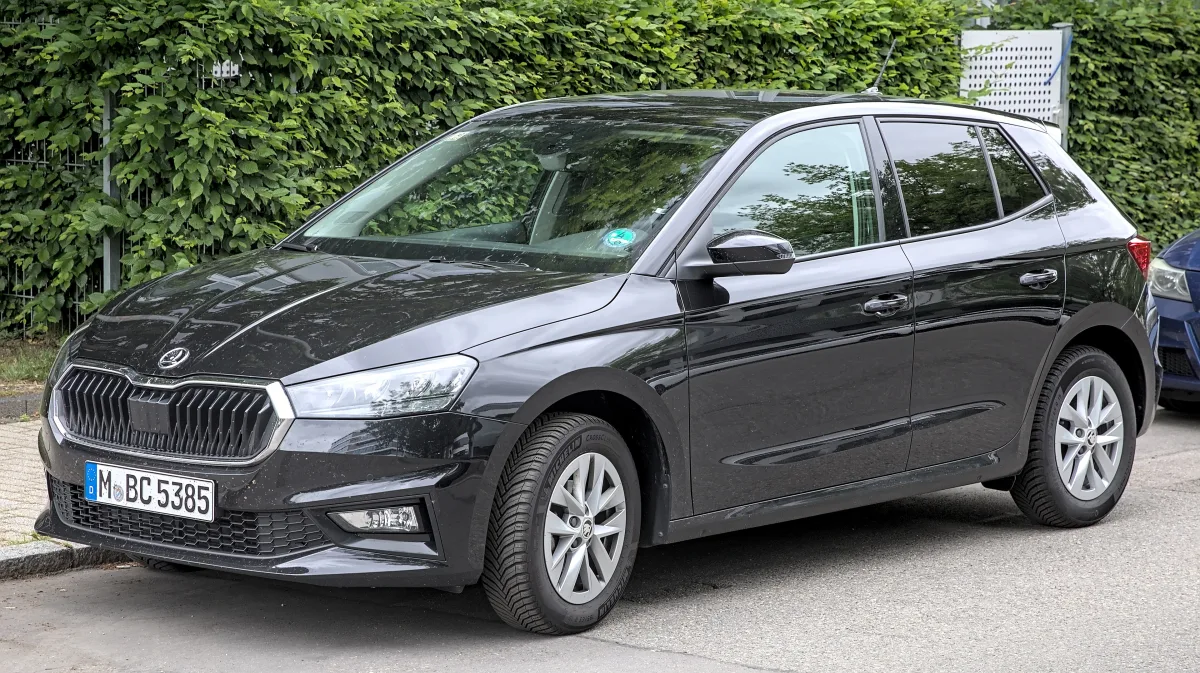
Škoda Fabia: generations III and IV, engines and trims
The Škoda Fabia is a subcompact car appreciated in Lithuania for its practicality, low running costs, and affordable price. We review the most common generations on the used market: II (2007–2014), III (2014–2021), and IV (from 2021), along with their engines, trims, and what to check when buying.






The Fabia in brief
The Fabia has been in production since 1999 across four generations. The first three generations were offered in hatchback and estate (Fabia Combi) body styles, while generation IV is hatchback-only. A sporty-looking version is named Monte Carlo, and generations I and II also included a sporty RS.
The Fabia shares the same Volkswagen Group platforms and engines as the VW Polo and SEAT Ibiza, but is often more practical and cheaper. It is popular as a first car, city runabout, or company fleet car, meaning there is a large supply on the used market.
Which generation to choose
Generation II (2007–2014) — simple and cheap, distinguished by a tall body and spacious cabin, with the Fabia Combi offering a large boot. It was facelifted in 2010, introducing the 1.2 TSI and 1.6 TDI engines. Today, most examples have high mileages, so overall technical condition is paramount.
Generation III (2014–2021) — more modern, lower, and wider, with significantly better equipment. This is the most popular Fabia generation on the used market. Cars updated in 2018 received new headlights (with LEDs available as an option), and diesel engines were dropped.
Generation IV (from 2021) is built on the MQB A0 platform, just like the VW Polo VI: it is longer, more spacious, with a larger boot and more modern equipment — including a digital instrument cluster, a larger screen, and more driver assistance systems. There is no estate version in this generation.
Engines and transmissions
Generation II most commonly features 3-cylinder 1.2 HTP (60–70 hp), 1.4 (86 hp), and, from 2010, 1.2 TSI (86–105 hp) petrol engines, alongside 1.4 TDI, 1.9 TDI, and 1.6 TDI diesels. The RS version featured a 1.4 TSI (180 hp) engine and a DSG.
Generation III features the 1.0 MPI (60–75 hp), 1.2 TSI (90–110 hp, up to 2017), 1.0 TSI (95–110 hp, from 2017), and the 3-cylinder 1.4 TDI (75–105 hp, up to 2018).
Generation IV features the 1.0 MPI (65–80 hp), 1.0 TSI (95–110 hp), and 1.5 TSI (150 hp, DSG only). Transmissions include 5- or 6-speed manual and 7-speed dry-clutch DSG; the 1.0 MPI is almost exclusively manual.
What to check when buying a used Fabia
The 3-cylinder 1.2 HTP and 1.2 TSI engines in generation II were notorious for timing chain stretch — a cold engine should not rattle upon starting, and it must idle smoothly.
The DSG transmission should shift smoothly: shuddering when pulling away or clunking during gear changes often points to clutch or mechatronics repairs. For diesels driven mostly in the city, check the diesel particulate filter (DPF) and the EGR valve.
Many Fabias served as company cars, so always verify the mileage against service records and MOT history. The entry-level 1.0 MPI engines are best suited for city driving — take the car for a test drive on an open road before buying.


Trim levels
Names and equipment vary by market and year; we list the most common specifications found in Europe.
Active
Generations III and IVBase trim — simple and the most affordable.
- Typically steel wheels
- Basic infotainment system
- Often features manual air conditioning
Ambition
Generations III and IVThe most popular choice — a great balance of price and comfort.
- Frequently alloy wheels
- Air conditioning and a larger infotainment screen
- Often equipped with parking sensors
Style
Generations III and IVA higher trim level for comfort enthusiasts.
- Larger alloy wheels
- Often features automatic climate control
- Frequently includes LED headlights and a digital instrument cluster
Monte Carlo
Generations II, III, and IVA sporty-looking version with black styling accents.
- Black exterior styling accents and larger wheels
- Sports seats
- Sportier interior trim
Elegance
Generation IIThe flagship trim level for generation II.
- Alloy wheels
- Often features automatic climate control
- More comfort features
Generation IV trim comparison
| Active | Ambition | Style | Monte Carlo | |
|---|---|---|---|---|
| Target audience | For the city, lowest price | For daily commuting | For comfort | For a sporty look |
| Wheels (typically) | 14–15 inch, steel | 15–16 inch | 16–17 in. | 17–18 in. |
| Interior | Basic trim | More equipment | Upscale trim | Sports seats, black styling details |
| Engine (most common) | 1.0 MPI | 1.0 MPI, 1.0 TSI | 1.0 TSI, 1.5 TSI | 1.0 TSI, 1.5 TSI |
| Used market price (relative) | € | €€ | €€ | €€€ |
For most buyers, the sweet spot is the Ambition or Style trim paired with the 1.0 TSI engine. Active is best suited for city driving, while the Monte Carlo is the one to go for if looks are a priority.
Pros
- Spacious for its class with a generous boot
- Low running costs and abundant spare parts availability
- Vast choice on the used market
- Practical Simply Clever solutions
Cons
- The 1.0 MPI feels underpowered out on the open road
- No estate version available in the generation IV lineup
- Timing chain issues on older generation 1.2 engines
Frequently asked questions
Which generation of Fabia should you buy used?
For the majority of buyers, the third-generation (2017–2021) powered by the 1.0 TSI is the sweet spot: well-refined and affordable. If space and modern tech are priorities, look at the fourth generation, while estate seekers are limited to the third-gen Fabia Combi.
Is the Fabia 1.0 MPI engine up to the job?
The 1.0 MPI (60–80 hp) copes fine in town and for relaxed driving, but it quickly runs out of steam on the motorway or when fully loaded. If you frequently drive long distances, opt for the 1.0 TSI instead.
How does the Fabia differ from the VW Polo?
The Fabia and Polo share the same underpinnings and engine lineup. The Fabia is typically more affordable and practical (boasting a larger boot in generation IV), whereas the Polo features slightly higher-quality cabin materials and stronger residual values.
Updated 2026-10-09 · Trim levels and equipment vary by market and model year — check the equipment of the specific car. · Translated automatically


