 English
 Lietuvių
 Latviešu
 Eesti
 Polski
 Русский
 Українська
 Deutsch
 Nederlands
 Čeština
 Slovenčina
 Svenska
 Norsk
 Dansk
 Suomi


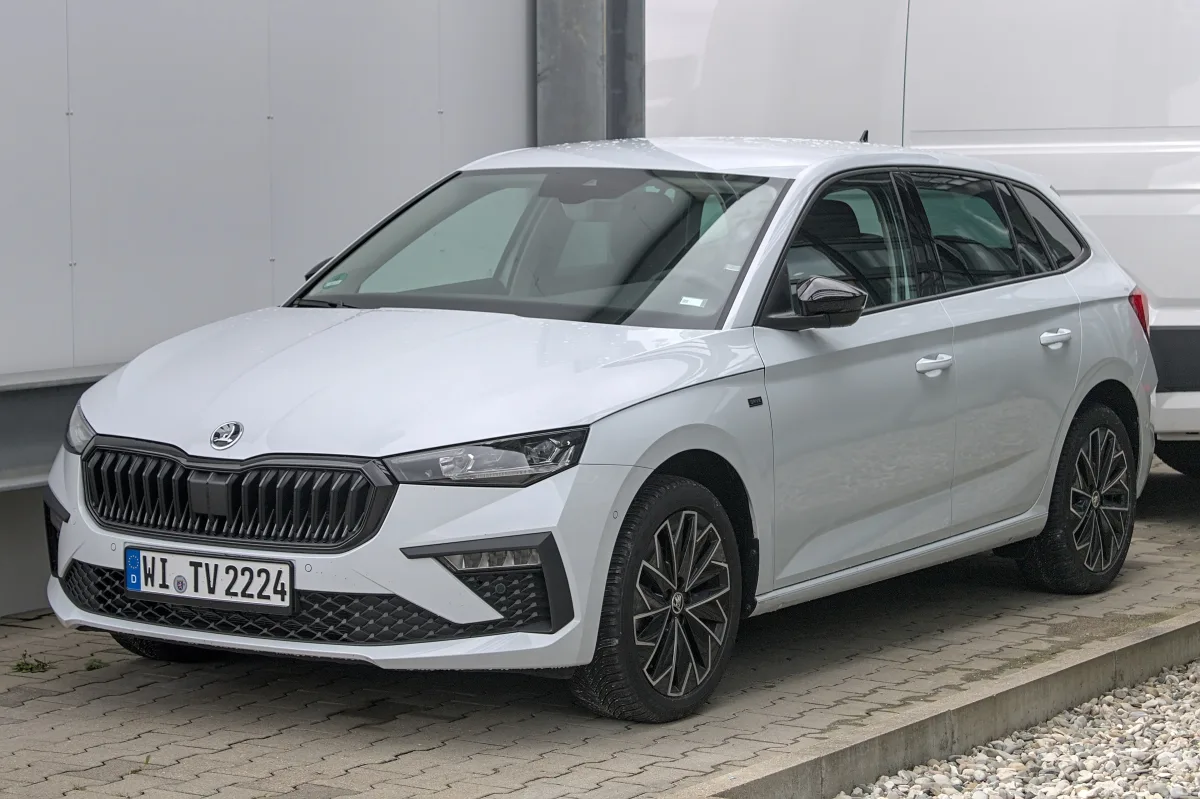
Škoda Scala: generations, engines and trims
The Škoda Scala is a compact hatchback produced since 2019, replacing the Rapid Spaceback. We look at how the cars differ before and after the facelift, which engines are most popular, how the trims vary and what to check when buying used.






The Scala in brief
The Scala is built on the MQB A0 platform, shared with the VW Polo and Škoda Kamiq, but it's significantly longer — around 4.36 m — making it close in size to the Golf. The boot is around 467 litres, one of the largest in the class, and there's ample legroom for taller passengers in the back.
The Scala doesn't offer four-wheel drive. This is a sensible choice for those who need a spacious, simple and affordable-to-run car: the technology is shared with many Volkswagen Group models, so spare parts and mechanics are plentiful.
What's changed with the 2023 facelift
The original Scala (2019–2023) was already quite modern: it often featured a large infotainment screen, and higher trims came with a digital driver's display. There are plenty of these used cars on the market, so choice is wide.
The refreshed Scala, launched at the end of 2023, gained revised bumpers and headlights (with optional matrix LED units), a refreshed interior and usually a standard digital driver's display. Trim names have also changed, and the facelifted model is offered with petrol engines only.
Technically, both versions are very similar, so your choice will mainly come down to budget, mileage and desired features.
Engines and transmissions
The most common engines are the three-cylinder 1.0 TSI petrol units (around 95 or 110–116 hp) and the four-cylinder 1.5 TSI (150 hp). Before the update, a 1.6 TDI diesel (around 115 hp) was also offered, and in some markets, a 1.0 G-TEC version powered by natural gas.
The less powerful 1.0 TSI comes with a 5-speed manual gearbox, while the more powerful ones are paired with a 6-speed manual or a 7-speed dry-clutch DSG.
For most buyers, the 110–116 hp 1.0 TSI is the most sensible choice. The 1.5 TSI is worth considering if you frequently drive in the city with a full car, while the 1.6 TDI is best for those who cover long distances regularly.
What to check when buying a used Scala
The DSG gearbox should shift smoothly, especially when pulling away and driving slowly in traffic — juddering or jolts often indicate a need for clutch or mechatronics repair. Check the clutch in a manual car.
For diesel cars that have done a lot of city driving, check the diesel particulate filter (DPF) and EGR valve. For small turbocharged petrol engines, it's crucial that the oil has been changed on time, so ask for the service history.
Check the mileage against the service records and MOT history, and inspect the body for repainted parts and uneven gaps. Test the multimedia system, parking sensors, and if fitted, the rear-view camera.


Trim levels
Names and equipment vary by market and year; we list the most common trim levels found in Europe.
Active
Up to 2023The base trim is basic and the most affordable.
- Most often, steel wheels
- Simpler multimedia system
- Often — manual air conditioning
Ambition
Up to 2023The most popular choice — a good balance of price and features.
- Light alloy wheels
- Often — parking sensors
- Often — a larger multimedia screen
Style
Up to 2023The top standard trim with more comfort.
- Larger wheels
- Often — automatic climate control
- Often — digital instrument cluster
Monte Carlo
Both versionsSporty-looking version without a sporty engine.
- Black exterior trim details
- Sport seats
- Often — panoramic roof
Selection
From 2023The main well-equipped trim of the refreshed model.
- Light alloy wheels
- Often — digital instrument cluster
- Often — matrix LED headlights
Trim comparison (up to 2023)
| Active | Ambition | Style | Monte Carlo | |
|---|---|---|---|---|
| Who it's for | For the tightest budgets | For daily driving | For comfort | For a sporty look |
| Wheels (most common) | 15–16 in. | 16 in. | 16–17 in. | 17–18 in. |
| Interior | Basic | Standard | More comfort features | Sport seats, dark trim |
| Engine | 1.0 TSI | 1.0–1.5 TSI, 1.6 TDI | 1.0–1.5 TSI, 1.6 TDI | 1.0–1.5 TSI |
| Price in the used market (relatively) | € | € | €€ | €€ |
For most buyers, the best choice is the Ambition or Style with around 110–116 HP 1.0 TSI engine. The Monte Carlo is worth considering for its looks — the tech is the same.
Pros
- Spacious interior and one of the largest boot in its class
- Simple, well-known technology
- Economical petrol engines
- Often cheaper than a Golf in the used market
Cons
- No estate body or four-wheel drive
- The interior has plenty of hard plastics
- Dry-clutch DSG repairs can be expensive
Frequently asked questions
How does the Scala differ from the Octavia?
The Scala is smaller and built on the Polo class platform, while the Octavia is larger, with a liftback or estate body and a wider range of engines. The Scala is usually cheaper, but its space is quite close to the Golf class.
Is the Scala suitable for a family?
For a small family, often yes: the boot is spacious, there's enough room in the back, and maintenance isn't expensive. If you need to carry lots of stuff or bikes, an estate like the Octavia Combi would be more convenient.
Which Scala engine to choose?
For most buyers, the 1.0 TSI with around 110–116 HP: it's enough for both city and suburban driving. The 1.5 TSI is for those who prioritise performance, and the 1.6 TDI is for those who do a lot of long-distance driving.
Updated 2026-10-10 · Trim levels and equipment vary by market and model year — check the equipment of the specific car. · Translated automatically


