 English
 Lietuvių
 Latviešu
 Eesti
 Polski
 Русский
 Українська
 Deutsch
 Nederlands
 Čeština
 Slovenčina
 Svenska
 Norsk
 Dansk
 Suomi


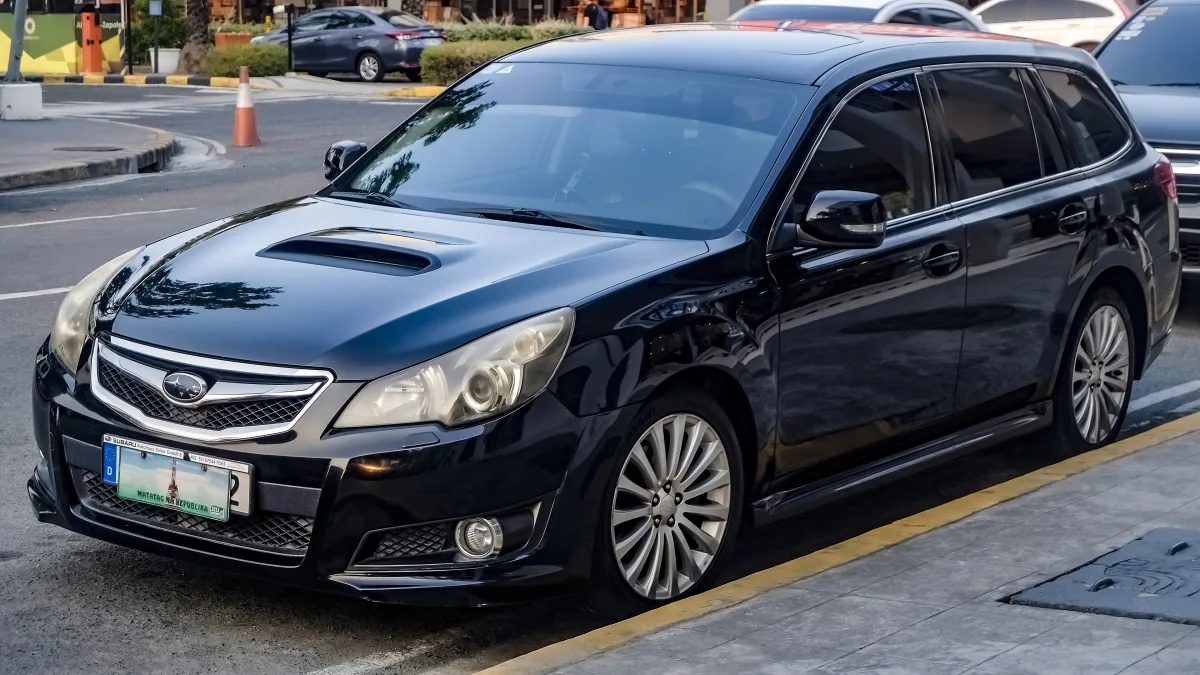
Subaru Legacy: BL/BP and BM/BR generations, engines and trims
The Subaru Legacy is a mid-size sedan and estate with permanent all-wheel drive, particularly popular in Lithuania in its estate guise. We look at what sets the most popular used generations apart, which engines they use, how the trims differ, and what to check before buying.






Legacy in brief
The Legacy has been in production since 1989. The Legacy estate spawned the Outback—a higher-riding, crossover-style version that later became a separate model.
In the Lithuanian used market, you'll most often encounter the fourth generation (BL/BP, 2003–2009) and fifth generation (BM/BR, 2009–2014). Both were offered as sedans and estates, with the estates being far more popular. The sixth generation (BN, from 2014) was sold in Europe only as a sedan and for a short time, with the estate role taken over by the Outback and Levorg.
All generations feature permanent all-wheel drive and horizontally opposed engines, making the Legacy stable in winter and on slippery roads.
Which generation to choose
The fourth generation (BL/BP) is light and sporty, with a high-quality interior; it was refreshed in 2006. Today, it's an affordable way to get a spacious estate with all-wheel drive, but most cars are now quite old, so rust and engine condition are key.
The fifth generation (BM/BR) became significantly larger and more spacious, especially at the rear. It rides more comfortably, features the Lineartronic CVT, and later on, newer FB series engines. For many buyers, this is the most rational choice: more modern, safer, and still quite well-equipped.
The sixth-generation (BN) sedan is harder to find in Europe. It comes with a 2.5-litre petrol engine and CVT, but it's the most modern and quietest.
Engines and transmissions
In the fourth generation, the most common engines are the 2.0 and 2.5-litre petrol units with four cylinders, while the most powerful version is the 3.0R with a six-cylinder engine (around 245 hp). From 2008, a 2.0D diesel (around 150 hp) was offered — the first light car diesel with opposed cylinders.
The fifth generation offers the 2.0i (around 150 hp), 2.5i (around 170 hp), and 2.0D diesel (around 150 hp), with the most powerful being the 3.6R with a six-cylinder engine (around 260 hp). In some markets, there was also the 2.5 GT with a turbocharger.
Older petrol versions come with manual or automatic transmissions. In the fifth generation, the 2.5i is often paired with the Lineartronic CVT, the 3.6R with a five-speed automatic, and the 2.0D diesel usually has a six-speed manual.
What to check when buying a used Legacy
First, inspect the body and undercarriage: older Legacy models often have rust on the rear wheel arches, sills, and underbody components. Check if the engine is leaking oil — this is common with opposed-cylinder engines.
The history of the 2.0D diesel engine is crucial: issues with the early camshaft pulley, dual-mass flywheel, and hard particle filter can be costly. If the car has mostly been driven in the city, diesel might not be the best choice.
All-wheel drive means matching tyres. During a test drive, turn the steering wheel to full lock and slowly drive in a circle — any clunking or grinding could indicate transmission problems. In an automatic, the car should move off smoothly, without hesitation.


Trim levels
Subaru trim names vary by country in Europe, so we list the most commonly encountered versions by engine.
2.0 / 2.0i
BL/BP, BM/BRThe most common and basic version for daily driving.
- A four-cylinder petrol engine
- Manual or automatic transmission
- Often includes climate control and lightweight alloy wheels
2.5i
BL/BP, BM/BR, BNA more powerful petrol variant, especially popular in the fifth generation.
- Around 165–175 hp
- In the fifth and sixth generations — often the Lineartronic CVT
- Often includes a leather interior and more equipment
2.0D
BL/BP (from 2008), BM/BRDiesel version for those who drive a lot outside the city.
- Around 150 HP and a high torque.
- Often a manual 6-speed gearbox.
- Lower running costs, but more demanding in terms of maintenance.
3.0R / 3.6R
BL/BP (3.0R), BM/BR (3.6R)Six-cylinder versions are quiet, smooth, and fast.
- Around 245–260 HP.
- Often an automatic gearbox.
- Generous equipment, but high fuel consumption.
spec.B
BL/BPThe sportiest version of the fourth generation.
- Often the 3.0R engine and a manual 6-speed gearbox.
- A more refined suspension and larger wheels.
- A rare car in the used market.
Comparison of fifth-generation (BM/BR) versions.
| 2.0i | 2.0D | 2.5i | 3.6R | |
|---|---|---|---|---|
| Who's it for? | Ideal for daily driving | For long journeys | For comfort and refinement | For power and quiet |
| Engine | Petrol, around 150 hp | Diesel, around 150 hp | Petrol, around 170 hp | Petrol, 6 cyl., around 260 hp |
| Gearbox | Mostly manual | Mostly manual | Mostly Lineartronic | 5-speed automatic |
| Fuel economy (relatively) | Mid-range | Lowest | Mid-range | Highest |
| Price in the used market (relatively) | € | €€ | €€ | €€€ |
For most buyers, the 2.5i with the automatic is the sweet spot — smooth and free from diesel woes. The 2.0D is more frugal on long journeys, but needs a clean history, while the 3.6R is for those who don't mind fuel costs.
Pros
- Permanent all-wheel drive and winter stability
- Spacious estate with a large boot
- Comfortable, well-sorted drive
- Six-cylinder versions are quieter and smoother
Cons
- Higher fuel consumption than front-wheel-drive rivals
- Older cars are prone to rust
- Early 2.0D diesel issues can be costly
Frequently asked questions
What's the difference between Legacy and Outback?
The Outback is based on the Legacy estate but has a higher ride height, plastic body protection and a differently tuned suspension. The Legacy is lower and slightly more stable on the motorway, while the Outback is better suited to rough roads.
Is it worth buying a Legacy with the 2.0D diesel?
It's worth it only if there's a clear service history and you do a lot of out-of-town driving. Early versions of these engines had serious issues, so it's often safer to choose the petrol 2.0 or 2.5 variants.
Which Legacy generation is best to buy used?
For many buyers, the fifth generation (BM/BR) is the best: it's roomier, more modern and usually in better condition than the fourth. The fourth generation is cheaper and loved for its sportier character, but due to its age requires a thorough body check.
Updated 2026-10-09 · Trim levels and equipment vary by market and model year — check the equipment of the specific car. · Translated automatically


