 English
 Lietuvių
 Latviešu
 Eesti
 Polski
 Русский
 Українська
 Deutsch
 Nederlands
 Čeština
 Slovenčina
 Svenska
 Norsk
 Dansk
 Suomi


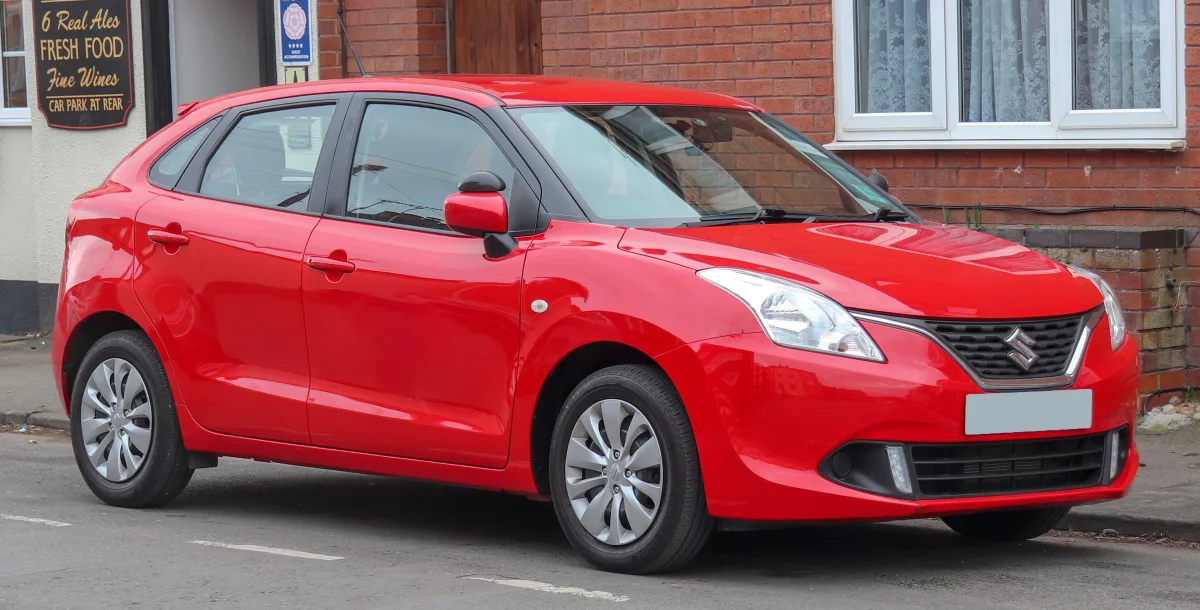
Suzuki Baleno: generations, engines and trims
The Suzuki Baleno is a compact, economical and practical car, first introduced in 1995 and later returning as a hatchback. We look at the generations, most common engines, trims and what to check before buying a used Baleno.






Baleno in brief
The name Baleno is used by Suzuki for two very different models. The first generation (1995–2002) was a sedan and estate, while later the name was revived for the second-generation hatchback.
The second-generation Baleno is a compact, light and economical city car with a spacious interior and practical boot. It's aimed at those who need a simple and affordable car for daily use.
Which generation to choose
The first generation (1995–2002) is now very old and cheap. It's only suitable as a budget car, and its condition heavily depends on corrosion and service history.
The second generation (from 2015) is much more modern: it has more equipment, safety systems and economical engines. If you can, go for this one.
As the car was offered in different markets, trims and engine choices vary, so check the exact configuration using the VIN code.
Engines and gearboxes
In the first generation, petrol 1.3 and 1.6-litre engines are most commonly found, along with a diesel option. They're simple, but now quite dated.
The popular 1.2-litre petrol engine (with a mild hybrid system on some versions) and the 1.0-litre turbocharged BoosterJet engine are both second-time rounders. The latter is praised for its liveliness and low fuel consumption.
Transmissions come in manual or automated/manual, depending on the version. Check the seller's documents for precise information.
What to check when buying a used Baleno
First, inspect the body for rust, especially on older cars. Common trouble spots include sills, wheel arches, and door sills.
Test the engine and transmission. The engine should start easily and run smoothly, while the gears should engage without hesitation. If it's an automated transmission, test it in city driving.
Check the suspension, steering, and brakes. Inspect the timing belt according to the service history.


Trim levels
Names and equipment vary by market and year; we list the most common trims found in Europe.
GL
Second generationThe base trim with essential equipment.
- Often — steel wheels
- Often — manual climate control
- Often — basic audio system
GL+
Second generationA popular choice with added comfort.
- Often — alloy wheels
- Often — automatic climate control
- Often — touchscreen display
GLX
Second generationTop spec with the most kit
- Often — alloy wheels
- Often — LED headlights
- Often — navigation and camera
Compare trims
| GL | GL+ | GLX | |
|---|---|---|---|
| Who's it for | For the tightest budgets | For daily driving | For maximum kit |
| Alloys (most often) | 15-inch | 16-inch | 16-inch |
| Engine | 1.2 petrol | 1.2 petrol or 1.0 turbo | 1.0 turbo or 1.2 |
| Price in the used market (relatively) | Budget-friendly | Budget-friendly | Mid-range |
Most buyers will opt for the GL+ with the 1.2-litre engine. The 1.0-litre BoosterJet and GLX are worth considering if you prioritise a livelier drive and more features.
Pros
- Low purchase and maintenance costs
- Economical fuel consumption
- Light, compact and spacious for its class
- Simple technology
Cons
- Interior trim is less plush than German rivals
- First-generation cars are older and more prone to rust
- Lower noise insulation levels
Frequently asked questions
Is the Suzuki Baleno reliable?
Suzuki is typically praised for its straightforward and reliable technology. The key is to check the service history and body condition.
Which Baleno engine is better?
Most buyers will find the economical 1.2-litre engine suits them. The 1.0-litre turbo BoosterJet is more lively, making it ideal for those who spend more time on the motorway.
Is the Baleno suitable for a family?
As a second car or for a small family — yes. It's spacious for its class, but a larger family might find it a bit cramped.
Updated 2026-10-17 · Trim levels and equipment vary by market and model year — check the equipment of the specific car. · Translated automatically


