 English
 Lietuvių
 Latviešu
 Eesti
 Polski
 Русский
 Українська
 Deutsch
 Nederlands
 Čeština
 Slovenčina
 Svenska
 Norsk
 Dansk
 Suomi


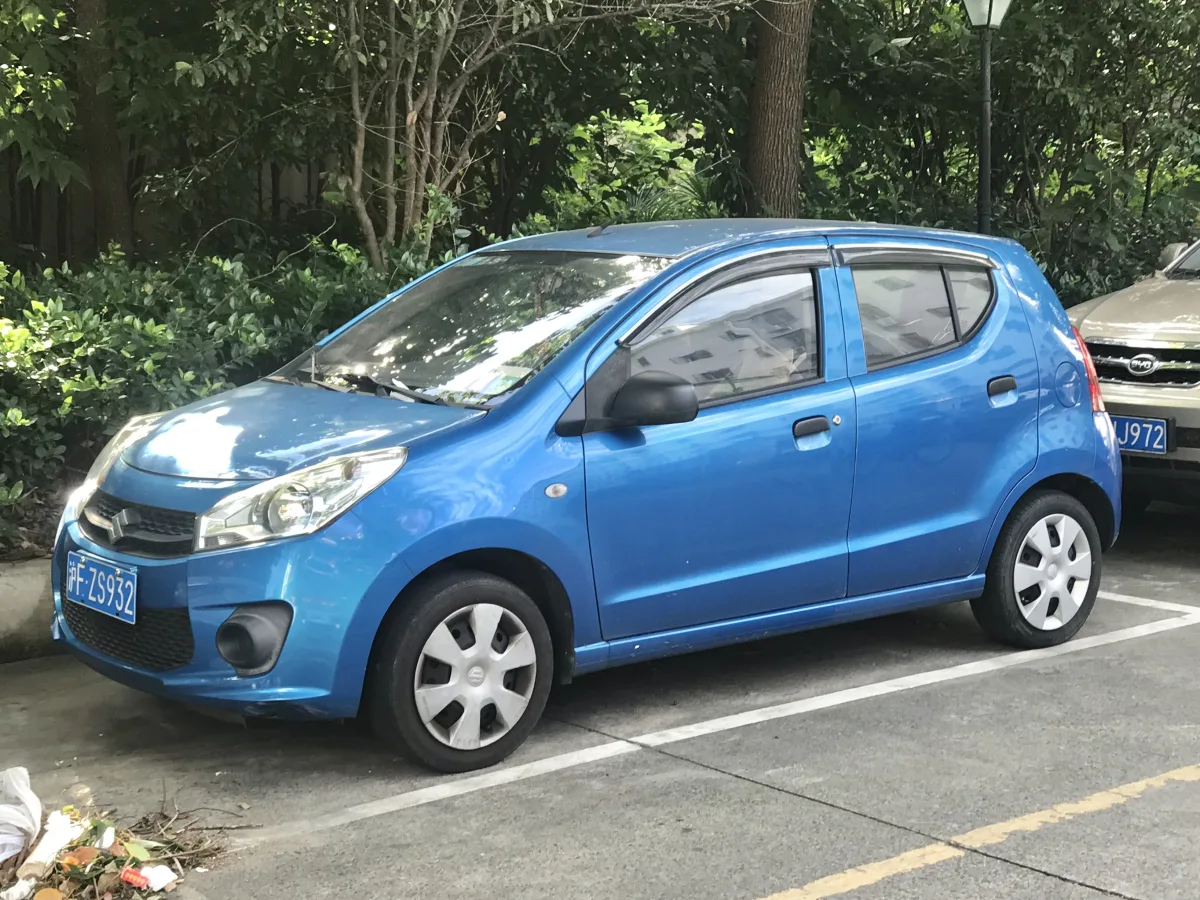
Suzuki Alto: generations, engines and trims
The Suzuki Alto is a compact city car that has been in production since 1979. It's less common in Lithuania but you can find both European-market and Japanese-import models. We'll look at how the generations differ, which engines are fitted, and what to check when buying a used Alto.






Alto in brief
The Alto is one of Suzuki's longest-running models and is a traditional first car in many countries. It's known for its light weight, low fuel consumption, and simple construction.
The Alto varies by market: in Japan, it's a small-displacement 'kei' class car with a 660 cm³ engine, while in Europe, the Alto was slightly larger and tailored to local requirements.
Which generation to choose
For European buyers, the seventh generation (around 2009–2014) is the most relevant, as it was officially sold in Europe. It's a simple, economical, and cheap-to-run city car with a modest boot.
The eighth (HA36, from 2014) and ninth (from 2021) generation models imported from Japan are more technologically advanced: they're light, with economical 660 cm³ engines, and some come with a mild hybrid system. However, they're built to Japanese kei class specifications, so size and speed are limited, and the choice of spare parts and services in Lithuania is narrower.
Engines and gearboxes
The seventh-generation European version used a 1.0-litre petrol engine, paired with a manual or automatic gearbox. With around 70 hp, it's plenty for everyday city driving.
Japanese Alto models come with 660 cm³ three-cylinder engines (power limited to kei class), usually paired with CVT or automated manual gearboxes. Some versions feature a mild hybrid system to reduce running costs.
What to check when buying a used Alto
Inspect the bodywork of a small car for corrosion, especially around the wheel arches, sills, and suspension mounting points. Check for recently painted parts and ensure the gaps between panels are uniform.
Ask about the engine oil change history and check if the engine runs smoothly without any unusual noises. Test automatic and CVT gearboxes by driving in urban conditions.
For imports from Japan, verify the mileage on the auction sheet and ensure all necessary documents are present.


Trim levels
Names and equipment vary by market and year; we list the most commonly imported trim levels.
F
8th generation (HA36)The most basic trim, aimed at budget-conscious buyers.
- Often comes with steel wheels and hubcaps
- Simpler interior trim
- Often features a manual air conditioner
L
8th generation (HA36)A bit more comfort and safety equipment.
- Often includes electric windows and central locking
- Often comes with an upgraded sound system
- Often — collision safety systems
X
8th generation (HA36)Higher trim with a more comfortable interior
- Often — alloy wheels
- Often — automatic air conditioning
- Often — additional lighting features
S
8th generation (HA36)Sportier styling version
- Often — unique exterior and interior trim
- Often — additional styling features
- Often — sportier wheels
Trim comparison
| F | L | X | |
|---|---|---|---|
| Who it's for | Ideal for everyday driving | City car with basic trim | For comfort and style |
| Wheels (most often) | Petrol | Petrol or light hybrid | Light hybrid |
| Engine | 660 cm³ | 660 cm³ | 660 cm³, some with hybrid system |
| Price in the used market (relatively) | Budget | Budget | Mid-range |
For most buyers, the L or X versions are enough, while the F is the cheapest option. Always check the exact specs on the specific car.
Pros
- Very low fuel consumption
- Easy to park and ideal for city driving
- Simple, low-maintenance design
- Low price in the used market
Cons
- Small boot and limited power on the motorway
- A smaller selection of spare parts for imported cars
- Body prone to corrosion
Frequently asked questions
Is the Alto suitable for the motorway?
It might be, but low power and a light body mean the car is more suited to the city. Those who frequently drive on motorways should consider a more robust model.
Is it worth buying an Alto from Japan?
They are economical and usually well-maintained, but built for the kei class, so they are smaller and slower. It's important to be able to source parts and find a service.
What are the Alto's fuel consumption figures?
Due to its low weight and engine efficiency, fuel consumption is usually among the lowest in its class, although real-world figures depend on driving style and gearbox.
Updated 2026-10-17 · Trim levels and equipment vary by market and model year — check the equipment of the specific car. · Translated automatically


