 English
 Lietuvių
 Latviešu
 Eesti
 Polski
 Русский
 Українська
 Deutsch
 Nederlands
 Čeština
 Slovenčina
 Svenska
 Norsk
 Dansk
 Suomi


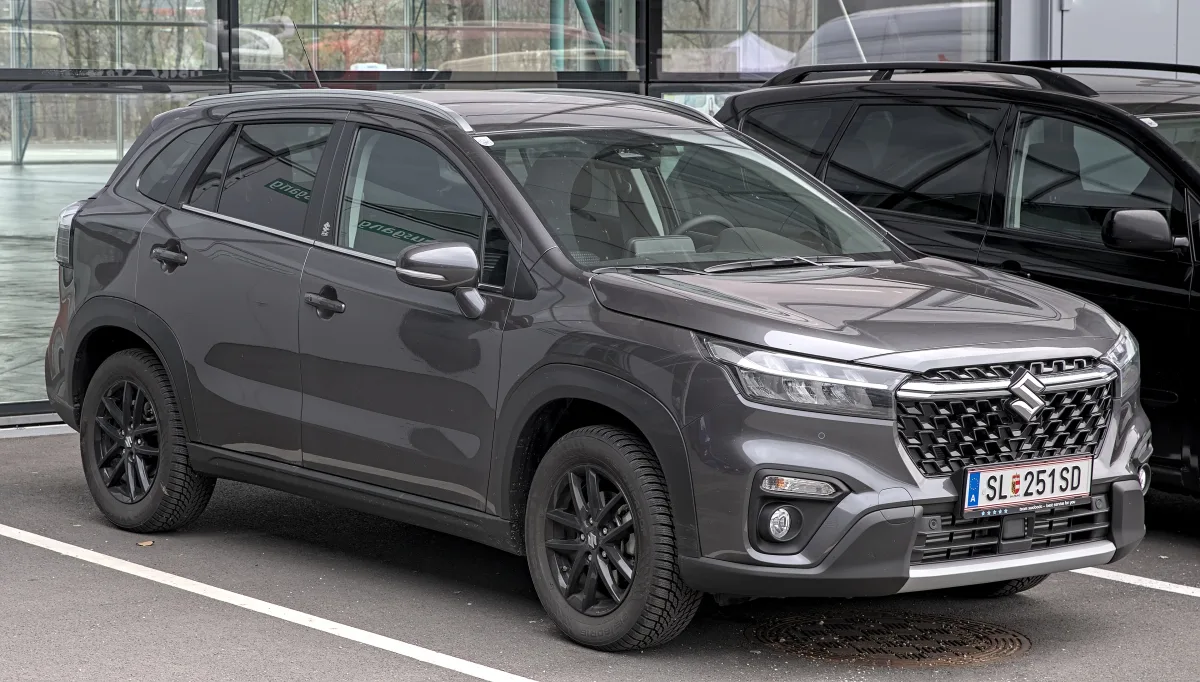
Suzuki S-Cross: generations, engines and trims
Suzuki S-Cross — a compact crossover sold in Europe since 2013: initially as the SX4 S-Cross, and since the end of 2021 as the new-generation S-Cross. We look at how the generations differ, which engines are most common, how the trims vary, and what to check when buying used.






S-Cross in brief
The S-Cross for Europe is built in Hungary, at the Esztergom plant. The model sits above the smaller Vitara: it’s around 4.3m long, with a spacious interior and about 430 litres of boot space.
The big S-Cross advantage is ALLGRIP four-wheel drive, which was available with most engines. The car is relatively light and of simple construction, so it’s often praised as a practical and affordable-to-run choice.
SX4 S-Cross and new-generation S-Cross — how they differ
The first-generation SX4 S-Cross (2013–2021) was refreshed in 2016: it gained a taller, more robust front grille and new turbocharged BoosterJet engines. Pre-facelift cars usually have an atmospheric 1.6-litre petrol or 1.6-litre diesel engine. These are the most common on the used market, and the most affordable.
The new-generation S-Cross (from the end of 2021) is built on the previous model’s underpinnings, but has a new body, a more modern interior with a larger multimedia screen and only hybrid powertrains. These are the newest and best-equipped cars, but there are fewer used examples and they command higher prices.
Engines and gearboxes
Initially, up to 2016, the most common engines were the 1.6 petrol and 1.6 DDiS diesel, both around 120 hp. Post-facelift, turbocharged 1.0 BoosterJet (around 110 hp) and 1.4 BoosterJet (around 140 hp) engines were introduced, and from 2020, the 1.4 BoosterJet with a 48V mild hybrid (around 130 hp).
The new-generation S-Cross is offered with the 1.4 BoosterJet mild hybrid, and later, with a 1.5-litre full hybrid (Strong Hybrid), paired with a robotised AGS gearbox. No S-Cross version is a plug-in hybrid.
Gearboxes are manual or automatic. Before the facelift, the 1.6 petrol engine was often paired with a beltless CVT, while the turbocharged BoosterJet engines came with a conventional 6-speed automatic gearbox.
What to check when buying a used S-Cross
In ALLGRIP models, test all driving modes and listen for any unusual noises when cornering or accelerating. The automatic gearbox should shift smoothly, without jerks or delays, while the full hybrid AGS box shifts more slowly — that's typical of its design, so it's worth ensuring this driving style suits you before buying.
If the car has a panoramic sunroof, check that it operates smoothly and that no water enters the cabin. For diesel cars that have done a lot of city driving, inspect the particulate filter (DPF).
Check the underbody and sills for corrosion, especially on older cars. Verify the service history through maintenance records, and inspect the body for repainted parts.


Trim levels
Names and equipment vary by market and year; we list the trims commonly found in Germany, where many used cars are imported from — in other markets, they might go by different names.
Club
First generationBase trim — basic and most affordable.
- Smaller alloy wheels
- Often — manual air conditioning
- Simpler sound system
Comfort
Both generationsMost popular choice — a good balance of price and features.
- Light-alloy wheels
- Often — automatic climate control
- Often — rear-view camera
Comfort+
Both generationsTop-of-the-range trim with the most equipment.
- Often — panoramic sunroof
- Often — navigation and leather interior
- Often — LED headlights
ALLGRIP
Both generationsFour-wheel drive version, available with different trims.
- Four-wheel drive
- Driving modes: Auto, Sport, Snow and Lock
- Better grip in winter and on rough terrain
S-Cross trim comparison
| Club | Comfort | Comfort+ | |
|---|---|---|---|
| Who it's for | For the tightest budgets | For daily driving | For comfort and long journeys |
| Wheels (most common) | 16 inch | 16–17 inch | 17 inch |
| Interior | Basic | More comfort features | Often — leather upholstery and panoramic sunroof |
| Price in the used market (relatively) | Budget-friendly | Mid-range | Mid-range |
For most buyers, the Comfort trim is the best fit — it comes with all the essential equipment. For those who drive a lot in winter or on rough terrain, the ALLGRIP version is worth considering.
Pros
- ALLGRIP four-wheel drive is available
- Spacious interior and generous boot space
- Simple construction and affordable maintenance
- Relatively light and economical
Cons
- The interior has plenty of hard plastics
- The full hybrid AGS gearbox shifts smoothly
- There are fewer new-generation cars in the used market
Frequently asked questions
How does the S-Cross differ from the Vitara?
The S-Cross is longer, with a roomier interior and larger boot, while the Vitara is more compact and has a more rugged appearance. The technology and engines are largely the same, and both can be found with ALLGRIP four-wheel drive.
Is the ALLGRIP version worth choosing?
If you drive a lot in winter, on gravel roads or in the countryside, it's often worth it: ALLGRIP significantly improves grip. For city driving, a front-wheel-drive car is usually sufficient and tends to be more economical and cheaper.
Which S-Cross engine should you choose?
For the first time, most buyers will find the 1.4 BoosterJet a better fit—it's considerably more dynamic than the naturally aspirated 1.6. In the new lineup, the 1.4 mild hybrid is the simpler choice, while the full hybrid is more economical in the city.
Do you need to charge the S-Cross hybrid?
No. Both the mild and full S-Cross hybrids charge their batteries themselves while driving and braking, so there's no need for a plug.
Updated 2026-10-10 · Trim levels and equipment vary by market and model year — check the equipment of the specific car. · Translated automatically


