 English
 Lietuvių
 Latviešu
 Eesti
 Polski
 Русский
 Українська
 Deutsch
 Nederlands
 Čeština
 Slovenčina
 Svenska
 Norsk
 Dansk
 Suomi


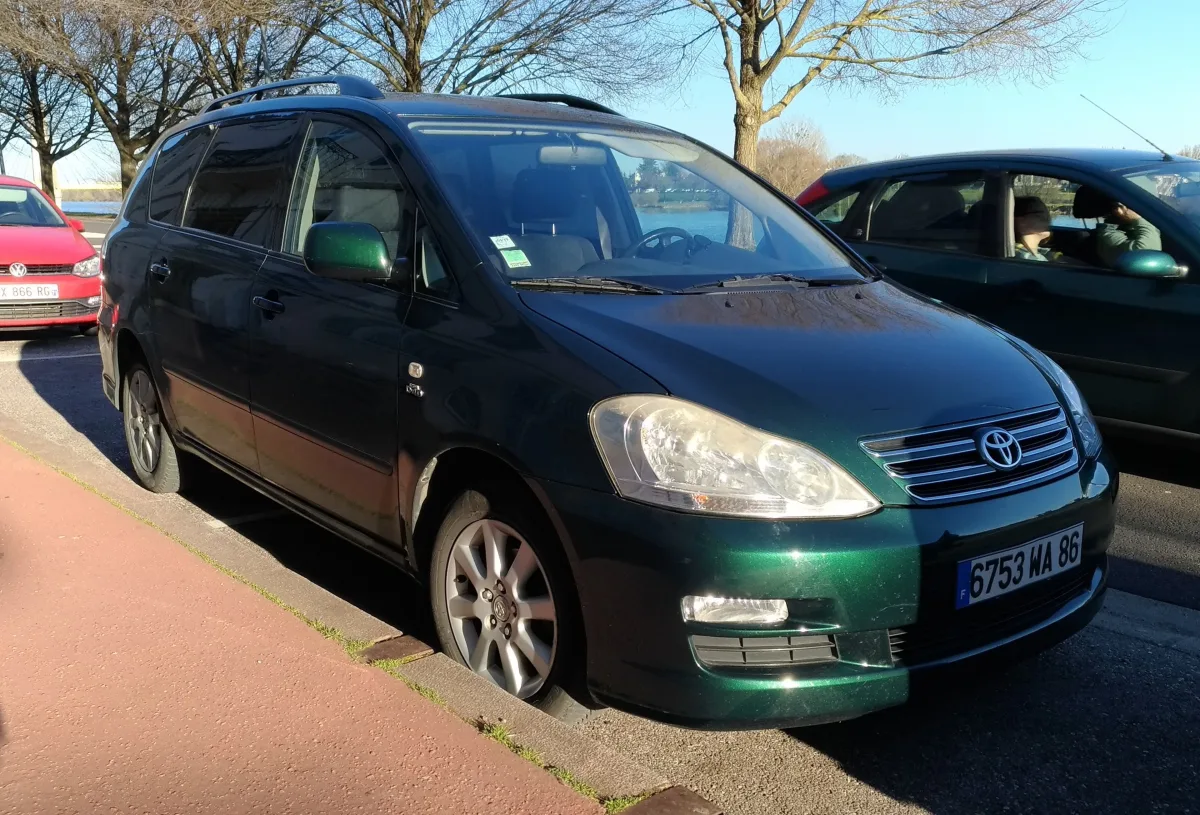
Toyota Avensis Verso: engines, condition and what to know when buying
The Toyota Avensis Verso is a seven-seater compact MPV produced from 2001 to 2009, based on Avensis technology. We look at the engines, gearboxes, trim levels and what to check before buying such an older car.






Avensis Verso in brief
The Avensis Verso is a family car built on the Avensis platform but with a higher body and up to seven seats. It competed with the Renault Scénic, Opel Zafira and similar compact MPVs, but stood out with Toyota's reputation for reliability.
It's an old car now, so its value depends heavily on its condition, not its age. In Lithuania, it's popular as an affordable family runabout.
Facelift and which version to choose
The model was produced in one generation, but during its production run, it was facelifted — the front end, some engines and equipment changed. So first, assess the specific car's condition, and use the year as just a guideline.
If you can choose, look for a car with a full service history and a low number of previous owners. The seven-seater version is practical for families, but the third-row seats are usually for kids or short trips.
Engines and gearboxes
Most commonly found is the 2.0-litre petrol engine (around 150hp, D-4 direct injection version) and the 2.0 D-4D diesel engine (around 115hp). The gearbox is usually manual, but some cars have an automatic.
Diesel is more economical for long journeys, but it requires high-quality fuel and timely oil changes. A petrol engine is quieter and simpler for daily driving, but the D-4 direct injection version is more demanding in terms of fuel quality and maintenance.
What to check when buying a used Avensis Verso
Check the engine oil level and inquire about its consumption — in some older Toyota engines, it may have increased. In the case of a diesel, assess the injectors, turbo, and EGR valve based on cold and hot start behavior.
Inspect the sills, wheel arch edges, and boot floor for corrosion, and check the mechanisms and seatbelts of all seven seats. Compare the mileage with the service book entries.


Trim levels
The manufacturer called the trim levels differently in various countries, so we provide a general classification based on equipment level.
Bazinė komplektacija
2001–2009Basic equipment, suitable for daily driving.
- Often — basic air conditioning
- Often — steel wheels
- Simpler sound system
Vidutinė komplektacija
2001–2009Most common, with better comfort equipment.
- Often — automatic climate control
- Often — alloy wheels
- Often — electrically adjustable mirrors
Aukštesnė komplektacija
2001–2009A version tailored for comfort with more generous equipment.
- Often — leather or higher-quality upholstery
- Often — parking or wheel sensors
- Often — heated seats
Comparing versions
| Bazinė | Vidutinė | Aukštesnė | |
|---|---|---|---|
| Who it suits | For the budget-conscious buyer | For the family | For those seeking comfort |
| Wheel sizes (most often) | 15 inch | 16 inch | 16 inch |
| Air conditioning | Often basic | Often automatic climate control | Often automatic climate control |
| Engine | Mostly 2.0 petrol or diesel | 2.0 petrol, 2.0 D-4D | 2.0 petrol, 2.0 D-4D |
| Price in the used market (relatively) | Budget-friendly | Budget-friendly | Mid-range |
For most buyers, the best choice is a mid-range trim with a clear service history, as more features in an older car often mean more potential repair points.
Pros
- Seven seats and flexible interior transformation
- Toyota's reputation for reliability
- Simple technology and readily available parts
- A spacious and comfortable people-mover for the family
Cons
- The car is already old, so the specific condition of the vehicle is crucial
- Some engines may have higher oil consumption
- Rust on sills and arches
Frequently asked questions
Is the Avensis Verso reliable?
Toyota has a good reputation, but the car is already over 15 years old. The most important thing is the service history and whether savings were previously made on oil and filters.
Which engine to choose?
For those who drive more, the 2.0 D-4D diesel is usually the best fit, while for those who drive less, a petrol engine is suitable. The key is that the specific engine runs smoothly and without smoke.
Are all seven seats comfortable for adults?
The second-row seats are comfortable, but the third-row seats are usually suitable for kids or short trips. They are less comfortable for adults on longer journeys.
Updated 2026-10-14 · Trim levels and equipment vary by market and model year — check the equipment of the specific car. · Translated automatically


