 English
 Lietuvių
 Latviešu
 Eesti
 Polski
 Русский
 Українська
 Deutsch
 Nederlands
 Čeština
 Slovenčina
 Svenska
 Norsk
 Dansk
 Suomi


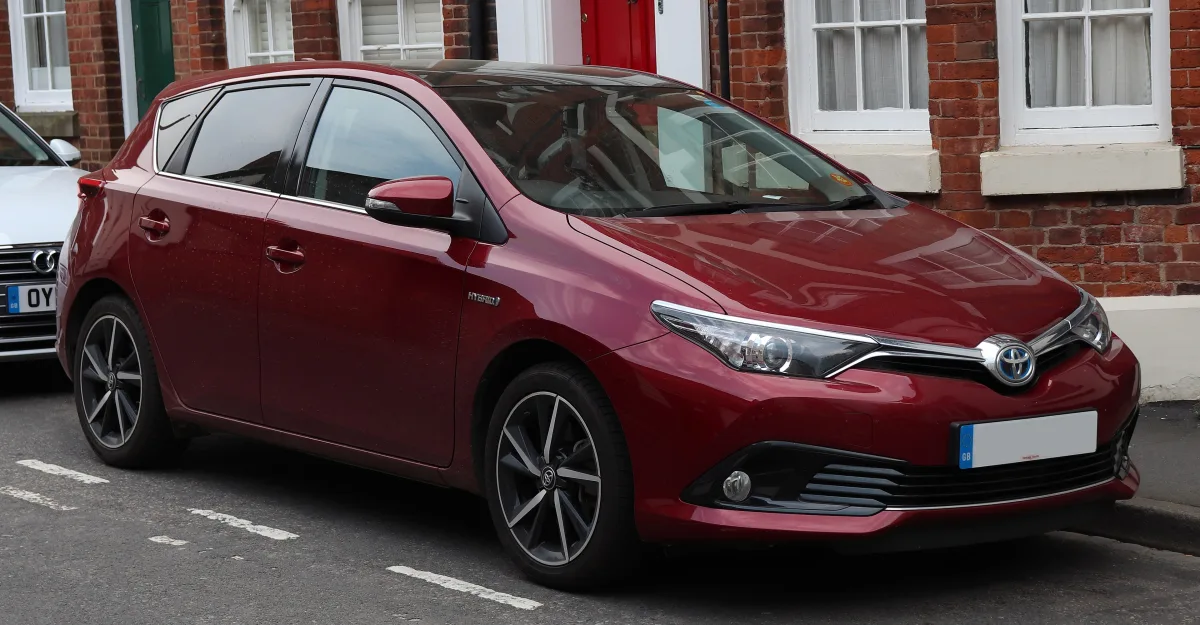
Toyota Auris: E150 and E180 generations, engines and trims
Toyota Auris — a compact class hatchback and estate, replacing the Corolla hatchback in Europe and produced until 2018. In Lithuania, it's particularly valued for its reliable petrol engines and economical hybrid version. We'll look at the E150 and E180 generations, engines, trims, and what to check before buying.






Short and sweet on the Auris
The Auris was produced in two generations: E150 (2007–2012) and E180 (2012–2018). The first generation was available only as a hatchback (3 or 5 doors), while the second generation hatchback was 5 doors only, with the Touring Sports estate arriving in 2013.
From 2010, the Auris was also offered with a full hybrid powertrain. In 2019, the Auris was replaced by the Corolla in Toyota's lineup. In the used market, you'll most commonly find E180 generation cars, especially hybrids.
What sets the E150 and E180 apart
The E150 (2007–2012) is simple and reliable, but it's an older car today with a high centre console and less-than-premium interior materials. In 2010, it was refreshed: a new front end, interior details, and the introduction of a hybrid version. When buying one, focus on the technical condition rather than the trim level.
The E180 (2012–2018) is lower, lighter, and better equipped, with a more modern, higher-quality interior. In 2015, refreshed models got a new front end, upgraded interior, a 1.2-litre turbocharged petrol engine, and often Toyota Safety Sense safety systems. Later models, from 2015–2018, are the best choice if your budget allows.
Engines and transmissions
The E180 series features petrol engines including the 1.33 (around 100 hp), 1.6 Valvematic (around 132 hp), and from 2015, the 1.2 turbo (around 116 hp). Diesel options are the 1.4 D-4D (around 90 hp), up to 2015 the 2.0 D-4D (around 124 hp), and later the 1.6 D-4D (around 112 hp), co-developed with BMW.
The hybrid version comes with a 1.8 petrol engine and an electric motor, combining for around 136 hp. It's the most economical in city driving, making it popular with taxi drivers and businesses. The E150 series includes 1.33, 1.4, 1.6, and 1.8 petrol engines, as well as 1.4, 2.0, and 2.2 D-4D diesel engines.
Transmissions include a manual, the stepless Multidrive S (for petrol engines), or the hybrid's stepless transmission. Some E150 series cars have the robotised MultiMode box, which shifts slowly and hesitates.
What to check when buying a used Auris
Hybrids often have high mileage, so check this against service records and MOTs. Ask for the hybrid battery's condition and, during a test drive, see if the car moves smoothly on electric power alone. Since hybrid brakes are used less, discs and pads can rust.
Test the MultiMode transmission thoroughly — hesitation and unreliable engagement can indicate clutch or gearbox issues. The Multidrive S box should accelerate smoothly, without unusual jerking.
2.0 and 2.2 D-4D diesels share the same head gasket and oil consumption issues as other Toyota models of that era, so most buyers are better off choosing a petrol engine or a hybrid. Check the bodywork of all cars for painted-over parts and uneven gaps.


Trim levels
Toyota trim names vary by country and year. We list those commonly found in Germany and other European countries; British cars often feature Active, Icon, Excel, or Design.
Luna / Sol
E150 generationFirst-generation trim levels are usually basic and practical.
- Air conditioning
- Often — light-alloy wheels
- Often — automatic climate control (Sol)
Life
E180 generationThe base E180 trim comes with essential equipment.
- Air conditioning
- Often — multimedia system with a screen and rear-view camera
- Often — smaller wheels
Life+
E180 generationThe most popular choice — more comfort for a modest price difference.
- Light-alloy wheels
- Often — automatic climate control
- Often — speed maintenance system
Executive
E150 and E180 generationsTop trim with the most kit
- Larger alloy wheels
- Often — part-leather, heated seats
- Often — sat-nav and keyless entry
E180 generation trims compared
| Life | Life+ | Executive | |
|---|---|---|---|
| Who it suits | The sensible buyer | Most families | Comfort lovers |
| Alloy wheels (most often) | 15–16 inch | 16 inch | 17 inch |
| Interior | Basic fabric | Better trim | Often — partial leather, heated seats |
| Price in the used market (relatively) | Budget | Mid-range | Premium |
For most buyers, the best choice is the 2015–2018 E180 Life+ with the 1.6 Valvematic or hybrid engine. The Executive is worth considering for more comfort, but the technical condition is always more important than the trim level.
Pros
- Reliable petrol engines and hybrid transmissions
- Very economical hybrid version in the city
- Moderate running costs
- Practical Touring Sports estate with a large boot
Cons
- Not particularly exciting to drive, especially the hybrid
- Many hybrids have a very large tax bill
- E150 interior materials and MultiMode transmission
Frequently asked questions
Is it worth buying a used Auris hybrid?
Yes, if the car doesn't have too high a mileage and has a service history. Toyota's hybrid transmission is considered one of the most reliable, but before buying, it's worth checking the condition of the hybrid battery and ensuring the car wasn't used as a taxi.
Which Auris engine is the most reliable?
The 1.33, 1.6 Valvematic petrol engines and the 1.8 hybrid are considered the most reliable. Diesels, especially the 2.0 and 2.2 D-4D, have more issues, so it's worth considering them only with a good history.
How do the Auris and Corolla differ?
In Europe, the Auris was the Corolla hatchback's successor — from 2007 to 2018, Toyota sold its compact hatchback and estate as the Auris, while the sedan remained the Corolla. From 2019, the new model is once again called the Corolla and is offered in hatchback, estate, and sedan body styles.
Updated 2026-10-09 · Trim levels and equipment vary by market and model year — check the equipment of the specific car. · Translated automatically


