 English
 Lietuvių
 Latviešu
 Eesti
 Polski
 Русский
 Українська
 Deutsch
 Nederlands
 Čeština
 Slovenčina
 Svenska
 Norsk
 Dansk
 Suomi


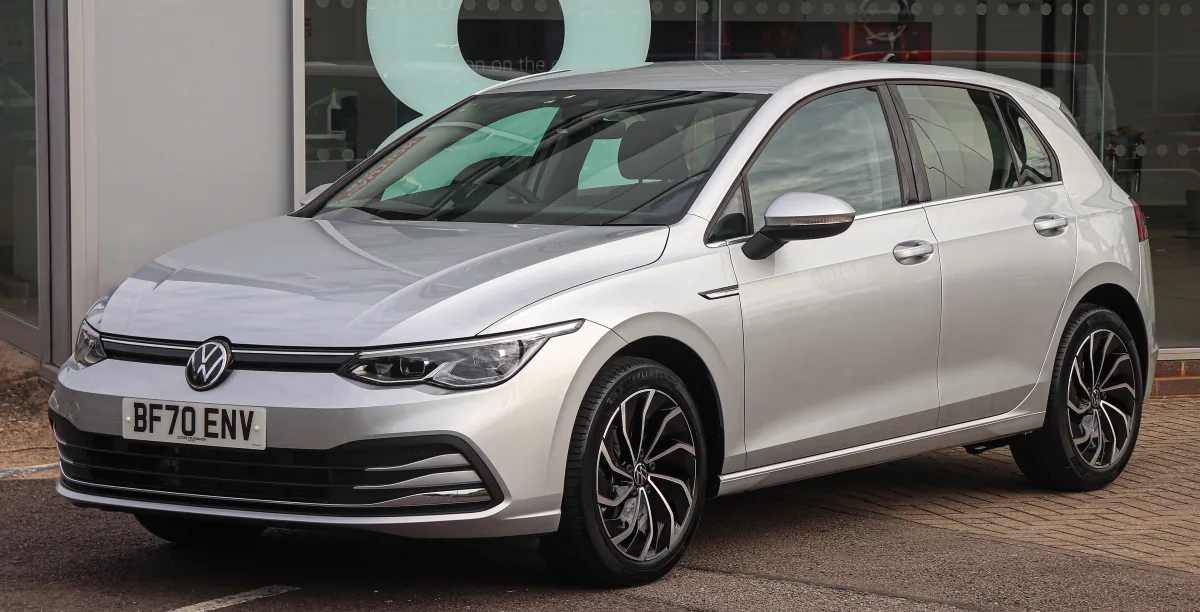
Volkswagen Golf: Generations, Engines and Trims Compared
The Volkswagen Golf has been the compact class benchmark since 1974 and is one of the most popular used cars. We look at how the VI, VII and VIII generations differ, which engines are the most popular, how the trim levels vary, and what you need to check before buying.






The Golf at a Glance
The Golf spans eight generations. Most can be found as hatchbacks (3- or 5-door) or estates (Golf Variant). Alongside the regular versions, there have always been sporty GTI, GTD and R models, and from the VII generation onwards, the GTE plug-in hybrid too.
The Golf is praised for its well-balanced chassis, high-quality interior, and the abundance of spare parts and specialists who know the model inside out. Thanks to its popularity, it holds its value remarkably well, meaning used prices are often higher than those of similarly aged rivals.
Which Generation to Choose
The VI generation (2008–2012) is technically close to the V generation, but features a sturdier, quieter interior. Today, it’s the cheapest way to buy a “proper” Golf, though most examples carry high mileage, meaning condition trumps trim level.
The VII generation (2012–2019) is built on the MQB platform, making it lighter, more spacious and more modern. It is the most popular generation on the used market, with a vast supply and wide choice, while the 2017 facelift brought larger screens and newer engines.
The VIII generation (from late 2019) stands out with its digital cockpit, a wider array of driver assistance systems, and mild-hybrid (eTSI) powertrains. Early models drew criticism for infotainment glitches and touch-sensitive controls, but the 2024 facelift introduced a larger screen and a more user-friendly setup.
Engines and Gearboxes
In the VII generation, the most common petrol engines are the 1.2 and 1.4 TSI (replaced by the 1.0 and 1.5 TSI from 2017), alongside the 1.6 and 2.0 TDI diesels. Sporty GTI models produced around 220–245 hp, while the Golf R offered roughly 300 hp and all-wheel drive.
The eighth-generation lineup is anchored by 1.0 and 1.5 TSI engines (with DSG pairing making it the eTSI mild hybrid), the 2.0 TDI diesel, the GTE plug-in hybrid, the GTI (245 hp) and the Golf R (around 320–333 hp).
Transmissions include manual or DSG. Smaller engines are typically paired with the 7-speed dry-clutch DSG (DQ200), while punchier units get the wet-clutch DSG.
What to check when buying a used Golf
The DSG transmission should shift smoothly: stuttering when pulling away, harsh shifts or vibrations often signal clutch or mechatronics repairs. Always check if the oil has been changed on wet-clutch DSGs.
Early 1.2 and 1.4 TSI engines (Gen 6 and early Gen 7) are notorious for timing chain stretch—a cold engine shouldn't rattle on startup. On high-mileage urban diesels, carefully check the diesel particulate filter (DPF) and EGR valve.
On eighth-generation models, ask if the infotainment software has been updated. Across the board, verify the mileage against inspection and service records, and inspect the bodywork for resprayed panels and uneven gaps.


Trim levels
Names and equipment levels vary by market and model year; these are the most common specs found across Europe.
Trendline
Generation VIIThe entry-level Gen 7 trim is no-frills and budget-friendly.
- Usually comes on steel wheels
- Manual air conditioning
- Basic infotainment system
Comfortline
Generation VIIThe most popular choice—striking a great balance between price and comfort.
- Alloy wheels
- Often features automatic climate control and parking sensors
- More comfortable seats and extra storage compartments
Highline
Generation VIIThe top standard trim, offering enhanced comfort.
- Larger alloy wheels and extra chrome exterior trim
- Frequently equipped with LED or xenon headlights
- Sportier seats, digital dash on some models
Life
Generation VIIIThe core Generation VIII trim, already well-equipped with modern tech.
- LED headlights and digital dash
- Larger infotainment screen
- Often adaptive cruise control
Style
Generation VIIIA more upscale version for comfort seekers.
- Upmarket interior trim
- Often IQ.LIGHT matrix headlights
- Ambient interior lighting
R-Line
Generation VIIIA sporty-looking trim without the performance engine.
- Sporty bumpers and alloy wheels
- Sports seats and steering wheel
- Often with progressive steering
Generation VIII trim comparison
| Life | Style | R-Line | GTI | |
|---|---|---|---|---|
| Who it's for | Daily driving | Comfort and styling | Sporty styling | Driving pleasure |
| Wheels (typically) | 16–17 in. | 17 in. | 17–18 in. | 18–19 in. |
| Headlights | LED | LED, often matrix | LED, often matrix | LED, often matrix |
| Interior | Standard | Upmarket trim | Sports seats | Sports seats, GTI trim |
| Engine | 1.0–1.5 TSI, 2.0 TDI | 1.5 TSI, 2.0 TDI | 1.5 TSI, 2.0 TDI | 2.0 TSI, 245 hp |
| Used market price (relative) | € | €€ | €€ | €€€ |
For most buyers, the best choice is the Life or Style with the 1.5 TSI or 2.0 TDI engine. The R-Line is worth choosing for its looks, and the GTI only if you're looking for a truly sporty car.
Pros
- Well-balanced, quiet ride
- Abundant supply and great parts availability
- Strong residual values
- Wide engine range — from economical to sporty
Cons
- Often pricier than rivals on the used market
- Dry-clutch DSGs can be costly to repair
- Infotainment and touch controls in early eighth-generation cars
Frequently asked questions
Which Golf generation is best when buying used?
For many buyers, the best choice is the 2017–2019 seventh-generation Golf: modern, well-refined, and cheaper than the eighth-generation. If your budget allows and new equipment matters — choose the eighth-generation, ideally a post-2021 or the facelifted 2024 version.
Is it worth buying a Golf with a DSG gearbox?
Yes, if the DSG operates smoothly and has a service history. Before buying, test pulling away from a standstill and slow driving in traffic — jerking is a sign that repairs may be needed.
What's the difference between the Golf and Golf Variant?
The Golf Variant is an estate — longer with a significantly larger boot, making it suitable for families and frequent travellers. The mechanics and trims are essentially the same as the hatchback's.
Which Golf engine is the most economical?
The most economical are the 1.6 and 2.0 TDI diesels and the 1.0 TSI petrol engine. If you mostly drive in the city, it's often more rational to choose a petrol TSI, as the diesel particulate filter requires longer trips.
Updated 2026-10-09 · Trim levels and equipment vary by market and model year — check the equipment of the specific car. · Translated automatically


