 English
 Lietuvių
 Latviešu
 Eesti
 Polski
 Русский
 Українська
 Deutsch
 Nederlands
 Čeština
 Slovenčina
 Svenska
 Norsk
 Dansk
 Suomi


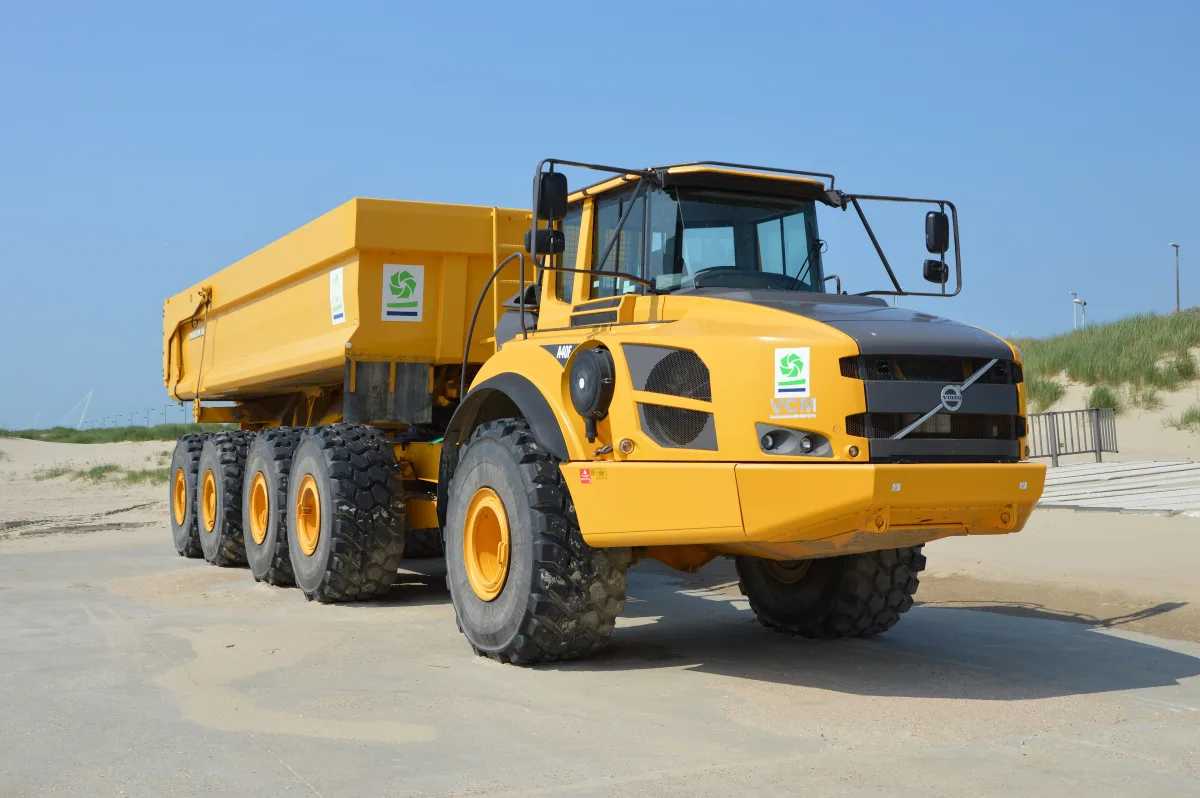
Volvo A: articulated haulers, series and what to check
Volvo A — Volvo Construction Equipment's range of articulated haulers, with a history dating back to 1966. We look at the A25, A30, A35, and A40 models, series, key specs, and what to check when buying a used Volvo A.






Volvo A in brief
Volvo A designation covers articulated haulers used to transport soil, gravel, rocks, and other bulk materials in quarries, road, and infrastructure construction. The articulated frame and all-wheel drive allow for operation on rough, muddy terrain.
The number usually reflects the payload class: A25 is smaller, A30 and A35 are mid-sized, while A40 and larger are heavier. The A25, A30, and A35 models are most commonly found in Lithuania.
Series — what's the difference
Older C, D, and E series are simpler, with less electronics. The F series improved comfort and fuel efficiency, while the G series features more advanced electronics, a more comfortable cabin, and additional systems, such as weighing.
Some machines are six-wheel drive (6x6), while smaller ones are 6x4. Before purchasing, it's essential to identify the exact model and year of manufacture.
Engine and key components
Volvo articulated haulers use Volvo's own diesel engines. Newer machines feature SCR (AdBlue) and particulate filter systems, the condition of which is crucial.
Key components: automatic transmission, articulated frame joint, braking system (often with retarder), suspension, dump body with tipping cylinders, axles, and tyres.
What to check when buying a used Volvo A
Check the engine hours, service history, smoke, starting, and oil leaks. Test the gearbox and brakes — they should operate smoothly, without juddering or strange noises.
Pay particular attention to the hinge joints, suspension, boot lid cylinders, and any bodywork dents or corrosion. Check the tyres and axles, and ensure the car hasn't been used in the harshest off-road conditions.


Versions and trims
Names and equipment vary by market and year of production; we list the versions most commonly found in Europe.
A25
smaller classA more compact estate car.
- Often — smaller dimensions
- Suitable for smaller spaces
- Lower price in the used market
A30
mid-size classA versatile mid-size car.
- Often — six-speed gearbox
- More space than the A25
- Good grip
A35
larger classSuitable for larger careers.
- More power
- Often — a weighing system
- Sturdier chassis
A40 ir didesni
heavy classFor heavy-duty career work.
- Largest capacity
- Requires special transport
- Expensive tyre maintenance
Volvo A class comparison
| A25 | A30 | A35 | |
|---|---|---|---|
| Who it's for | For smaller jobs | Versatile work | For large careers |
| Size | Smaller | Medium | Larger |
| Transmission | Often 6x4 or 6x6 | Often 6x6 | Often 6x6 |
| Price in the used market (relatively) | €€ | €€€ | €€€€ |
Before buying, first determine the required class based on your tasks. For versatile work, an A30 with a good history often fits the bill.
Pros
- Good off-road capability
- Ladder frame and four-wheel drive
- Good Volvo service and parts availability
- Holds its value well
Cons
- Expensive tyre and brake maintenance
- Newer versions with SCR and particulate filters require maintenance
- Transport requires specialist equipment
Frequently asked questions
What does the A stand for in Volvo?
A is Volvo's designation for articulated trucks, with the number usually indicating the class. Check the specific model's documents for exact weight and power.
How does the A30 differ from the A35?
The A35 is larger and more powerful, with greater capacity. The A30 is more manoeuvrable and cheaper.
Is it worth buying a Volvo A with high mileage?
Yes, if there's a service history and the gearbox, articulated frame, and cab have been checked. High mileage without history is a risk.
Updated 2026-10-21 · Trim levels and equipment vary by market and model year — check the equipment of the specific car. · Translated automatically


