 English
 Lietuvių
 Latviešu
 Eesti
 Polski
 Русский
 Українська
 Deutsch
 Nederlands
 Čeština
 Slovenčina
 Svenska
 Norsk
 Dansk
 Suomi


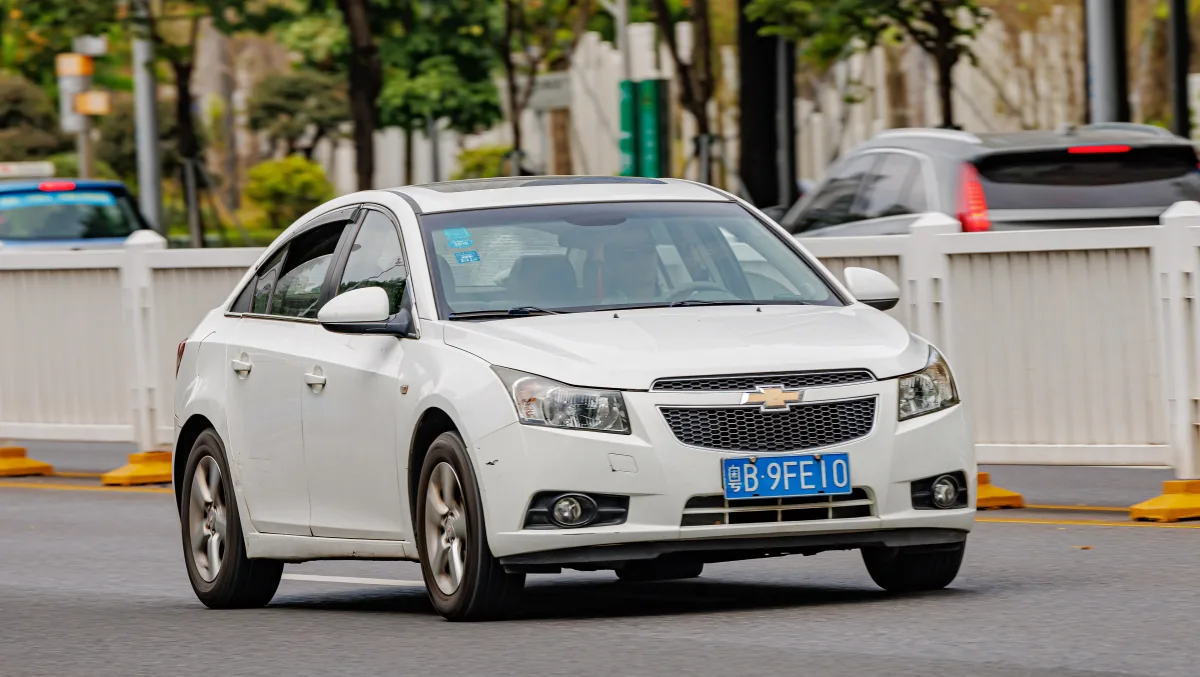
Chevrolet Cruze: 2008–2016 compact car, engines and trims
Chevrolet Cruze — a compact class car, sold in Europe from 2008–2016 as a sedan, hatchback and estate. In this article, we review the engines, trims and what to check when buying a used Cruze.






Cruze in brief
Cruze – a spacious and affordable compact car, offered in several body styles: sedan, hatchback and (from 2012) estate. It is built on the GM Delta II platform, which is also used in some Opel models.
In the used market, the Cruze often costs less than its rivals, making it an attractive alternative for those who value space and price.
Which version to choose
The Cruze was produced in one generation, but it was refreshed in 2012 and received improved equipment and newer engines. The estate version also became available.
When choosing, it's important to consider the engine, body style and service history. The sedan might seem more practical due to its larger boot, while the estate offers more versatility.
Engines and gearboxes
Petrol engines – 1.6, 1.8 and 1.4 turbo, diesels – 2.0 VCDi and later 1.7 VCDi. Exact power output varies by year and version.
Gearboxes – manual or 6-speed automatic. Most buyers opt for the manual due to its simplicity.
What to check when buying a used Cruze
Check the cooling system and whether the engine is not using too much oil. Find out when the timing belt or chain was last changed and if there are documents confirming this.
Check the diesel particulate filter, turbo and timing chain in a diesel car. The gearbox should operate smoothly.
Inspect the body, suspension and electronics. If the car is fitted with LPG, ask for the installation documents.


Trim levels
Names and equipment vary by market and year; we list the most common trims found in Europe.
LS
All versionsBase trim.
- Often — steel wheels
- Basic sound system
- Standard safety equipment
LT
All versionsPopular mid-range trim.
- Often — air conditioning
- Often — electric windows
- More comfortable interior
LTZ
All versionsTop-of-the-range trim.
- Often — alloy wheels
- Often — automatic air conditioning
- More interior trim
Comparing trims
| LS | LT | LTZ | |
|---|---|---|---|
| Who it's for | For the budget-conscious buyer | For daily driving | For maximum comfort |
| Wheels (most common) | 15–16 inch | 16 inch | 16–17 inch |
| Interior | Basic | More comfortable | The most luxurious trim |
| Price in the used market (relatively) | € | € | €€ |
Most buyers will find the LT well-equipped for a sensible price. Opt for the LTZ if you want maximum comfort.
Pros
- Spacious interior and large boot
- Price often lower than competitors
- Wide range of body styles
- Simple construction
Cons
- Prestige and residual value lower than German competitors
- Some engines require careful maintenance
- Interior materials are more basic
Frequently asked questions
Which Cruze body style is best?
It depends on your needs: the sedan has a large boot, the hatchback is more agile in the city, and the estate offers the most space for cargo.
Which engine to choose?
For those who do a lot of driving, a diesel often makes sense, while for city driving and short trips, a petrol engine is usually better. The specific car's service history is important.
Is the Cruze reliable?
A lot depends on maintenance. Choose a car with a clear history and have it checked before buying.
Updated 2026-10-17 · Trim levels and equipment vary by market and model year — check the equipment of the specific car. · Translated automatically


