 English
 Lietuvių
 Latviešu
 Eesti
 Polski
 Русский
 Українська
 Deutsch
 Nederlands
 Čeština
 Slovenčina
 Svenska
 Norsk
 Dansk
 Suomi


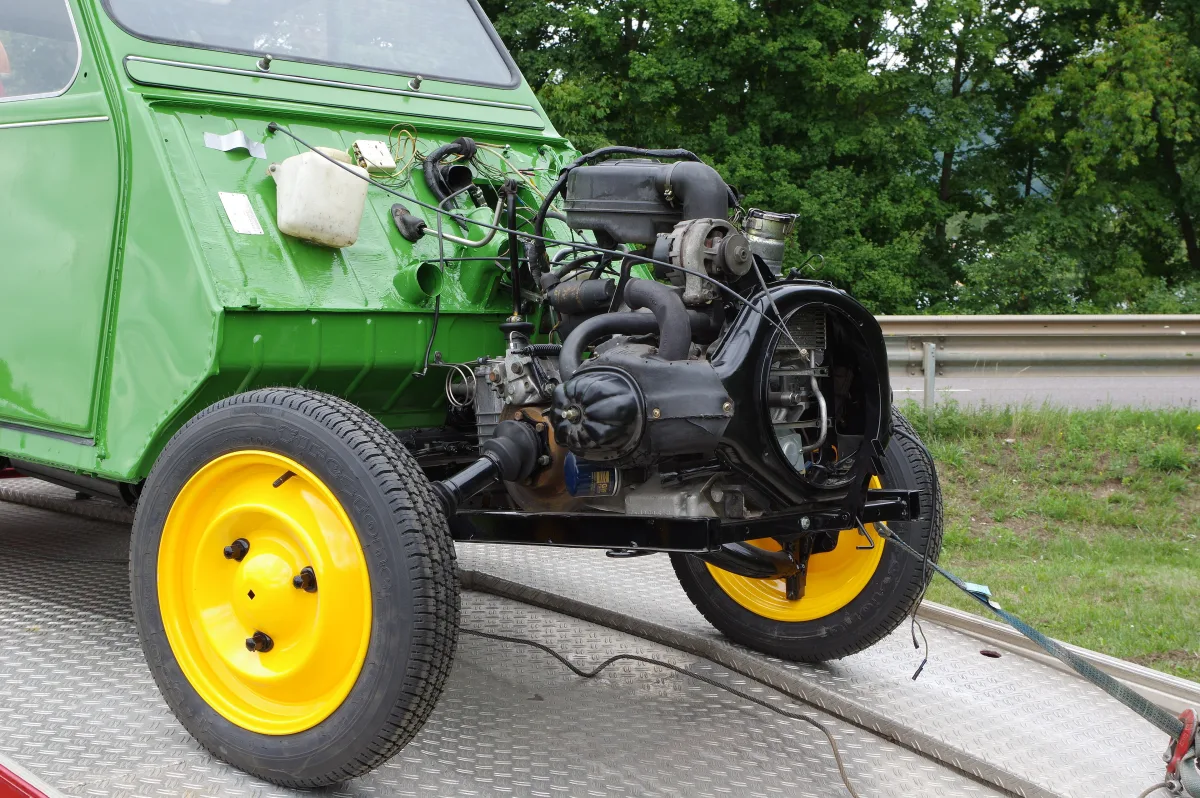
Citroën 2CV: generations, engine and what to know before buying
The Citroën 2CV is a legendary French small car produced from 1948 to 1990. We look at the generations, engines, and what to check when buying a classic 2CV.






2CV in brief
The Citroën 2CV was designed as a simple, affordable, and versatile car for farmers and everyday people. It features an air-cooled two-cylinder engine, front-wheel drive, a soft suspension, and a foldable canvas roof.
Today, the 2CV is a beloved classic car. In the used market, it appeals to enthusiasts, collectors, and those seeking a simple, fun, and unique automobile.
Which generation to choose
Over nearly four decades, the 2CV evolved gradually. Early models had a smaller engine and simpler styling, while later ones featured a larger engine and more comfort.
The most popular later generations are those with the 602 cm³ engine (2CV6), which are more practical for daily use. There are also special series like the 'Charleston' and 'Dolly', valued for their styling.
Engine and gearbox
Initially, the 2CV had around a 375 cm³ engine, which was later increased to 425, 435, and 602 cm³. Power is modest, ranging from a few to about 29 hp, but the car is very light.
The gearbox is a 4-speed manual. The car is simple and easy to maintain, but speed and acceleration are modest — it's classic slow driving.
What to check when buying a 2CV
The most important thing is the condition of the car's frame. The frame can be severely rusted, and replacing it is a major job. Also, check the body panels, floor, and roof.
Inspect the engine, oil leaks, suspension, and brakes. There's a wide range of parts available, as there are many specialist suppliers and a large community, so finding help is straightforward.


Trim levels
Versions by era and purpose; years are approximate.
2CV A / AZ
Early yearsEarly versions with a smaller engine.
- Smaller engine
- Basic styling
- Collector's value
2CV 6
Later yearsWith a 602 cm³ engine — more practical for daily use.
- Around 29 hp
- Often — more comfort
- Often — more modern interior
Charleston
From 1980Distinctive two-tone version.
- Two-tone body
- Often — special bumpers
- Popular collector's version
Dolly
From 1985Vibrant special series version.
- Bold colours
- Often — special trim details
- Popular among collectors
Comparison of versions
| 2CV A / AZ | 2CV 6 | Charleston | |
|---|---|---|---|
| Who it suits | For collectors | For daily classic use | For style enthusiasts |
| Engine | Smaller, up to 425 cm³ | 602 cm³ | 602 cm³ |
| Power | Low | Around 29 hp | Around 29 hp |
| Price in the used market (relatively) | €€ | €€ | €€ |
Most buyers will find the 2CV 6 with the 602 cm³ engine to be the most practical. The Charleston is worth considering for its looks.
Pros
- Simple technology and easy maintenance
- A smooth and comfortable ride
- Wide range of parts available and a large community
- A playful and unique classic car
Cons
- Slow and undynamic
- Body rust can be expensive to fix
- Lack of safety features
Frequently asked questions
How many horsepower does the 2CV have?
From around 29 hp depending on the version.
Is the 2CV suitable for daily driving?
It can work as a fun or second car, but due to its sluggishness and lack of safety features, it's less suited to motorways.
Why is the 2CV chassis important?
The chassis can be severely rusted, and replacing it is expensive and complex, so it's crucial to check it before buying.
Updated 2026-10-19 · Trim levels and equipment vary by market and model year — check the equipment of the specific car. · Translated automatically


