 English
 Lietuvių
 Latviešu
 Eesti
 Polski
 Русский
 Українська
 Deutsch
 Nederlands
 Čeština
 Slovenčina
 Svenska
 Norsk
 Dansk
 Suomi


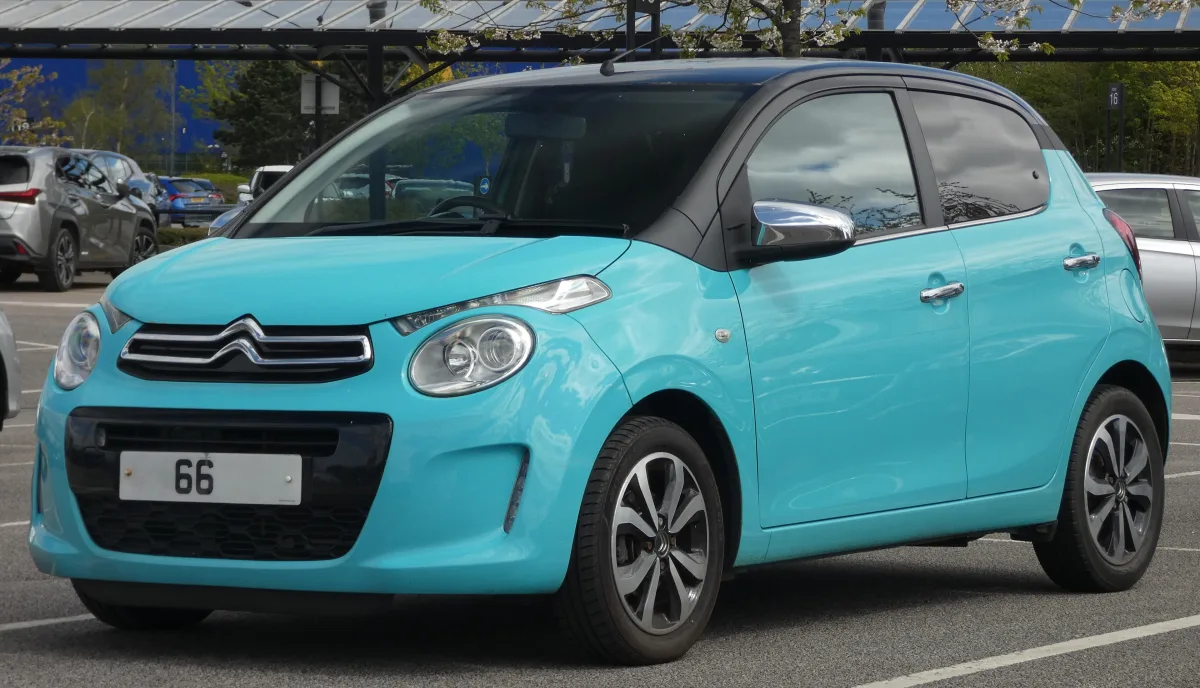
Citroën C1: 1st and 2nd generations, engines and trims
The Citroën C1 is a compact city car produced alongside the Peugeot 107/108 and Toyota Aygo. We look at how the 1st and 2nd generations differ, which engines and gearboxes are most common, how the trims vary, and what to check when buying a used C1.






C1 in brief
The C1 was produced from 2005 to 2022 in the Czech Republic, in the same factory as the Peugeot 107 (later 108) and Toyota Aygo. These cars are virtually identical under the skin: they mainly differ in their front ends, rear ends, and interior details, so most spare parts fit all three models.
The C1 was offered with 3- and 5-door hatchback bodies. It's one of the cheapest cars to run: low fuel consumption, simple technology, and affordable parts. On the downside, the interior is cramped, the boot is small, and it's noisy on the motorway, so it's best suited to the city.
1st and 2nd generation — what's the difference
The 1st generation (2005–2014) is basic and light. During its production run, it was updated twice: bumpers, headlights, and interior details were changed, and newer models often feature LED daytime running lights. Today, it's the cheapest C1, but the cars are getting old, so rust and suspension condition are key.
The 2nd generation (2014–2022) is more modern: a quieter and better-equipped interior, often with a touchscreen multimedia display with Mirror Screen functionality to connect your phone, and sometimes a rear-view camera. There was also an Airscape version with a folding soft top.
The C1 was discontinued around 2022 — it has no direct successor, and in the same factory, the Toyota Aygo X is now produced.
Engines and transmissions
Almost all C1s come with a 1.0-litre three-cylinder petrol engine (Toyota 1KR) — around 68–72 hp. It's simple, economical, and has a timing chain, so there's no need to change the timing belt.
Initially, there was also a 1.4 HDi diesel (around 54 hp), but it's rare. In the second generation, a more powerful 1.2 PureTech (around 82 hp) was offered — with it, the C1 feels better on out-of-town roads.
Transmissions come as a 5-speed manual or a robotised manual (called ETG in the second generation). The robotised box shifts slowly and with hesitations, so many buyers find the conventional manual more convenient.
What to check when buying a used C1
The clutch is the most common source of expense, as most C1s were driven in the city. It shouldn't slip and should 'catch' at the top of the pedal. In a car with a robotised box, test the movement from a standstill and the gear shifts — long delays or errors on the instrument cluster could indicate clutch or transmission control mechanism repair.
Check the bodywork for rust on the sills, wheel arches, and tailgate, especially on first-generation cars. Listen to the suspension — rattling often indicates worn-out stabiliser links or bushes; check the springs as well.
Check in the Airscape trim that the roof opens smoothly and doesn't leak water, and in all cars, that the air conditioning works. The C1 is often a first or work car, so inspect the bodywork according to the service and inspection records.


Trims
Names and equipment vary by market and year; we list the most commonly found trims in Europe.
Live
Second generationThe base trim of the second generation comes with essential equipment.
- Steel wheels
- Basic sound system
- Often — no air conditioning
Feel
Second generationThe most popular trim — core comfort for a modest price.
- Often — air conditioning
- Electrically operated front windows
- Often — touchscreen with Mirror Screen
Shine
Second generationHigher trim with more equipment.
- Light-alloy wheels
- Often — automatic air conditioning and rear-view camera
- Coloured interior or body details
Flair
Second generationTop trim in some markets (e.g., UK), similar to Shine.
- Light-alloy wheels
- Often comes with a rear-view camera
- Often comes with a 1.2 PureTech engine
Urban Ride
Second generation (from 2018)A crossover-style version for the city.
- Black plastic wheel arch and bumper protectors
- Light-alloy wheels
- Often comes with a two-tone body
Comparison of second-gen trims
| Live | Feel | Shine / Flair | Urban Ride | |
|---|---|---|---|---|
| Who it's for | For the tightest budgets | For most buyers | More comfort | For a distinctive look |
| Dealers (most often) | 14-inch steel wheels | 14–15-inch | 15-inch alloy wheels | 15-inch alloy wheels |
| Interior | Basic | Often — touchscreen display | More equipment, coloured details | Distinctive trim |
| Price in the used market (relatively) | € | € | €€ | €€ |
For most buyers, the Feel with a manual gearbox is the best bet — it's cheap, simple, and sufficiently comfortable. The Shine or Flair are worth considering if you want more kit, while the Airscape version is for those who value the open-top experience.
Pros
- Very low running costs
- Easy to manoeuvre and park in the city
- Simple and reliable 1.0-litre engine with a chain
- Parts are shared with the Peugeot 107/108 and Toyota Aygo
Cons
- The cabin is cramped and the boot is small
- It's noisy and sluggish on the motorway
- The slow, jerky automated gearbox
Frequently asked questions
How does the C1 differ from the Peugeot 107/108 and Toyota Aygo?
Technically, it's almost identical — the same engines, gearboxes, and chassis. The differences lie in the styling, interior details, and trim levels, so it's worth comparing all three models and choosing based on the specific condition of the car.
Which C1 generation should you choose?
If your budget allows, go for the second generation: it's quieter, more modern, and better equipped. The first-gen C1 is for the tightest budgets, but it's crucial to thoroughly check the bodywork and suspension.
Is it worth choosing a C1 with an automatic gearbox?
It's not a true automatic, but a robotised manual — it shifts slowly and with hesitation. If you drive calmly in the city, it's fine, but it's essential to test its operation before buying.
Is the C1 suitable for longer journeys?
It's manageable, but not comfortable: the engine is loud on the motorway, the cabin is cramped, and the boot is small. If you often drive outside the city, consider the 1.2 PureTech version or a larger car.
Updated 2026-10-09 · Trim levels and equipment vary by market and model year — check the equipment of the specific car. · Translated automatically


