 English
 Lietuvių
 Latviešu
 Eesti
 Polski
 Русский
 Українська
 Deutsch
 Nederlands
 Čeština
 Slovenčina
 Svenska
 Norsk
 Dansk
 Suomi


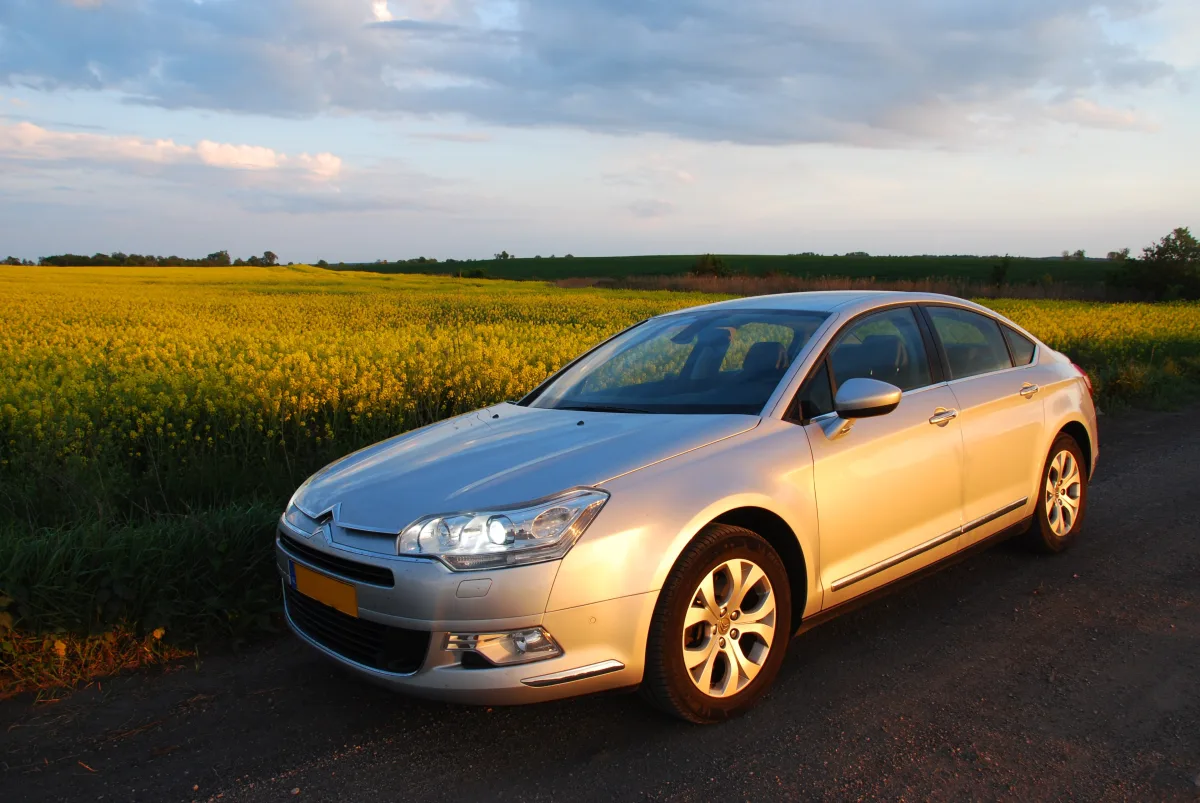
Citroën C5: I and II (X7) generations, engines and trims
Citroën C5 — a mid-size Citroën model produced from 2001 to 2017 and renowned for its particularly comfortable ride. We look at how the I and II generations differ, which engines are most popular, how the trims vary and what you need to check before buying a used C5.






C5 in brief
The first-generation C5 (2001–2008) was available as a five-door hatchback and estate (Break), while the second (2008–2017) came as a saloon and estate, known as the Tourer. In 2014, the range was joined by the raised, rugged-looking C5 CrossTourer.
The standout feature of the C5 is the hydropneumatic Hydractive suspension, which maintains the car's ride height and absorbs bumps exceptionally smoothly. In the first generation, it was fitted to all versions, while in the second, it was mostly found on pricier models and those with more powerful engines; others made do with conventional springs.
The C5 Aircross (from 2018) and C5 X (from 2021) are separate models, so we won't cover them in this article.
Which generation to choose
The first generation (2001–2008) is today the cheapest way to get a spacious and comfortable car, but most examples are now very old and have high mileage. The 2004 model was refreshed — with a revised front end and improved equipment. Such a car is worth buying only if you know its history and have a mechanic who understands the hydraulic suspension.
Second generation (2008–2017), known by the code X7, is significantly more robust: a sturdier body, a higher-quality interior, and a quieter ride. This is the most commonly found C5 on the used market, especially the Tourer estate with a diesel engine.
When buying the second generation, first decide if you want the Hydractive suspension. It offers unique comfort, but its repair is more expensive than that of conventional spring suspensions.
Engines and gearboxes
The second generation most often features diesels: 1.6 HDi and e-HDi (around 110–115 hp), 2.0 HDi (around 136–163 hp), 2.2 HDi (around 170–204 hp), and V6 HDi (2.7 and 3.0 litres, around 204–240 hp). Petrol engines include the 1.6 THP (around 156 hp), 1.8 and 2.0-litre naturally aspirated units, and the 3.0 V6.
The first generation saw the most popularity with the 2.0 HDi and 2.2 HDi diesels, while petrol engines included the 1.8 and 2.0-litre units. After the facelift, the range was supplemented with the smaller 1.6 HDi diesel.
Gearboxes come in manual or automatic. More powerful second-generation diesels are often paired with a 6-speed automatic, while e-HDi models come with the robotised ETG6 (EGS6), which shifts more slowly.
What to check when buying a used C5
Hydractive suspension: with the engine running, the body should rise to its operating height, and the car should not feel harsh or 'bouncy' while driving. Over time, the suspension spheres lose pressure and need replacing; check for hydraulic fluid leaks and ask if the hydraulic block has been repaired.
Check the diesel particulate filter (DPF) on diesel cars — most HDi engines use a special additive fluid that needs topping up. Pay attention to the injectors and turbocharger condition, especially on high-mileage vehicles.
The C5 is packed with electronics, so it's worth checking all the systems: electric windows, climate control, lights, and any fault codes with a diagnostic tool. Check the ride based on service history and maintenance records.


Trim levels
Names and equipment vary by market and year; we list the most common trims found in Europe.
Attraction
Second generationThe base trim of the second generation is simple and the most affordable.
- Often comes with steel wheels with hubcaps
- Torsion beam suspension
- Air conditioning and a basic audio system
Tendance
Second generationMid-range trim with more comfort features.
- Light-alloy wheels
- Often includes dual-zone automatic climate control
- Often includes parking sensors and cruise control
Exclusive
First, second generationTop-of-the-range trim, often with Hydractive suspension.
- Larger wheels and more chrome details
- Often — leather seats and xenon headlights
- Often — Hydractive suspension and navigation
CrossTourer
Second generation (from 2014)The raised Tourer version with protective body details
- Protective bumper and sill details
- Increased ground clearance
- Often — more powerful diesel engines and automatic transmission
Comparison of second-generation trims
| Attraction | Tendance | Exclusive | CrossTourer | |
|---|---|---|---|---|
| Who it's for | For the tightest budgets | For daily driving | For comfort lovers | For long journeys and rough roads |
| Wheels (usually) | 16-inch | 16–17-inch | 17–18-inch | 18-inch |
| Lowered | Spring suspension | Often spring suspension | Often — Hydractive | Often — Hydractive |
| Interior | Standard | More comfort features | Often — leather upholstery | Estate with unique trim |
| Price in the used market (relatively) | € | € | €€ | €€€ |
Most buyers' best bet is the Tendance or Exclusive trim with the 2.0 HDi engine. The Hydractive suspension offers unparalleled comfort, but only opt for it if you're aware of its condition.
Pros
- Unrivalled driving comfort
- Spacious interior and generous Tourer boot space
- Relatively affordable in the used market
- Quiet and stable on the motorway
Cons
- Expensive Hydractive suspension repairs
- Lots of electronics that can cause headaches for older cars
- Quickly depreciates, many examples with high mileage
Frequently asked questions
Is a C5 with Hydractive suspension worth buying?
It is if comfort is your top priority and the suspension is in good nick. Before buying, check if the body lifts when the engine is started, if there are no fluid leaks, and if the suspension doesn't clunk. You'll need a specialist mechanic for any repairs.
Which C5 engine is the best?
For most buyers, the 2.0 HDi diesel is the sweet spot: powerful enough, economical, and well-known to mechanics. The more potent 2.2 HDi and V6 HDi offer extra dynamism, but their repairs come at a higher cost.
How do the C5 and C5 Aircross differ?
The C5 is a mid-size saloon or estate car produced until 2017, while the C5 Aircross is an SUV launched in 2018 with entirely different technology. They are distinct models, despite their similar names.
Updated 2026-10-09 · Trim levels and equipment vary by market and model year — check the equipment of the specific car. · Translated automatically


