 English
 Lietuvių
 Latviešu
 Eesti
 Polski
 Русский
 Українська
 Deutsch
 Nederlands
 Čeština
 Slovenčina
 Svenska
 Norsk
 Dansk
 Suomi


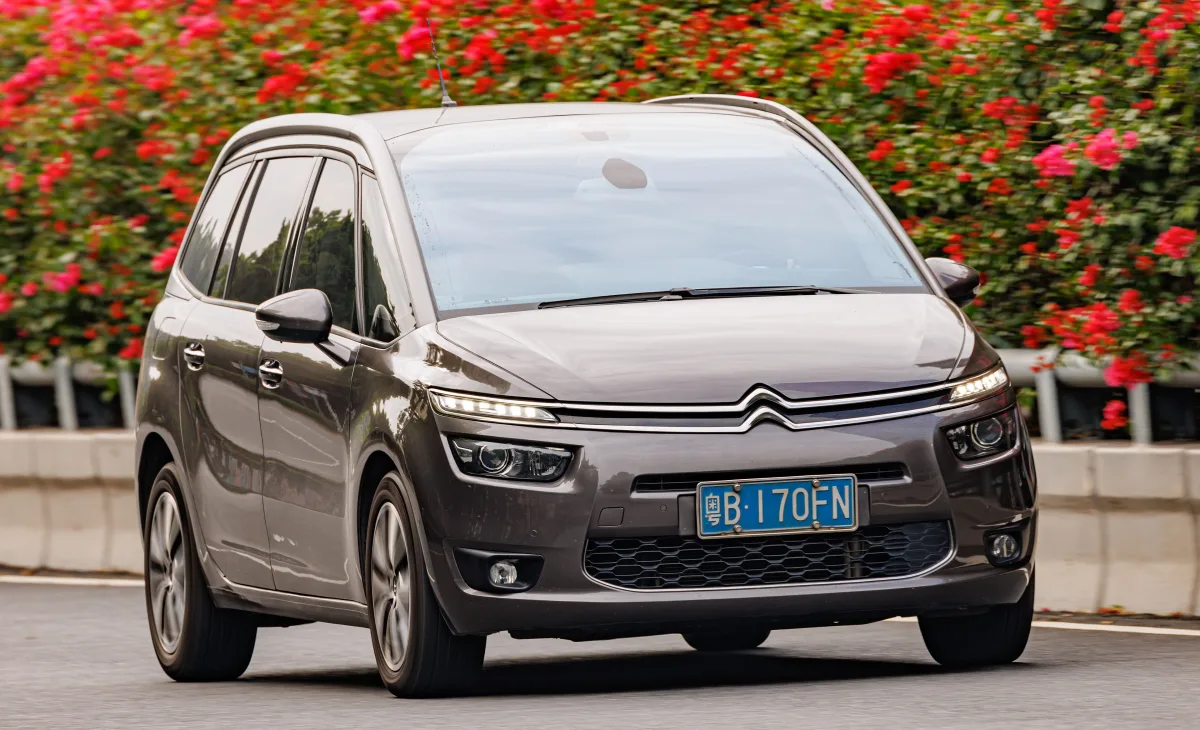
Citroën C4 Grand Picasso: first and second generations, engines and trims
Citroën C4 Grand Picasso — a seven-seater family MPV, produced from 2006 to 2018. We look at both generations, the most popular engines, trims, and what to check before buying a used model.






C4 Grand Picasso in brief
The Grand Picasso is a spacious seven-seater MPV, popular with families for its flexible interior layout, large boot, and expansive glass areas. The driver's seat is elevated, offering excellent visibility, and the suspension is tuned for comfort.
The first generation was sold from 2006 to 2013, the second from 2013 to 2018. The final models in 2018 were rebranded as the Grand C4 SpaceTourer.
Which generation to choose
The first generation (2006–2013) is the more budget-friendly option. The interior design and technology are more dated, and some models feature an automated manual transmission that requires careful inspection.
The second generation (2013–2018) is built on a new platform, making it lighter, more modern, and more fuel-efficient. The interior is dominated by large screens and numerous driver-assistance systems, with a more contemporary look.
If your budget allows, we recommend choosing the second generation, especially with an economical diesel engine or PureTech petrol engine, and most importantly — with a service history.
Engines and gearboxes
In the first generation, popular choices include the 1.6 and 2.0-litre petrol engines and the 1.6 and 2.0-litre HDi diesel engines. Gearboxes include manual, automated manual, or traditional automatic.
The second generation most commonly features 1.2 l PureTech and 1.6 l THP petrol engines, as well as 1.6 l and 2.0 l BlueHDi diesel engines. Manual and automatic transmissions are offered.
Always check the specific car's engine, power, and transmission type against the documents.
What to check when buying a used C4 Grand Picasso
If the car has an automated manual transmission, test it: movement should be smooth, without judders or jolts. If you notice problems, expect an expensive repair.
In turbocharged petrol engines, check the oil level and consumption, as well as the condition of the distribution mechanism. In diesels, it's worth checking the particulate filter and other exhaust system components.
Inspect the suspension, as family MPVs often drive when loaded. Also, check that all electronic functions work — screens, cameras, boot and door operation.


Trim levels
Names and equipment vary by market and year; we list the most common trims found in Europe.
Attraction
First and second generationsThe base trim with essential equipment.
- Steel or light-alloy wheels
- Often — manual or automatic climate control
- Often — a more basic sound system
Seduction
First generationThe popular mid-range trim in the first generation.
- Light alloy wheels
- Often — dual-zone climate control
- Often — parking sensors
Exclusive
First generationTop-spec first-generation trim.
- Often — leather upholstery
- Often — navigation and extra comfort systems
- Often — larger wheels
Feel
Second generationBase second-generation trim with a good level of kit.
- Often — daytime running lights and light alloy wheels
- Often — large touchscreen
- Often — parking sensors
Shine
Second generationTop-spec second-generation trim.
- Often — leather upholstery and larger wheels
- Often — cameras and driver assistance systems
- Often — panoramic glass roof
Trim comparison
| Attraction | Exclusive (1 karta) | Feel (2 karta) | Shine (2 karta) | |
|---|---|---|---|---|
| Who it's for | On a budget | For comfort, first generation | For the family, second generation | For maximum equipment |
| Common wheel sizes | 15–16 inch | 16–17 inch | 16–17 inch | 17 inch |
| Engine | Petrol or diesel | Petrol or diesel | Petrol or diesel | Petrol or diesel |
| Price in the used market (relatively) | € | € | €€ | €€ |
Buyers prioritizing price will find a well-maintained first-generation model suitable. For most families, a better choice is a second-generation Feel or Shine with a BlueHDi or PureTech diesel engine.
Pros
- Spacious seven-seat interior
- Bright cabin with large glass areas
- Comfortable ride
- Easy transformation of seats and boot space
Cons
- Some versions suffer from a problematic automated manual gearbox
- Complex electronics and more expensive repairs
- Many cars already have high mileage and a worn-out chassis
Frequently asked questions
How many seats does the C4 Grand Picasso have?
The Grand Picasso is a seven-seater: the third row of seats is mainly for children or teenagers. The second-row seats can be moved forward and backward.
Which generation of the C4 Grand Picasso is better?
The second generation (2013–2018) is more modern and economical, but the first is cheaper and suits budget-conscious buyers. The key is the car's condition and service history.
Which engine is the most suitable?
Most buyers will find economical diesel HDi or BlueHDi engines suitable if they drive a lot. For those who drive less, a petrol variant is fine, but it's important to check its technical condition.
Updated 2026-10-17 · Trim levels and equipment vary by market and model year — check the equipment of the specific car. · Translated automatically


