 English
 Lietuvių
 Latviešu
 Eesti
 Polski
 Русский
 Українська
 Deutsch
 Nederlands
 Čeština
 Slovenčina
 Svenska
 Norsk
 Dansk
 Suomi


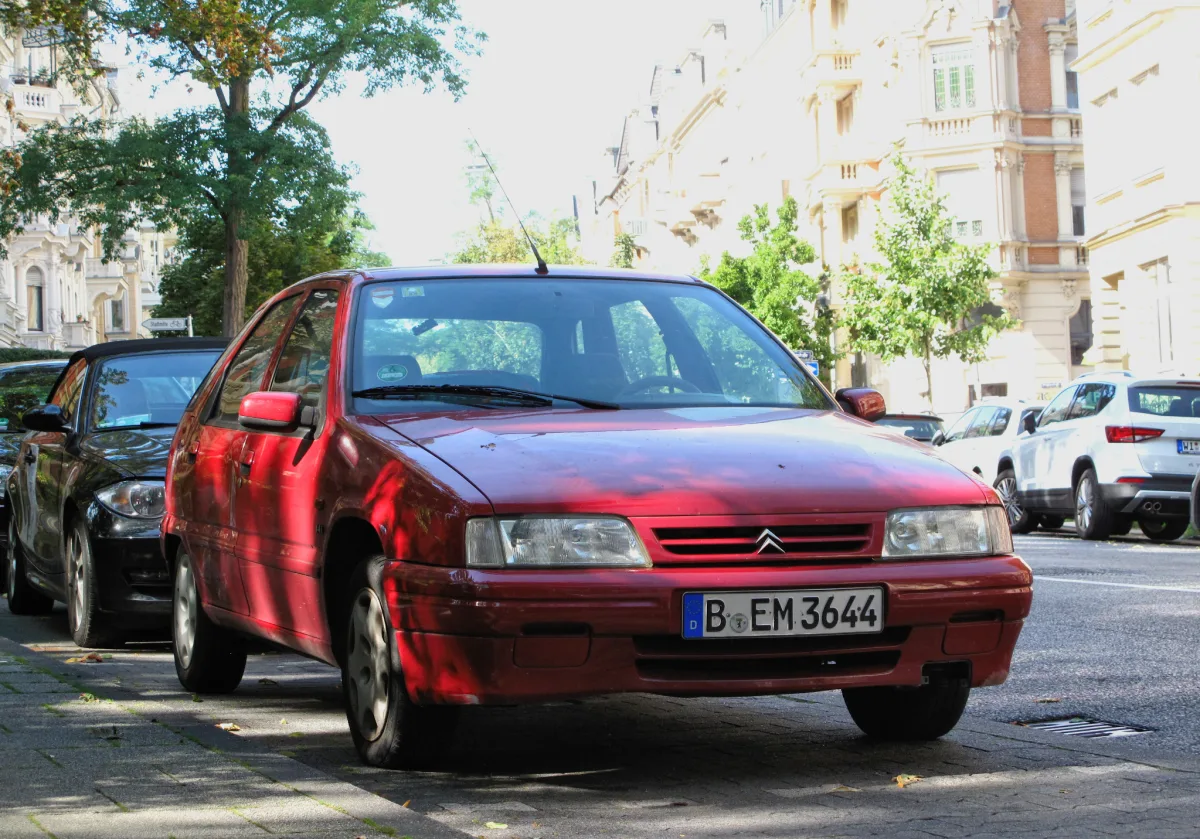
Citroën ZX: hatchback and Break, engines and trims
Citroën ZX (1991–1998) — a compact class car, offered as a hatchback and estate. We look at the engines, trims, and what to check before buying such an old car.






ZX in brief
The ZX became one of Citroën's most popular models in the 1990s. Offered as a 3- and 5-door hatchback, and later as the estate Break.
It's a simple, light, and economical front-wheel-drive car. Most examples are quite old now, so the condition of the car is more important than the trim level.
Which version to choose
Early ZX models (up to 1994) have the original design and simpler interior. The facelifted versions (from 1994) got a revised front end, updated interior, and more safety features.
The Break estate is great for families thanks to its larger boot, while the 16V is perfect for driving enthusiasts.
Engines and gearboxes
Petrol engines range from 1.1 to 2.0 litres, including 1.4, 1.6, and 1.8 litres, with the sportiest being the 2.0-litre 16V. Diesels are 1.9 litres (naturally aspirated and turbo).
Gearboxes are mostly manual, with automatics being rarer. Diesel engines are often praised for their economy and longevity.
What to check when buying a used ZX
Corrosion is the main risk: check the sills, wheel arches, boot lid, and bottom of the windscreen. Deep corrosion often isn't worth repairing.
Check the engine condition (leaks, smoke), timing belt change history, suspension, brakes, rear suspension parts, and electrical equipment.


Trims
Names and equipment vary by market and year; we list the most commonly found trims in Europe.
Reflex
1991–1998The base trim with a smaller engine.
- Often a 1.1–1.4 l engine
- Basic interior trim
- Often basic alloy wheels
Avantage
1991–1998The mid-range trim for daily use.
- Often a 1.4–1.6 l engine
- Often more comfortable seats
- Often central locking
Aura
1991–1998The better-equipped version with more comfort.
- Often electric windows
- Often air conditioning
- Often lightweight alloy wheels
Volcane
1991–1998The sportier, higher-spec trim.
- Often — 1.8 or 2.0-litre engine
- Often — sport seats
- Often — extra equipment
16V
1991–1998The sportiest version with a 2.0-litre 16-valve engine.
- 2.0-litre 16V engine
- Often — sport seats
- Often — larger alloy wheels
Comparing versions
| Reflex | Aura | Volcane | 16V | |
|---|---|---|---|---|
| Who it's for | A straightforward city car | Everyday use | Comfort and sportiness | Dynamic driving |
| Engine | Mostly 1.1–1.4-litre | 1.4–1.6-litre | Often 1.8–2.0 l | 2.0 l 16V |
| Interior | Basic | More Comfortable | Better Equipped | Sportier |
| Price in the used market (relatively) | Budget | Budget | Mid-range | Mid-range |
For most buyers, the condition of the body and engine is more important than the trim level. The Break is great for families, while the 16V is ideal for those who prioritise performance.
Pros
- Light and economical
- Comfortable driving
- Simple technology
- Wide range of engines
Cons
- Risk of corrosion
- Old cars with high mileage
- Minor faults and electrical issues
Frequently asked questions
Is the Citroën ZX reliable?
Technically quite simple, but it depends on maintenance. Choose one without corrosion and with a clear history.
Which engine is the best?
Most will be fine with a 1.4–1.6 l petrol or 1.9 l diesel, and the 16V is for spirited driving.
Is there an estate version?
Yes, the Break estate came later and has a larger boot.
Updated 2026-10-09 · Trim levels and equipment vary by market and model year — check the equipment of the specific car. · Translated automatically


