 English
 Lietuvių
 Latviešu
 Eesti
 Polski
 Русский
 Українська
 Deutsch
 Nederlands
 Čeština
 Slovenčina
 Svenska
 Norsk
 Dansk
 Suomi


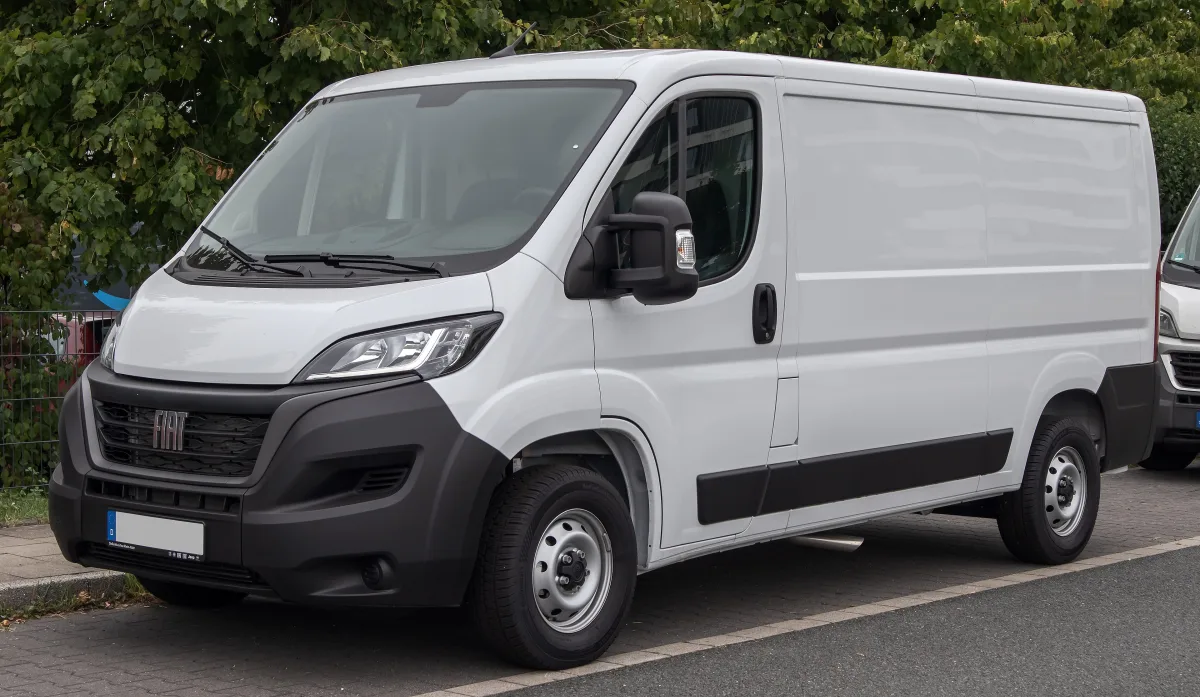
Fiat Ducato: II and III generations, engines and body versions
The Fiat Ducato is a large van that's often chosen in Lithuania for hauling cargo, and across Europe, it serves as the base for a significant number of campervans. We'll look at how the II and III generations differ, which engines are most commonly found, what body versions are available, and what to check before buying a used Ducato.






Ducato in brief
The Ducato has been produced since 1981 alongside the Peugeot and Citroën: the II and III generations have nearly identical twins in the Peugeot Boxer and Citroën Jumper. This means there's a wide selection of spare parts, and many mechanics are familiar with these vans.
The Ducato is front-wheel drive, so the cargo area floor is low, making loading easy. It comes as a cargo van, passenger van (Combinato, Panorama), cab chassis, double cab, or flatbed for camper conversions; usually, you can choose from several lengths and roof heights. The reinforced Maxi versions are designed for heavier loads.
II and III generation — what's the difference
The II generation (1994–2006, facelifted in 2002) is now quite rare and often heavily worn. It's worth considering only as a cheap workhorse or camper base, carefully assessing corrosion.
The III generation (from 2006) became larger, more comfortable, and significantly more modern. In 2014, it was facelifted: the front, interior, and engines were updated. In the used market, these are the most popular Ducatos, offering a wide range and varying prices.
2020–2021 updates brought a 9-speed automatic gearbox, new 2.2 Multijet engines, a digital instrument cluster, and more driver-assistance systems, with the model receiving another update later on. During this period, an electric e-Ducato was also introduced.
Engines and gearboxes
Early third-generation models featured 2.2 Multijet (around 100 hp), 2.3 Multijet (around 120–150 hp), and 3.0 Multijet (around 160–180 hp) diesel engines. Post-2014 refresh, the 2.3 Multijet became more common, with occasional 2.0 Multijet and 3.0 Natural Power CNG versions.
Since 2021, the lineup has been anchored by 2.2 Multijet engines (around 120–180 hp). Gearboxes are mostly manual; for a long time, a robotized Comfort-Matic was offered, later replaced by a genuine 9-speed automatic.
When choosing an engine, consider your payload: for frequent heavy loads or towing, opt for the more powerful 2.3 or 3.0 Multijet versions.
What to check when buying a used Ducato
Commercial Ducatos often have high mileage, so inspect the service history and records. Check the clutch and dual-mass flywheel: vibrations under load or juddering at idle often indicate an expensive repair. The gearbox should not grind while driving.
The Robotized Comfort-Matic gearbox should shift smoothly without harsh jolts and shouldn't grind or show errors on the instrument cluster; grinding noises or errors may indicate a need for clutch or gearbox repair. Check diesel engines for turbocharger issues, the EGR valve, and the particulate filter.
Inspect the underside of the body, sills, door bottoms, and wheel arches for rust, especially on older vehicles. Since the Ducato is front-wheel drive and often overloaded, check the front suspension, brakes, and tyre wear.


Body styles
Trim names vary by market and year, so we list the most commonly encountered body styles.
Furgonas
Second and third generationsThe most popular cargo version with a large load compartment.
- Various lengths and roof heights
- Often features one or two sliding side doors
- Low load compartment floor
Maxi
Third generationReinforced version for heavier loads.
- Higher gross vehicle weight rating
- Reinforced chassis and larger wheels
- Often the longest body variants
Combinato / Panorama
Third generationPassenger versions include the simpler Combinato and the better-equipped Panorama.
- Mostly seats up to 9
- Side windows in the passenger compartment
- Basic (Combinato) or premium (Panorama) interior trim
Važiuoklė su kabina
Second and third generationsBase for flatbeds, box vans, refrigerated vans and other bodies
- Cab without a load compartment
- Rear designed for a flatbed
- Often with a flatbed platform or van body
Dviguba kabina
Third generationDouble-cab pickup — perfect for working with a crew
- Second row of seats
- Often with a flatbed or box van
- Ideal for construction and municipal companies
Comparison of third-generation versions
| Furgonas | Maxi furgonas | Važiuoklė su kabina | Combinato / Panorama | |
|---|---|---|---|---|
| Who it's for | For cargo and services | For heavier loads | Special body types | Passenger transport |
| Interior | Cab only | Cab only | Single or double cab | Up to 9 seats |
| Engine (most common) | 2.3 Multijet | 2.3 or 3.0 Multijet | 2.3 or 3.0 Multijet | 2.3 Multijet |
| Price in the used market (relatively) | € | €€ | €€ | €€ |
For most jobs, the best choice is the facelifted third-gen van with the 2.3 Multijet engine. The Maxi is worth considering if you often haul heavy loads, while the cab-only version is ideal when you need a special body type.
Pros
- Large cargo area and low loading height
- A wide range of body styles – from van to camper base
- There are plenty of spare parts available (shared with Peugeot Boxer and Citroën Jumper)
- The robust and well-known 2.3 Multijet engine
Cons
- Body corrosion in older vehicles
- The robotized Comfort-Matic gearbox can be finicky
- Commercial vehicles often have high mileage
Frequently asked questions
How does the Fiat Ducato differ from the Peugeot Boxer and Citroën Jumper?
The second and third-generation Ducato, Boxer, and Jumper are built together and are essentially the same vehicle with different fronts and interiors. The biggest difference is the engines: Ducato uses Fiat Multijet diesels, while Boxer and Jumper usually have HDi or BlueHDi.
Is it worth buying a Ducato with the Comfort-Matic gearbox?
Only if it operates smoothly and has a service history. Comfort-Matic is a robotized manual gearbox, so it shifts slower than a true automatic. If you want an automatic gearbox, look for a newer (around 2020 onwards) Ducato with a 9-speed automatic.
Which Ducato is suitable for a camper?
For campers, the third-generation Ducato with a more powerful 2.3 or 3.0 Multijet engine is often chosen, as the vehicle can be heavy. When buying a pre-converted camper, check not just the mechanics but also the condition of the base vehicle and any signs of water damage.
Updated 2026-10-09 · Trim levels and equipment vary by market and model year — check the equipment of the specific car. · Translated automatically


