 English
 Lietuvių
 Latviešu
 Eesti
 Polski
 Русский
 Українська
 Deutsch
 Nederlands
 Čeština
 Slovenčina
 Svenska
 Norsk
 Dansk
 Suomi


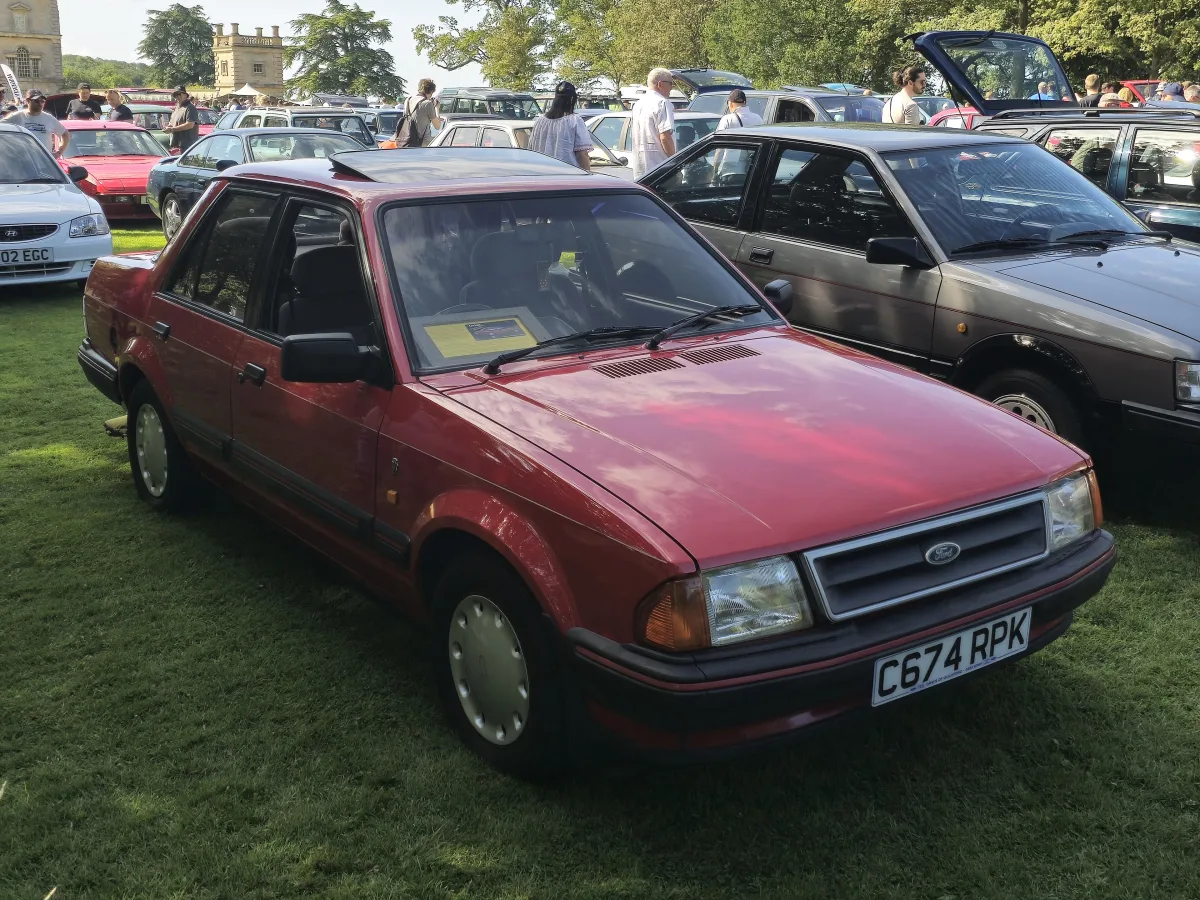
Ford Orion: generations, engines and trims
The Ford Orion was the saloon version of the Ford Escort, produced between 1983 and 1993. We look at three generations, engines, well-known trims and what to check when buying this older compact saloon.






Orion in brief
The Orion was the saloon version of the Ford Escort – essentially the same car with a classic three-box body and separate boot. It was aimed at those who needed a more practical Escort with a larger boot.
The Orion was produced in three generations: I (1983–1986), II (1986–1990) and III (1990–1993). Technically, they largely match the corresponding Escort generations, but with a different body.
Which generation to choose
The first generation has a simpler, older look, while the second generation features improved aerodynamics and a more modern interior. If you're after a collectible or basic car, both are fine, although they're becoming harder to find.
The third generation (1990–1993) comes with a more modern body and wider equipment. It's often considered the most practical for daily use, provided the car is in good condition.
Engines and gearboxes
The Orion came with petrol engines ranging from 1.3 to 1.8 litres and diesel variants. The 1.4 and 1.6-litre petrol engines are most common; more powerful versions featured fuel injection.
Gearboxes were either four- or five-speed manual, with some versions offering an automatic. The manual is simple and robust, and the car generally doesn't demand complex maintenance.
What to check when buying a used Orion
First, inspect the body for corrosion: check the sills, wheel arches, door bottoms, and boot floor. This is a primary concern for cars of this age.
Check the engine condition, cooling system, distribution system, and fuel system. In older cars with carburetors, proper tuning is crucial, while those with injectors need functioning sensors.
Pay attention to the interior condition, as plastics age over time and interior parts can be hard to find. Ensure the car has all its documents in order.


Trim levels
Names and equipment vary by market and year; we list the most commonly found trims in Europe.
L
All generationsThe base, no-frills trim.
- Basic interior trim
- Often comes with a smaller engine
- Often features steel wheels
GL
All generationsThe popular mid-range trim.
- Often comes with a better interior
- Often includes more comfort features
- Often has a more powerful engine
Ghia
All generationsThe top trim with a more luxurious interior.
- Often — premium interior
- Often — electric windows
- Often — lightweight alloy wheels
i
Later generationsVersion with a turbocharged engine.
- Often — 1.6-litre turbocharged engine
- Often — more dynamic driving
- Often — more comprehensive equipment
Trim comparison
| L | GL | Ghia | i | |
|---|---|---|---|---|
| Who it suits | For everyday use | For daily comfort | For maximum comfort | For more dynamic driving |
| Interior | Basic | More Comfortable | Luxurious | Depends on the trim |
| Engine | Smaller | Mid-range | Mid-range or more powerful | Fuel-efficient |
| Price in the used market (relatively) | € | € | €€ | €€ |
Most buyers will opt for the GL or Ghia, which offer more comfort. The key is to find one with an unrusted body and well-maintained mechanics.
Pros
- Simple and reliable construction
- Practical sedan body with a large boot
- Low maintenance
- Some parts are shared with the Escort
Cons
- Rust and old age
- Basic safety levels by today's standards
- Good-condition examples are rare
Frequently asked questions
How does the Orion differ from the Escort?
The Orion is the sedan version of the Escort with a separate boot, while the Escort is usually a hatchback or estate. The mechanics are essentially the same.
Is the Orion economical?
Yes, with smaller engines, and the diesel versions are even more so. However, the exact fuel consumption depends on the engine and condition.
Is the Orion suitable for daily use?
A good-condition example can work, but maintaining an older car requires more attention, and the safety features are basic.
Updated 2026-10-19 · Trim levels and equipment vary by market and model year — check the equipment of the specific car. · Translated automatically


