 English
 Lietuvių
 Latviešu
 Eesti
 Polski
 Русский
 Українська
 Deutsch
 Nederlands
 Čeština
 Slovenčina
 Svenska
 Norsk
 Dansk
 Suomi


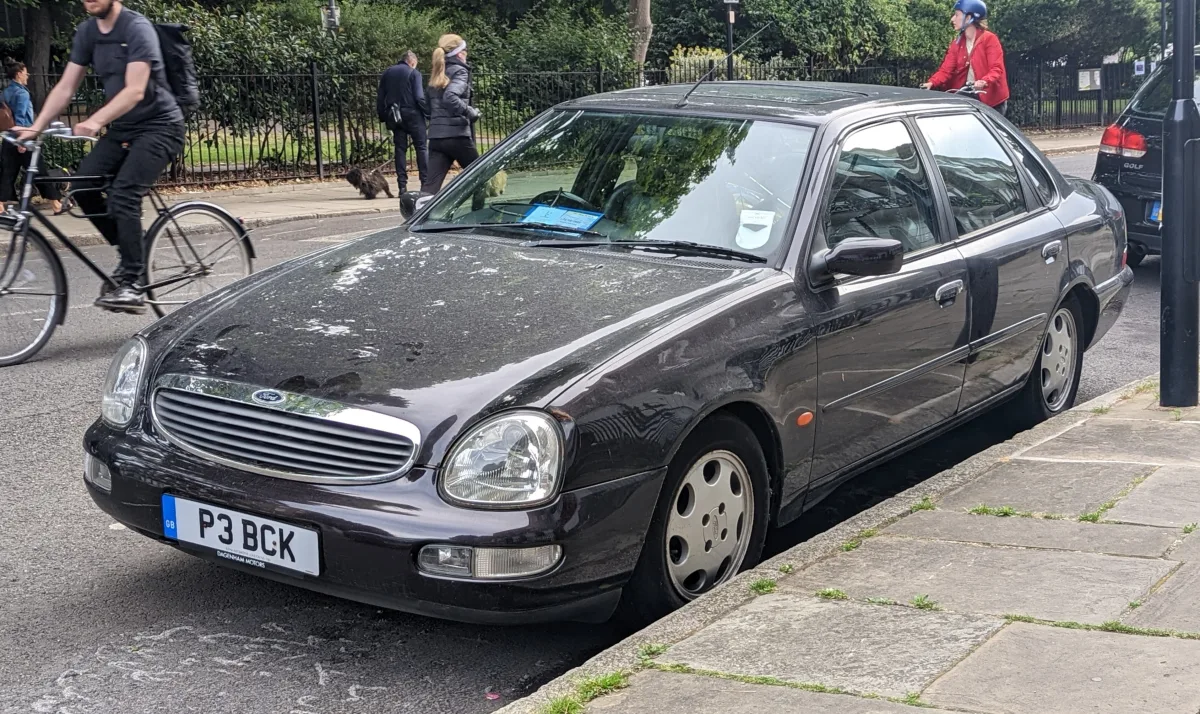
Ford Scorpio: executive sedan, engines and trims
Ford Scorpio (1985–1998) — a large rear-wheel-drive executive Ford, produced in two generations. We look at the engines, trims, and what to check when buying this older car.






Scorpio in brief
The Ford Scorpio replaced the Granada and was Ford's executive flagship. It offered plenty of interior space, generous equipment, and comfortable driving, with the first generation winning European Car of the Year in 1986.
The Scorpio was available as a hatchback, sedan, and estate (Turnier). Today, it's an old car, so condition is key, and good examples are few and far between.
Which one to choose
The first generation (1985–1994) features a classic design, simpler equipment, and a wide range of engines. Its offerings have become quite limited.
The second generation (1994–1998) received a refreshed design with distinctive headlights, which are divisive. It offers more modern equipment and refined engines, making it a better choice for daily use.
Engines and transmissions
Petrol engines include the 2.0 (around 115–136 hp), 2.3 16V, and V6: 2.8 and 2.9 (around 150 hp), with sportier versions getting the 2.9 24V (around 200 hp). V6 engines are praised for their sound and pull, but they drink more fuel.
The 2.5 turbodiesel is more economical but noisier and less dynamic.
Transmission options are manual or automatic. It's rear-wheel drive, with some V6 versions offering four-wheel drive.
What to check when buying a used Scorpio
Check the body for corrosion: look at the sills, wheel arches, door sills, and floor. Test the electrical equipment — windows, central locking, climate control, and lighting.
Inspect the engine, transmission, clutch, brakes, and suspension. Heavy vehicles' suspension bushes and joints wear out faster.
Finding spare parts, especially for the interior and electronics, can take time, so choose the best-maintained example.


Trim levels
Names and equipment vary by market and year; we list the most commonly found names in Europe.
GL
1985–1998Base trim with good-quality equipment.
- Often — power steering
- Often — electric windows
- Often — central locking
Ghia
1985–1998Higher-comfort version.
- Often — air conditioning
- Often — leather or part-leather upholstery
- Often — alloy wheels
Ultima
part of the production runThe top-of-the-range version with plenty of kit.
- Often — climate control
- Often — leather upholstery
- Often — extra comfort features
Trim comparison
| GL | Ghia | Ultima | |
|---|---|---|---|
| Who it's for | Daily driving | Comfort | Maximum comfort |
| Wheels (most often) | 15 col. | 15–16 col. | 16 col. |
| Interior | More basic | More comfortable | Most luxurious |
| Engine | 2.0, 2.5 TD | 2.0, 2.3, V6 | V6 |
| Price in the used market (relatively) | € | € | €€ |
The price of this older model largely depends on its condition. Most buyers will be happy with a well-maintained Ghia with a 2.0 or 2.3 engine, while the V6 is for enthusiasts.
Pros
- Spacious, comfortable interior
- Smooth driving and rear-wheel drive
- Generous equipment for the time
- Low price in the used market
Cons
- Old car, rust, and electrical issues
- V6 engines have high fuel consumption
- Parts can be hard to find
Frequently asked questions
Is the Ford Scorpio reliable?
It all depends on the service history. A well-maintained Scorpio can serve you well, but expect corrosion and electrical issues.
Which Scorpio generation is better?
The second generation (1994–1998) has more modern equipment, but the overall condition of the specific car is key.
Does the Scorpio have four-wheel drive?
Some V6 versions came with four-wheel drive, but these cars are few and far between. Check the specific car’s documents.
Updated 2026-10-19 · Trim levels and equipment vary by market and model year — check the equipment of the specific car. · Translated automatically


