 English
 Lietuvių
 Latviešu
 Eesti
 Polski
 Русский
 Українська
 Deutsch
 Nederlands
 Čeština
 Slovenčina
 Svenska
 Norsk
 Dansk
 Suomi


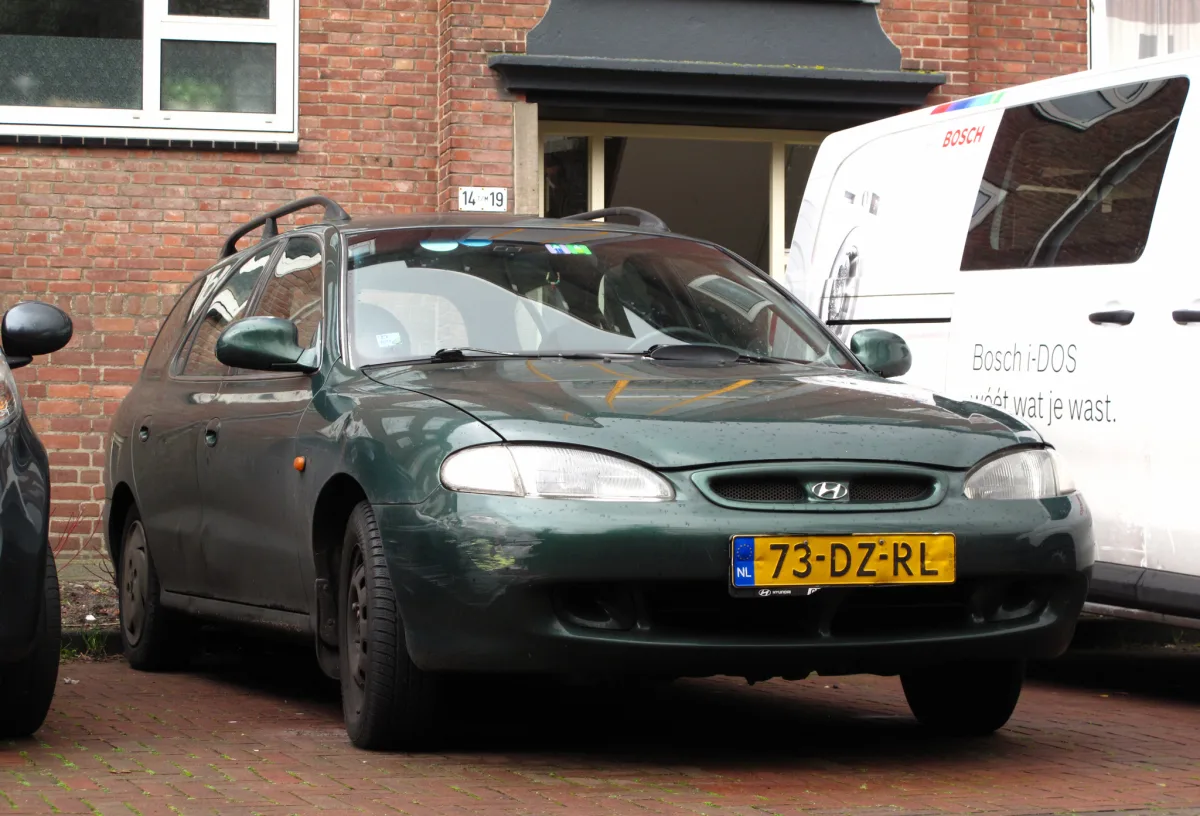
Hyundai Lantra: generations, engines and what to know before buying
Hyundai Lantra — the compact class sedan and estate sold in Europe from 1990–2000, one of the first widely known Hyundai models in our region. In this article, we review the generations, engines, and what's important to check when buying a used Lantra.






Lantra in brief
The Lantra was sold in Europe from 1990–2000 (in Korea and some other markets, this model was called the Elantra). It's a simple, affordable compact car that buyers chose for its price and fairly generous standard equipment.
Bodies — sedan and estate (Wagon). Today, the Lantra is rarely seen, so the buying decision is dictated by the condition of the specific car, not market supply.
Generations — what's the difference
The first generation (J1, 1990–1995) has a simpler, boxier design and older technology. The second generation (J2, 1995–2000) is smoother, more modern, with improved safety features, and the estate arrived with this generation.
When buying, it's worth choosing the newer example: the J2 is usually better built and offers more comfort, but every car is very old now, so condition is more important than generation.
Engines and gearboxes
Most commonly found are petrol 1.5, 1.6 and 1.8-litre engines, with power ranging roughly from 90 to 130hp.
The gearbox is a 5-speed manual or 4-speed automatic. The manual is simpler and more reliable, while the automatic is worth testing thoroughly: shifting should be smooth.
What to check when buying a used Lantra
First things first — the body: check for rust, the floor, wheel arches and the rear, as corrosion is the main issue with cars of this era. Ask about the history of the timing belt replacement.
Check the running gear, brakes, suspension, electrical equipment and air conditioning. Some parts might take longer to find, so it's worth checking their availability in advance.


Trim levels
Names and equipment vary by market and year; we list the most commonly found trims in Europe.
Lantra (J1) sedanas
1990–1995First-generation sedan with a straightforward design.
- Petrol engine
- Manual or automatic gearbox
- Basic interior trim
Lantra (J2) sedanas
1995–2000Second-generation sedan with a more modern design.
- 1.6 or 1.8-litre petrol engine
- More modern interior
- Rounder, more modern design
Lantra (J2) Wagon
1996–2000Versatile with a larger boot.
- Larger boot
- Ideal for families
- Same engine choices
Lantra versions compared
| J1 sedanas | J2 sedanas | J2 Wagon | |
|---|---|---|---|
| Who it's for | Budget-friendly car | Everyday use | For families and travellers |
| Body style | Saloon | Saloon | Estate |
| Engine | Petrol 1.5–1.8 l | Petrol 1.6–1.8 l | Petrol 1.6–1.8 l |
| Price in the used market (relatively) | € | € | € |
For most buyers, the best choice is the J2 sedan or estate if you can find a good example. The J1 is for those looking for the cheapest option.
Pros
- Simple construction and straightforward maintenance
- A modest car
- Spacious boot and interior (especially the Wagon)
- Quite reliable mechanics
Cons
- Rust and age are the main issues
- Limited parts availability for some engines
- Older safety equipment
Frequently asked questions
Are Lantra and Elantra the same?
Yes. In Korea and some other markets, the model is called Elantra, while in Europe it's known as Lantra.
Which Lantra generation is better?
In many cases, the second (J2), as it's more modern and comes with more features. However, the condition of the specific car is most important.
Is the Lantra a reliable car?
It's usually a straightforward and fairly long-lasting car, but these days the vehicles are quite old, so a lot depends on the previous maintenance and rust condition.
Updated 2026-10-19 · Trim levels and equipment vary by market and model year — check the equipment of the specific car. · Translated automatically


