 English
 Lietuvių
 Latviešu
 Eesti
 Polski
 Русский
 Українська
 Deutsch
 Nederlands
 Čeština
 Slovenčina
 Svenska
 Norsk
 Dansk
 Suomi


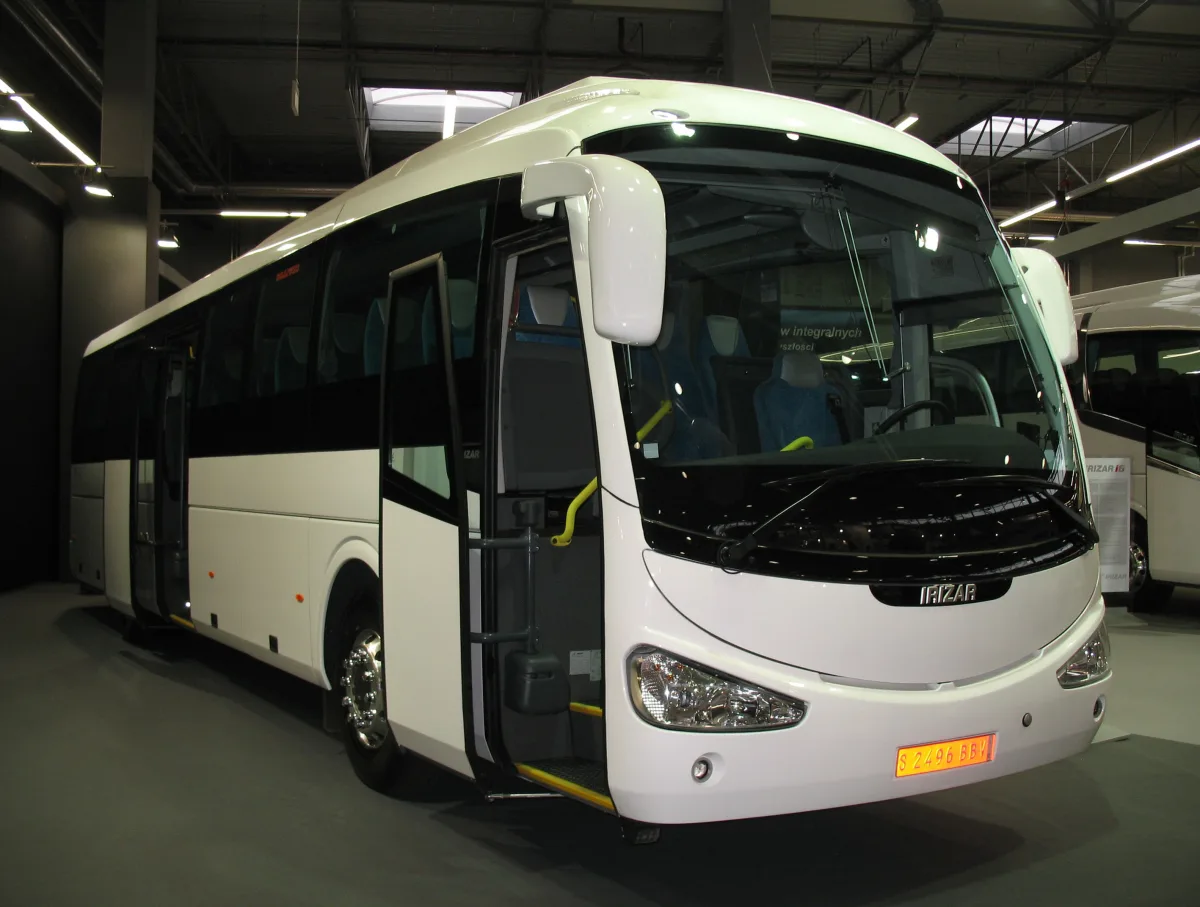
Irizar i4: city and intercity bus, engines and versions
Irizar i4 — the city and intercity bus chassis from the Spanish manufacturer, introduced in 2011. We look at its purpose, chassis options and what to check when buying a used one.






Irizar i4 in brief
The Irizar i4 is designed for city, intercity and school runs. Unlike the tourist-focused i6, it features a more functional interior with more standing room, wider doors and easier boarding.
The chassis is built by Irizar, while the drivetrain and transmission are usually from Scania, Volvo or MAN. Therefore, each example can have different mechanics.
Versions and purpose
The i4 is produced in various lengths and seating configurations: from shorter city buses to longer intercity models. They differ in floor height, number of doors and luggage compartment capacity.
Later, hybrid and other alternative transmission versions appeared, but in the Lithuanian used market, conventional diesel examples are most common.
Engines and gearboxes
Engines depend on the chassis: Scania, Volvo or MAN six-cylinder diesels with Euro 5 or Euro 6 standards.
Gearboxes are manual, automated or automatic. On city routes, where frequent stops are made, an automatic box reduces driver fatigue but requires more maintenance time.
What to check when buying a used Irizar i4
Check the vehicle and transmission as thoroughly as you would any other bus of this make: the engine, gearbox, suspension, and brakes. Frequent stops quickly wear out the doors and braking system.
Inside, look for signs of corrosion around the door sills, the roof and window seals, the floor covering, and the seats. Used public transport buses often show signs of interior wear.


Versions and trims
Names and equipment vary by market and year of production; we list the versions most commonly found in Europe.
i4 priemiesčio
from 2011More space for standing passengers, wider doors.
- Often — two or three doors
- More standing room
- Simpler interior
i4 tarpmiesčio
from 2011More comfort for longer journeys.
- Often — a larger luggage compartment
- Often — more comfortable seats
- Often — air conditioning
i4 mokyklinis
from 2011Suitable for school runs.
- Often — child safety features
- Often — special seats
- Often — extra exits
i4 hibridinis
Later yearsIdeal for city and suburban routes with hybrid transmission.
- Hybrid transmission
- Lower fuel consumption
- Special servicing
i4 versions comparison
| Priemiesčio | Tarpmiesčio | Mokyklinis | |
|---|---|---|---|
| Who it's for | For suburban routes | For longer journeys | For school runs and kids' transport |
| Interior style | More standing room | More comfort | Child-friendly |
| Engine | Diesel | Diesel | Diesel |
| Price in the used market (relatively) | € | €€ | € |
The intercity version is suited to longer journeys, while the suburban version is better for frequent stopping. The school version is worth considering if the bus will be used to transport children.
Pros
- A practical and functional interior
- A wide range of chassis options
- Easy access for getting in and out
- Mechanical parts are easily accessible according to the vehicle manufacturer
Cons
- Heavy use means more wear and tear
- Body parts are specific
- Less comfort than in tourist coaches
Frequently asked questions
What's the difference between i4 and i6?
The i4 is designed for suburban and intercity routes, while the i6 is for touring trips. The i4 has a more functional interior, while the i6 offers greater comfort.
Is the i4 suitable for school transport?
Yes, many i4s are used to transport children. It's important that the bus meets safety and seatbelt requirements.
What engine does the i4 have?
The engine depends on the chassis: usually a Scania, Volvo or MAN diesel. You'll find the specific information in the bus documents.
Updated 2026-10-21 · Trim levels and equipment vary by market and model year — check the equipment of the specific car. · Translated automatically


