 English
 Lietuvių
 Latviešu
 Eesti
 Polski
 Русский
 Українська
 Deutsch
 Nederlands
 Čeština
 Slovenčina
 Svenska
 Norsk
 Dansk
 Suomi


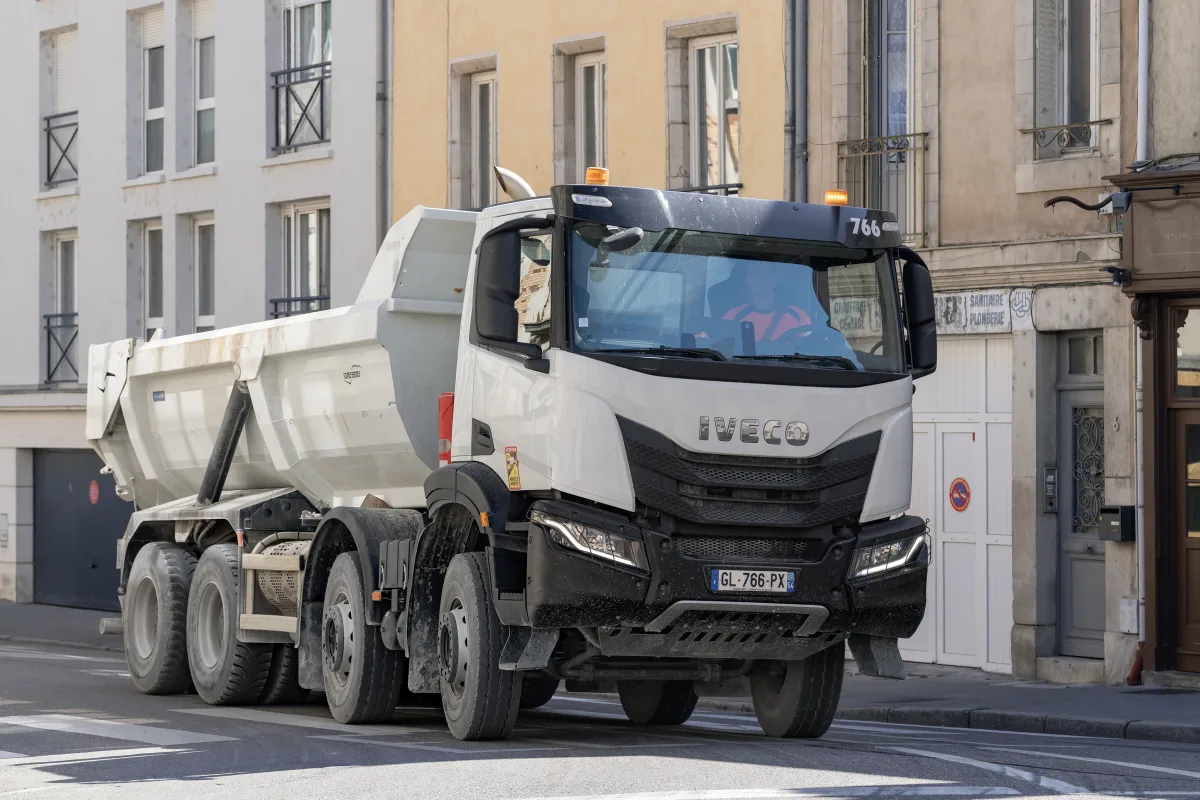
Iveco T-Way: heavy-duty construction and off-road truck and versions
Iveco T-Way — a heavy-duty truck designed for quarries, construction, and tough off-road conditions, introduced in 2021. We look at axle configurations, engines, and what to check when buying a used T-Way.






T-Way in brief
Iveco T-Way is a series of heavy-duty trucks designed for quarries, construction, mining, and tough off-road conditions. It was introduced in 2021 and is heavier and more off-road capable than the X-Way, which is designed for construction and roads.
The T-Way is most commonly found as a dump truck, concrete mixer, crane truck, or special-purpose vehicle. It operates in the harshest conditions, so the condition of used examples can vary greatly.
Versions — what's the difference
The T-Way is offered with 4x4, 6x4, 6x6, 8x4, and 8x8 axle configurations, which can be chosen based on working conditions. All-wheel-drive versions are designed for tough off-road use, while 6x4 and 8x4 are for construction with heavy loads.
Cabs come in basic and sleeper versions, and the truck is reinforced with a higher ground clearance. Some versions have front bumper reinforcements and guards.
Engines and transmissions
Iveco Cursor family diesel engines (around 9, 11, and 13 litres) with various power outputs are fitted. The number in the name, for example, T-Way 510, indicates the approximate horsepower.
Transmissions are either automated Hi-Tronix or manual. For heavy off-road work, a reliable clutch and transmission cooling are crucial, so check their condition.
What to check when buying a used T-Way
The most important thing is the condition of the frame, axles, and suspension: working in quarries puts a lot of strain on the frame and axles. Check for signs of corrosion, cracks, and deformations, as well as the operation of all-wheel drive and locking systems.
In self-loaders, check the hydraulic lifting mechanism, cylinders, and body condition. Verify the hours and working time according to the tachograph data and service records.
In Euro 6 engines, check the AdBlue system and particulate filter, and for all vehicles, check the clutch and brakes. Find out how the truck was used, as harsh conditions quickly wear down the vehicle.


Trims and versions
Trims and versions vary by market and year; below are the most commonly encountered versions.
T-Way 6x4
T-WayThe most common truck version for construction and quarry work.
- Three axles, rear-wheel drive
- Often comes with a self-loader body
- Suitable for heavy loads
T-Way 8x4
T-WayFour-axle version for large loads.
- Higher permissible weight
- Often features two steerable front axles
- Suitable for heavy construction work
T-Way 6x6 / 8x8
T-WayAll-wheel drive complicates off-road driving.
- All-wheel drive
- High ground clearance
- Ideal for off-road and heavy-duty use
T-Way 4x4
T-WayLighter all-wheel-drive version for special tasks
- Often — special-purpose bodies
- High clearance
- Suitable for municipal and forestry tasks
Model comparison
| T-Way 6x4 | T-Way 8x4 | T-Way 8x8 | |
|---|---|---|---|
| Who it's for | For construction and earth-moving | For heavy construction loads | Tough off-road capability |
| Axle configuration | 6x4 | 8x4 | 8x8 |
| What to check in particular | The frame and hydraulics | The axles and suspension | The all-wheel-drive system |
| Usage intensity | High | Very high | Very high |
| Price in the used market (relatively) | €€€ | €€€ | €€€ |
For most construction companies, the X-Way is sufficient, but the T-Way is worth choosing when you really need the toughest conditions and all-wheel drive. Before buying, thoroughly check the frame and axles.
Pros
- Designed for the toughest off-road work
- Robust reinforced chassis
- Wide range of axle configurations
- Modern cab and auxiliary systems
Cons
- High price of a used truck
- Heavy use quickly wears out a vehicle
- Specialized maintenance and parts
Frequently asked questions
How does the T-Way differ from the X-Way?
The T-Way is designed for the toughest jobs in quarries and off-road, while the X-Way is for construction, primarily working on roads and at construction sites.
Can the T-Way be used on roads?
Yes, the T-Way can be registered and used on roads, but its primary purpose is heavy-duty off-road work.
What license is required?
A C category license is needed for driving heavy trucks, and a CE for towing. Check the exact category based on the permitted weight.
Updated 2026-10-21 · Trim levels and equipment vary by market and model year — check the equipment of the specific car. · Translated automatically


