 English
 Lietuvių
 Latviešu
 Eesti
 Polski
 Русский
 Українська
 Deutsch
 Nederlands
 Čeština
 Slovenčina
 Svenska
 Norsk
 Dansk
 Suomi


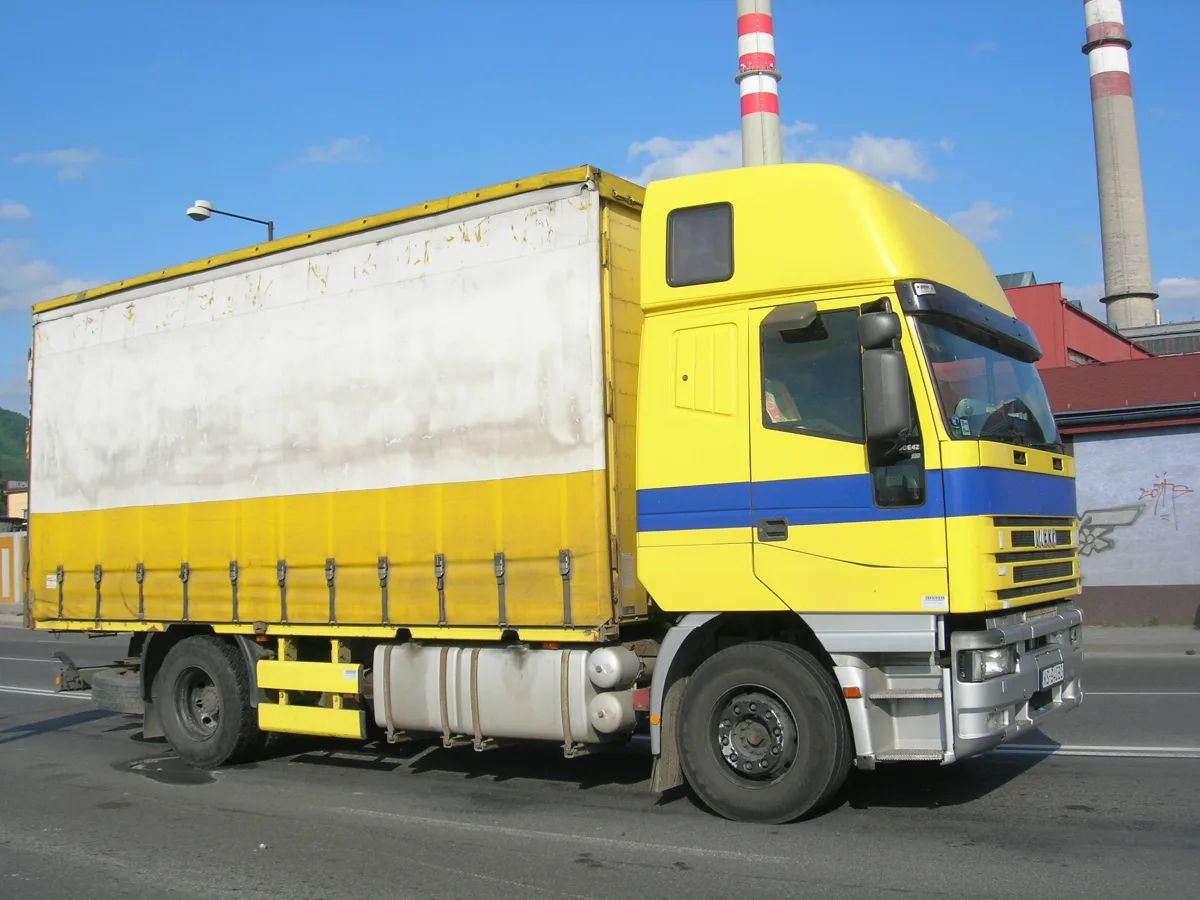
Iveco EuroStar: cabs, engines and what to check
Iveco EuroStar — a heavy-duty truck for long-haul journeys, produced from 1993 to 2002 and a close relative of the EuroTech and EuroTrakker. We look at what sets it apart, which engines you'll find, and what to check when buying a used EuroStar.






EuroStar in brief
The EuroStar was Iveco's top-tier long-haul truck with a spacious, high cab. While it's mostly a 4x2 truck, there were also 6x2 versions and cargo chassis, with flatbeds, drop-side bodies, and tankers mounted on them.
As with other Iveco trucks, the numbers in the name indicate the total weight and power: for example, 190E42 is roughly a 19-tonne truck with around 420 hp. The coding helps quickly identify the variant.
Series — what's different
Early EuroStars are more basic, with older engine designs, and a spartan interior and cab equipment. These trucks are the cheapest, but often have high mileage.
Later EuroStars (around 1998–2002) feature newer 'Cursor' engines, better power-to-economy ratios, and more modern equipment. These are the models most sought after in the used market.
In 2002, the EuroStar was replaced by the Iveco Stralis, so all EuroStars are now old trucks and are usually bought as cheap workhorses.
Engines and gearboxes
EuroStar engines — six-cylinder turbodiesels. Early models often feature around 9.5-litre Iveco units, while later ones come with the 'Cursor 10' (around 10.3 litres) and 'Cursor 13' (around 12.9 litres). Power ranges roughly from 350 to over 500 HP.
Gearboxes are usually manual, often with a splitter. Some models might have an automated gearbox, so it's crucial to test its operation while driving.
Emissions standards typically range from Euro 1 to Euro 3, so before buying, ensure the vehicle suits your activities and routes.
What to check when buying a used EuroStar
Inspect the cab and chassis — older trucks often suffer from corrosion around the wheel arches, cab corners, and chassis crossmembers. The high cab should be securely mounted, and the cab lift system should operate smoothly.
Start the engine cold and assess the exhaust smoke, noises, and any oil or coolant leaks. Check the turbocharger, air system, and brakes — repairs can be expensive.
Verify the mileage through service history and tachograph data. Check the Euro class and gross weight in the documents, and assess the trailer coupling for wear signs.


Cab and trim levels
Names and equipment vary by year; we list the most commonly encountered EuroStar trims.
Ankstyvoji versija
First year of productionA more basic version with an older-generation engine.
- Spacious interior trim
- Often — Euro 1
- The most budget-friendly option
Tolimųjų reisų vilkikas
Entire production runSpacious cab with sleeping area.
- Single or double beds
- More cabin space
- Often — autonomous heater
EuroStar „Cursor“
Later productionWith newer Cursor engines.
- More power and efficiency
- Often — Euro 2 or Euro 3
- Popular among used cars
EuroStar 6x2
Frequent heavy-duty cargo versionExtra axle for heavier loads
- More cargo space
- Often — with liftable axle
- More expensive maintenance than 4x2
Krovininė važiuoklė
All versionsWith a pickup, tipper or tank body.
- Simple body construction
- The body's condition determines the value
- Often — a tipper body
EuroStar versions compared
| Ankstyvoji versija | Tolimųjų reisų vilkikas | „Cursor“ | 6x2 | |
|---|---|---|---|---|
| Who it suits | For less frequent trips | For long-distance trips | For more economical work | For heavier loads |
| Cab | More basic | Spacious | Spacious | Spacious |
| Engine (approx.) | Less powerful | Average power | Greater power | High power |
| Price in the used market (relatively) | € | €€ | €€ | €€ |
For long-distance trips, the later EuroStar with the 'Cursor' engine and high cab is often the best choice. If price is the priority, a simpler version will do, but then check for corrosion and engine condition.
Pros
- Spacious, comfortable cab for long-distance trips
- Powerful 'Cursor' engines in later versions
- Wide range of body styles and configurations
- Supply of parts and used assemblies is decent
Cons
- Older vehicles often suffer from corrosion and wear
- Euro 1–3 standards restrict operation in certain zones
- Less economical than newer tractors
Frequently asked questions
What do the numbers in the EuroStar name mean?
The first digits indicate the approximate total weight, while the last two represent the power divided by ten. For example, 190E42 means roughly a 19-tonne truck with around 420 horsepower.
What category of license is needed to drive the EuroStar?
A truck with a trailer requires a CE category license, and for operating in the freight transport business, you'll also need professional qualifications and a valid tachograph card. The exact category depends on the specific setup.
Is it worth choosing the EuroStar today?
If you need an affordable truck and can check its condition, the EuroStar could be a smart choice. Before buying, assess the corrosion, engine condition, and whether its Euro class suits your intended use.
Updated 2026-10-21 · Trim levels and equipment vary by market and model year — check the equipment of the specific car. · Translated automatically


