 English
 Lietuvių
 Latviešu
 Eesti
 Polski
 Русский
 Українська
 Deutsch
 Nederlands
 Čeština
 Slovenčina
 Svenska
 Norsk
 Dansk
 Suomi


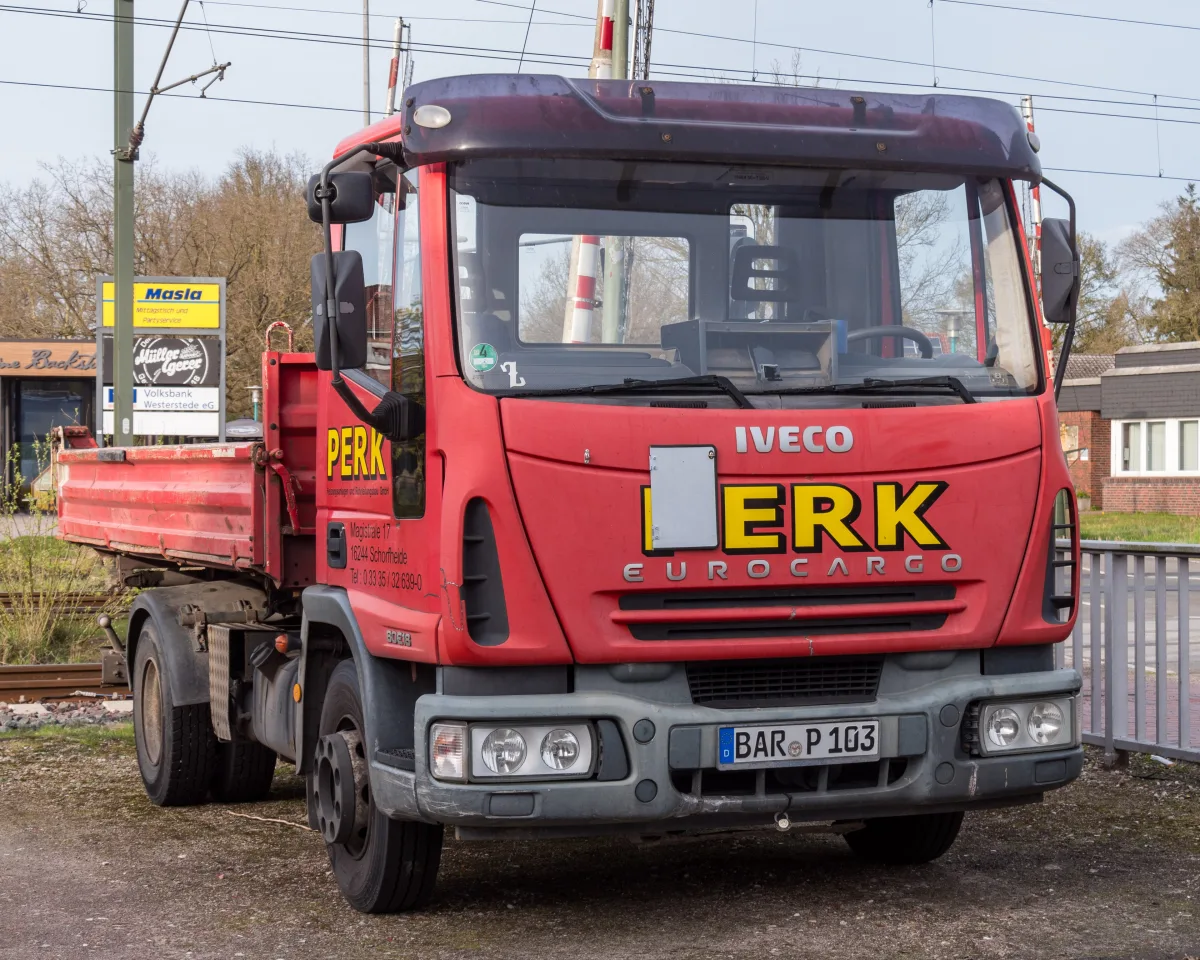
Iveco Eurocargo: a medium-duty truck, generations and what to check when buying used
Iveco Eurocargo (from 1991) — Iveco's medium-duty truck for distribution and general transport. We look at the generations, engines, and what to check when buying used.






Eurocargo in brief
Eurocargo — Iveco's medium-duty truck, typically in the 6–19 tonne gross vehicle weight class. It's used for distribution, municipal work, fire services, and general transport.
The Eurocargo debuted in 1991 and became one of Europe's most popular medium-duty trucks. A designation like ML80E18 indicates roughly an 8-tonne gross vehicle weight and 180hp power.
Generations — what sets them apart
Earlier generations (1991–2008) — simpler tech and older engines. These trucks are affordable but often worn out, with older emissions standards.
Later generations feature newer engines, safety systems, and cabs. The latest generation (from 2015) meets Euro VI standards and offers more modern equipment and a more comfortable cab.
Engines and transmissions
The Eurocargo uses Iveco Tector series diesel engines — four and six-cylinder, from around 4 to 7 litres in capacity. Euro VI versions have SCR systems and particulate filters.
The transmission is manual or automated. Some models are available with a gas engine, and specialist bodies (e.g., fire trucks) come with four-wheel drive.
What to check when buying a used Eurocargo
Distribution trucks often drive in the city, so brakes, gearbox and suspension work harder. Check the brakes, gearbox, suspension components and tyres.
Inspect the frame and cab for corrosion, especially in older models. Check the body mounts, doors, tail lift or any additional equipment. Start the cold engine yourself to see if there's any smoke or leaks.
In Euro VI trucks, check the condition of the AdBlue and particulate filter. Verify the mileage data according to service records and tachograph entries.


Versions
Names and equipment vary by market and year; we list generally described versions, but check the exact specification in the documents of the specific truck.
Pirmoji karta
1991–2008Early Eurocargos with simpler technology.
- Basic electronics
- Often — high mileage and corrosion
- Lowest used price
Vėlesnės kartos
2008–2015Improved Eurocargos with Euro 4/5 engines.
- Newer engines and safety systems
- More comfortable cab
- Often — popular among hauliers
Eurocargo Euro VI
from 2015Modern Eurocargos come with the latest kit.
- Euro VI with AdBlue
- Often — additional systems
- Modern cab
Specializuotos versijos
various yearsTipper, crane, fire or gas version.
- Extra hydraulics or kit
- Special bodies
- Check the body condition
Generation comparison
| Pirmoji karta | Vėlesnės kartos | Euro VI | |
|---|---|---|---|
| Who it's for | Ideal for parcel delivery | For versatile transport | For modern distribution |
| Emissions standard | Older | Euro 4/5 | Euro VI |
| Comfort | Basic | Better | Modern cab |
| Price in the used market (relatively) | Budget | Mid-range | Premium |
Iveco Eurocargo — a versatile distribution truck. Choose examples with a tidy chassis and clear service history.
Pros
- Wide range of versions and body styles
- Simple and robust technology
- Extensive Iveco service network
- Affordable price in the used market
Cons
- Older generations suffer from corrosion and wear
- Euro VI systems can be expensive
- The cabin comfort is more basic than heavy-duty trucks
Frequently asked questions
What does Iveco Eurocargo ML80E18 mean?
The number 80 indicates an 8-tonne permitted weight, and 18 refers to 180hp power. Check the exact specifications in the documents.
Is the Eurocargo suitable for daily distribution?
Yes, one of its main purposes is urban and regional transport.
What age of Eurocargo should you choose?
That depends on your budget and needs. If environmental standards are important, go for Euro VI. If cost is the priority, consider older generations, but only with a clear service history.
Updated 2026-10-21 · Trim levels and equipment vary by market and model year — check the equipment of the specific car. · Translated automatically


