 English
 Lietuvių
 Latviešu
 Eesti
 Polski
 Русский
 Українська
 Deutsch
 Nederlands
 Čeština
 Slovenčina
 Svenska
 Norsk
 Dansk
 Suomi


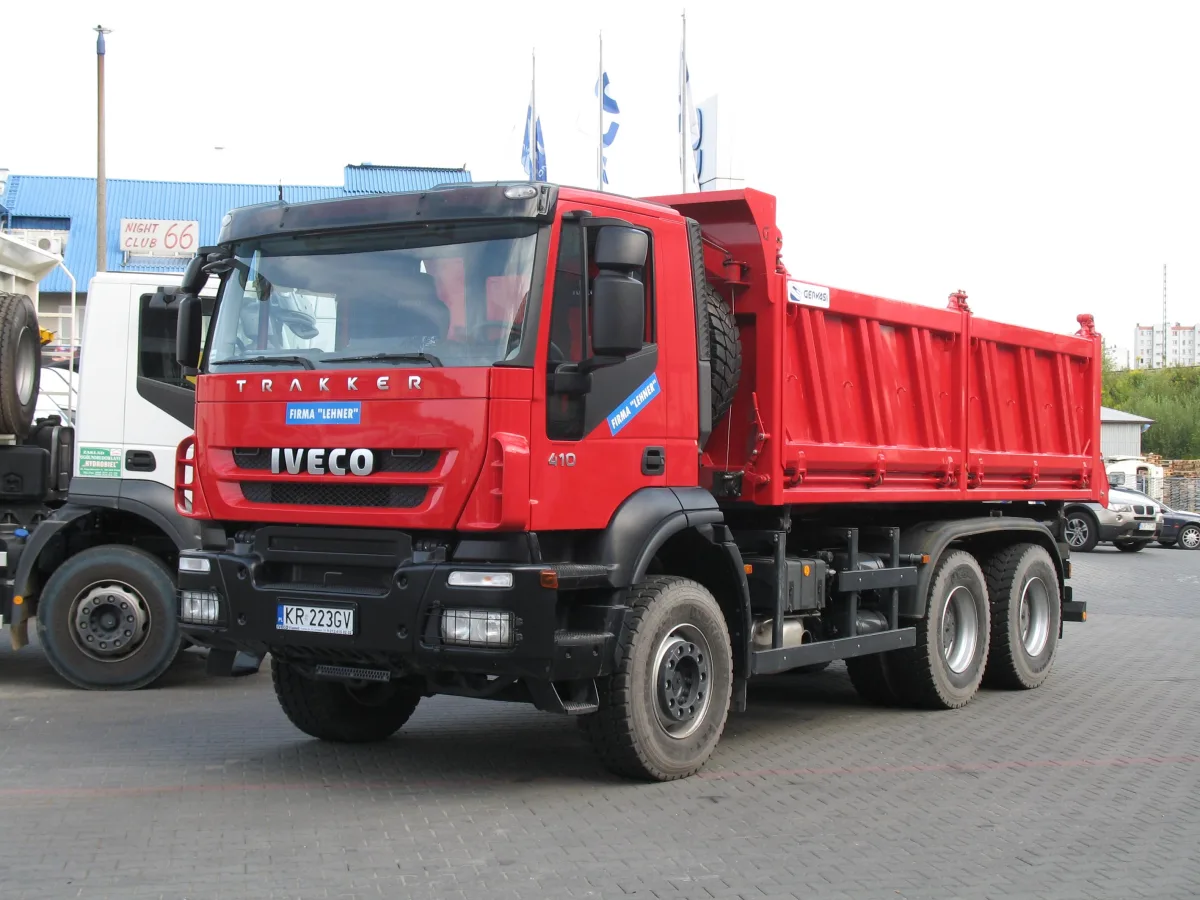
Iveco Trakker: construction truck, generations and what to check
Iveco Trakker — construction and off-road truck, produced 2004–2021. We look at versions, engines and what to check when buying a used Trakker.






Trakker in brief
Iveco Trakker — a series of heavy-duty trucks designed for construction, quarries and off-roading, produced 2004–2021. It was the construction and off-road counterpart to the Stralis tractor unit and used as a dump truck, concrete mixer, crane truck or special-purpose vehicle.
On the used market, you'll often find dump trucks and crane trucks. As these trucks work hard, their condition varies greatly depending on how intensively and in what conditions they've been used.
Versions — what's the difference
Trakker was offered with various axle configurations: 4x4, 6x4, 6x6, 8x4 and 8x8. Depending on working conditions, several modifications were offered: Hi-Land (mostly for roads and construction) and Hi-Track (heavier off-roading).
Later versions meet Euro 5 (EEV) and Euro 6 standards, have a more modern cab and assistance systems. In 2021, the Trakker was replaced by the T-Way.
Engines and gearboxes
Trakker engines are Iveco Cursor family diesels: Cursor 8, 10 and 13, with power ranging roughly from 330 to 500 hp. The number in the name (e.g., 410, 440, 500) indicates approximate power.
Gearboxes are manual or automated. For heavy off-road work, a reliable clutch and gearbox cooling are vital, so check their condition.
What to check when buying a used Trakker
The most important thing is the condition of the frame, axles, and suspension: working in quarries puts a lot of strain on the frame and axles. Check for signs of corrosion, cracks, and deformations, as well as the operation of all wheel drives and locking systems.
In self-loaders, check the hydraulic lifting mechanism, cylinders, and body condition, and in cranes, check the crane documents and periodic inspections. Verify the hours and working hours according to the tachograph data and service entries.
In Euro 5 and Euro 6 engines, check the AdBlue system and particulate filter, and for all, check the clutch and brakes. In the cab, check the electrical equipment and air conditioning.


Trim levels and versions
Trim levels and versions vary by market and year; below are the most commonly found versions.
Savivartis 6x4
All generationsThe most common version for construction and earthwork.
- Hydraulic self-loader body
- Three-axle chassis
- Robust chassis
Savivartis 8x4
All generationsFour-axle version designed for heavier loads.
- Higher permissible weight
- Often features two steerable front axles
- Suitable for heavy construction loads
Su kranu
All generationsTruck with hydraulic manipulator.
- Hydraulic crane
- Often — side platform
- Check the crane's service history
Visų ratų pavara (6x6, 8x8)
All generationsTough off-road.
- All-wheel drive
- High ground clearance
- Ideal for quarries and specialist tasks
Betono maišyklė
All generationsWith concrete mixing drum for construction sites.
- Special concrete drum
- Hydraulic transmission
- Check the drum's condition
Version comparison
| Savivartis 6x4 | Savivartis 8x4 | Visų ratų pavara | |
|---|---|---|---|
| Who it's for | Earth and gravel mover | Heavy construction loads | Tough to drive |
| Axle configuration | 6x4 | 8x4 | 6x6 or 8x8 |
| What to check in particular | Hydraulics and chassis | Chassis and suspension | All-wheel drive system |
| Usage intensity | High | Very high | Very high |
| Price in the used market (relatively) | €€ | €€ | €€€ |
Many construction companies will find a well-maintained Trakker 6x4 or 8x4 tipper a good fit. Opt for all-wheel-drive versions only if you genuinely need them, and thoroughly inspect the vehicle.
Pros
- Designed for heavy-duty construction work
- Wide range of axles and cab options
- Robust chassis
- Parts availability and service
Cons
- Used trucks often show significant wear
- Repairing Euro 5/6 systems can be expensive
- Older models are often long-serving and worn out
Frequently asked questions
How does the Trakker differ from the Stralis?
The Trakker is built for construction and off-road use, while the Stralis is designed for long-haul journeys. Technically, they're similar, but the Trakker features a reinforced chassis.
How does the Hi-Land differ from the Hi-Track?
The Hi-Land is primarily for roads and construction, while the Hi-Track is built for heavier off-road work and tough conditions.
Which truck did the Trakker replace?
In 2021, the Trakker was replaced by the T-Way, designed for heavy-duty work in quarries and construction sites.
Updated 2026-10-21 · Trim levels and equipment vary by market and model year — check the equipment of the specific car. · Translated automatically


