 English
 Lietuvių
 Latviešu
 Eesti
 Polski
 Русский
 Українська
 Deutsch
 Nederlands
 Čeština
 Slovenčina
 Svenska
 Norsk
 Dansk
 Suomi


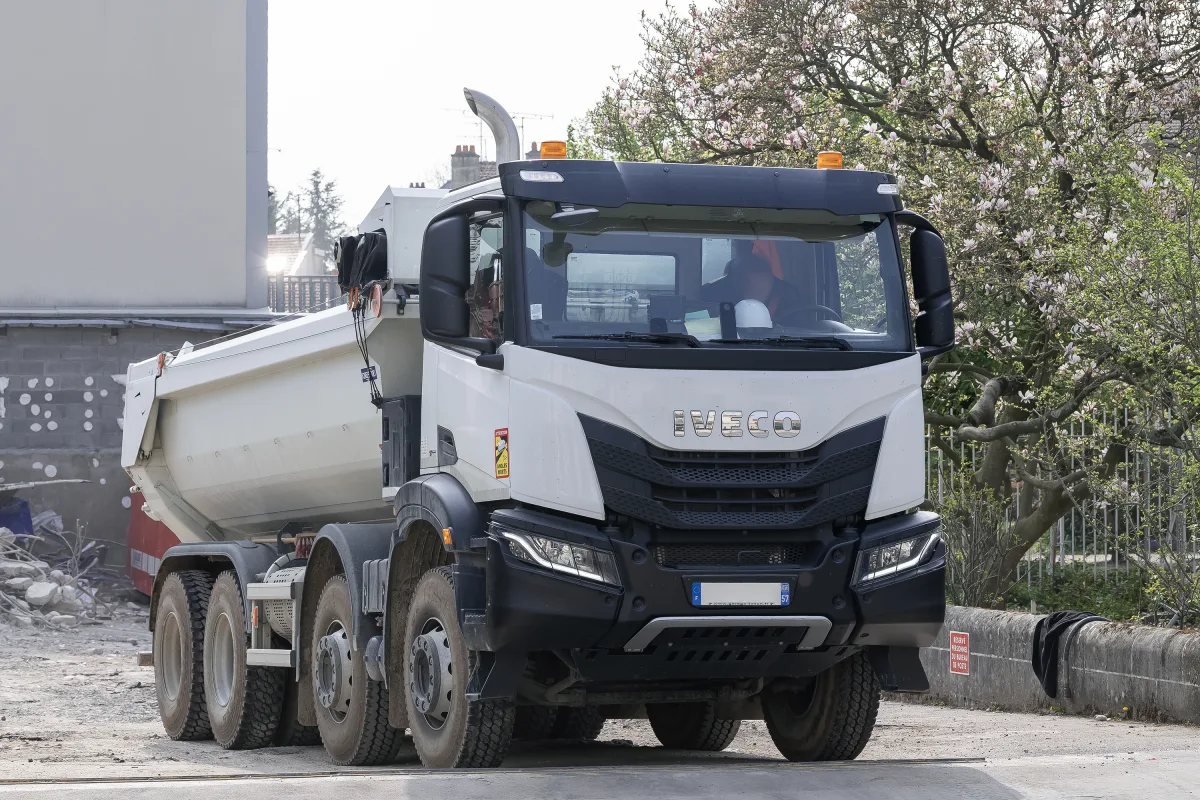
Iveco X-Way: construction trucks, engines, and trims
Iveco X-Way — a truck designed for construction and quarry work, evolved from the Stralis X-Way. We look at cab and axle configurations, engines, and what to check when buying a used X-Way.






X-Way in brief
Iveco X-Way — a series of heavy-duty trucks for construction, quarry work, and road maintenance. It evolved from the Stralis X-Way and has been sold as a separate X-Way line since 2020, designed for both on-road and off-road work.
You'll often find dump trucks, concrete mixers, crane-equipped trucks, and container haulers. These trucks operate in tough conditions, so their condition in the used market can vary greatly.
Trims — what sets them apart
The X-Way comes with several types of cabs — from day cabs to sleeper cabs, as well as various axle configurations: from 4x2 to 8x4 (most commonly 6x4 and 8x4). For dump trucks and concrete mixers, three or four-axle versions are usually chosen.
There's also a compressed natural gas (CNG) engine option, which is crucial for companies looking to reduce emissions. The driver's workspace is designed for long hours and frequent entry and exit.
Engines and transmissions
The most common engines are Iveco Cursor family diesels (Cursor 9, 11, and 13) in various power outputs, and some versions feature a CNG engine. The number in the name indicates the approximate horsepower.
Gearboxes are usually automated Hi-Tronix, but manual versions are also available. For heavy-duty off-road work, it's crucial to check the differential and the condition of the gearbox oil.
What to check when buying a used X-Way
Construction trucks work hard, so first check the frame, axle mounts, suspension, and body condition. For a tipper, check the hydraulic lifting mechanism, cylinders, and body angles.
Check if it has been used in heavy off-road conditions, as this will likely wear out the differential, axles, and drivetrain. Verify the hours and working time via the tachograph data and service records.
In Euro 6 engines, check the AdBlue system and particulate filter, and in the methane version, check the gas cylinders and their inspection deadlines. Also, evaluate the brakes and tyre wear.


Trims and versions
Trims and versions vary by market and year; below are the most commonly found versions.
Savivartis 6x4
X-WayMost common version for construction and earth-moving tasks.
- Hydraulic tipper body
- Often a three-axle chassis
- Suitable for gravel and earth hauling
Savivartis 8x4
X-WayFour-axle version for heavier loads.
- Higher gross vehicle weight rating
- Often with two steerable front axles
- Suitable for heavy construction loads
Betono maišyklė
X-WayWith a concrete mixing drum for construction sites.
- Special concrete mixing drum
- Hydraulic transmission
- Check the condition of the drum and oil system
Su kranu
X-WayTruck with hydraulic manipulator.
- Hydraulic crane
- Often — a flatbed platform
- Check the crane's documents and condition
Metano (CNG) versija
X-WayAlternative to diesel for lower emissions.
- Gas cylinders
- Lower emissions
- Check the cylinder inspection dates
Comparison of versions
| Savivartis 6x4 | Savivartis 8x4 | Betono maišyklė | |
|---|---|---|---|
| Who it's suitable for | For earth and gravel hauling | For heavy construction loads | For concrete delivery |
| Axle configuration | 6x4 | 8x4 | Mostly 8x4 |
| What to check in particular | The hydraulics and body | The frame and suspension | The drum and oil system |
| Usage intensity | High | High | Very high |
| Price in the used market (relatively) | €€ | €€€ | €€ |
Many construction companies will find a well-maintained X-Way 6x4 or 8x4 tipper truck suitable, depending on the loads. Before buying, make sure to check the truck's working conditions and service history.
Pros
- Designed for heavy-duty construction work
- A wide range of cab and axle options
- Option for a methane version
- Robust construction and comfortable cab
Cons
- Used trucks often show significant wear
- Repairing Euro 6 systems can be expensive
- Specialized equipment requires regular inspections
Frequently asked questions
How does the X-Way differ from the Stralis and S-Way?
The X-Way is suited to construction and light off-road use, while the Stralis and S-Way are primarily designed for long-haul journeys and road transport.
Is the X-Way suitable for off-road driving?
It's designed for work on construction sites and quarries, but for tough off-road conditions, the T-Way is a better choice. Always check the specific version's intended use.
What do the numbers in the tractor unit's name mean?
The listed maximum weight and engine power are usually stated. For precise information, please refer to the documentation and the seller.
Updated 2026-10-21 · Trim levels and equipment vary by market and model year — check the equipment of the specific car. · Translated automatically


