 English
 Lietuvių
 Latviešu
 Eesti
 Polski
 Русский
 Українська
 Deutsch
 Nederlands
 Čeština
 Slovenčina
 Svenska
 Norsk
 Dansk
 Suomi


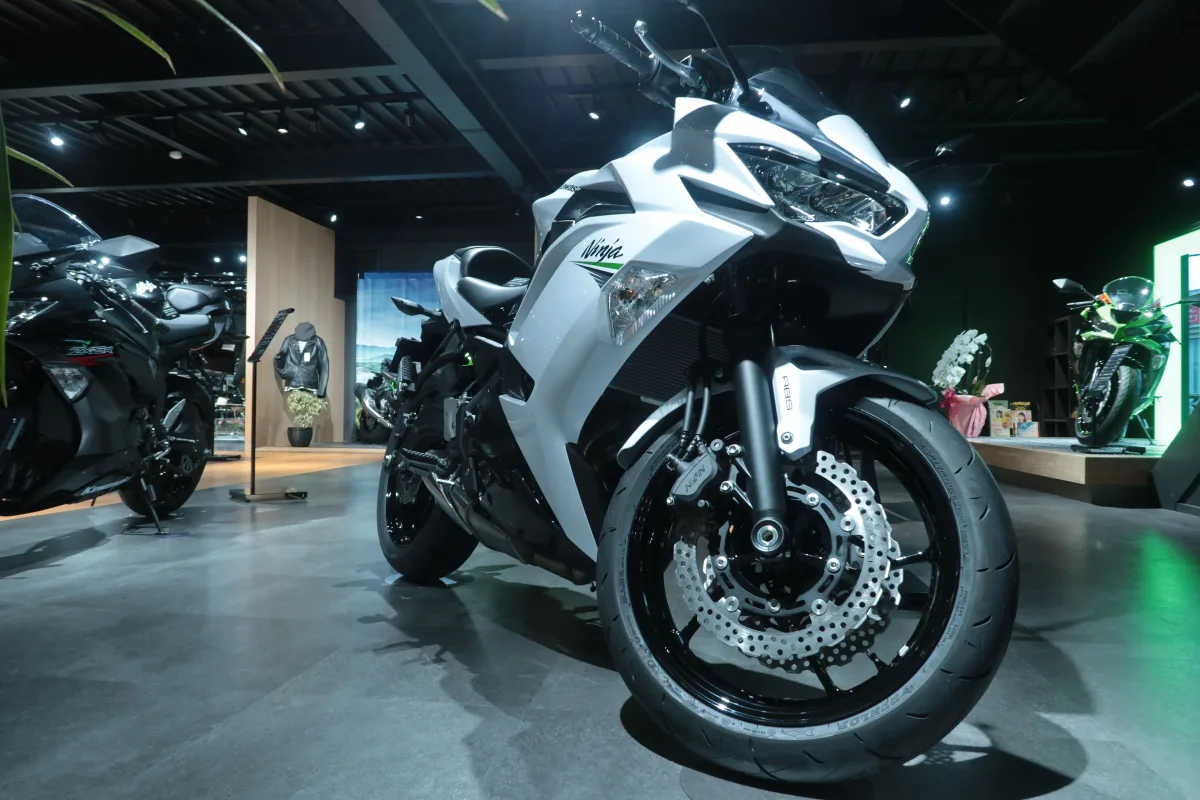
Kawasaki Ninja 650: a sporty twin-cylinder motorcycle, generations and what to check
Kawasaki Ninja 650 — a mid-range sport-style motorcycle, replacing the ER-6f since 2017. It's light, comfortable, and suitable for the A2 category. We look at the generations, versions, and what to check when buying used.






Ninja 650 in brief
The Ninja 650 debuted in 2017 with a new lightweight frame and modern bodywork. It offers a sporty style but maintains a comfortable riding position, making it suitable for daily commuting.
This model is popular among beginners and those seeking an all-rounder motorcycle.
Generations — what's the difference
The first generation (2017–2019) features a simpler instrument cluster and basic equipment. These are more affordable motorcycles, ideal for everyday use.
From 2020, the model received a refreshed look, a colour TFT instrument cluster, and smartphone connectivity. Newer versions are usually pricier but more modern.
Engine and transmission
The engine is a 649 cm³ twin-cylinder, liquid-cooled, with around 68 hp (50 kW). There's also an A2 version with power limited to 35 kW.
The transmission is a 6-speed manual, with power to the rear wheel via chain. Most motorcycles come with ABS.
What to check when buying a used Ninja 650
Check the chain, sprockets, brakes, and tyres. Motorcycles aimed at beginners are often dropped, so inspect the bodywork, mirrors, and footpegs.
Start the cold engine without assistance and listen for unusual noises. Check the fork seals, cooling system, and ABS light.
If the motorcycle has an A2 restriction, check that it matches the documents. Ask for the service history.


Trim levels
Names and equipment vary by market and year; we list the versions most commonly found in Europe.
Ninja 650
2017–2019First generation with a 649 cm³ engine.
- Often comes with ABS
- Simple instrument cluster
- Lightweight frame
Ninja 650 (atnaujinta)
From 2020 onwardsRefreshed styling and equipment.
- TFT instrument cluster
- Phone connectivity
- LED headlights
Ninja 650 A2
2017 onwardsA2 category restricted version.
- Around the 35 kW power limit
- The same bike
- The restriction can often be removed according to the rules
Ninja 650 versions compared
| Ninja 650 | Atnaujinta | A2 | |
|---|---|---|---|
| Who it suits | For the budget-conscious buyer | For those wanting more modern kit | For A2 licence holders |
| Engine | 649 cc, around 68 hp | 649 cc, around 68 hp | 649 cc, around 35 kW |
| Price in the used market (relatively) | € | €€ | € |
Many buyers opt for the first-gen Ninja 650 due to its price. The updated version is worth considering if TFT and more modern kit are important.
Pros
- Light and easy to handle
- Comfortable riding position
- There's an A2 version available
- Economical engine
Cons
- The standard suspension isn't sporty
- Wind protection is limited
- There are plenty of beginner-friendly used bikes on offer
Frequently asked questions
Is the Ninja 650 suitable for a beginner?
Yes, especially the A2 category version. It's light, smooth, and straightforward.
How does the Ninja 650 differ from the Z 650?
The technology is very similar, but the Ninja 650 has a sporty fairing, while the Z 650 is a „naked“ motorcycle.
Is the Ninja 650 suitable for touring?
It's fine for medium-length trips. The fairing offers better wind protection than a „naked“ bike.
Updated 2026-10-21 · Trim levels and equipment vary by market and model year — check the equipment of the specific car. · Translated automatically


