 English
 Lietuvių
 Latviešu
 Eesti
 Polski
 Русский
 Українська
 Deutsch
 Nederlands
 Čeština
 Slovenčina
 Svenska
 Norsk
 Dansk
 Suomi


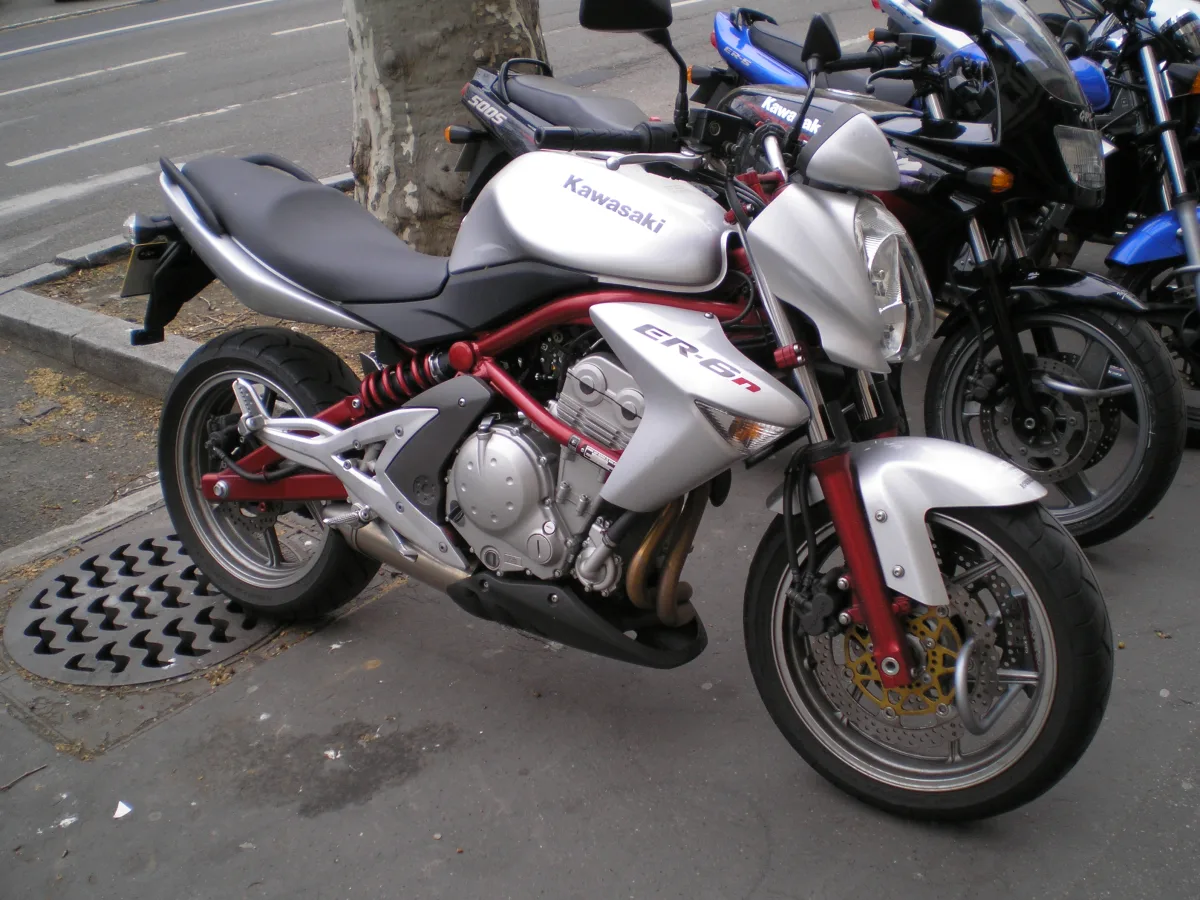
Kawasaki ER-6n: generations, engine and what to check when buying used
Kawasaki ER-6n — a mid-range 'naked' motorcycle with a 650 cm³ parallel-twin engine, produced from 2006 to 2016. We look at the generations, tech and what to check when buying a used ER-6n.






ER-6n in brief
The ER-6n is one of the most popular mid-range 'naked' motorcycles. It's light, simple and comfortable, making it ideal for both beginners and experienced riders looking for an affordable daily motorcycle.
Thanks to its straightforward tech and well-balanced chassis, the ER-6n is often chosen for training and as a first motorcycle. There are plenty of used examples on the market, and prices are usually fair.
Generations — what's the difference
The first generation (2006–2008) has a simpler design and engine, which was already quite smooth. The second generation (2009–2011) got a refreshed look and improvements, while the third generation (2012–2016) features an even more aggressive style and additional refinements.
Some motorcycles come with ABS, and certain versions are tailored to the A2 category with restricted power. In the used market, it's worth checking if ABS is present and if there are any power restrictions.
Engine and gearbox
The engine is a roughly 649 cm³ parallel-twin, liquid-cooled, with around 72 hp. It's smooth and flexible, suitable for both city and road riding.
The gearbox is a 6-speed manual, with power to the rear wheel via a chain. Some versions have an A2 category-compliant engine with restricted power.
What to check when buying a used ER-6n
Check the handlebars, footrests, and side panels for damage. Ensure the engine runs smoothly, doesn't smoke, and has no oil leaks.
Inspect the chain, sprockets, brakes, tyres, and cooling system. Listen for any unusual noises from the engine and gearbox.
If the motorcycle has an A2 restriction, ask for the documents. Inquire about the service history, as many ER-6n models are used for training and may be worn out.


Trim levels and versions
Names and equipment vary by market and year; below are the main generations.
ER-6n I karta
2006–2008The first generation with basic technology.
- Approximately 649 cm³ twin-cylinder engine
- Simple design
- Often — no ABS
ER-6n II karta
2009–2011Updated styling and improvements.
- Updated design
- Often — ABS
- Comfortable riding position
ER-6n III karta
2012–2016The latest generation with a more aggressive look.
- A more aggressive design
- Often — ABS
- Often — the A2 version
ER-6n generation comparison
| I karta | II karta | III karta | |
|---|---|---|---|
| Who it's for | For budget-conscious driving | For daily driving | For those who value a newer look |
| Engine | Around 649 cc, around 72 hp | Around 649 cc, around 72 hp | Around 649 cc, around 72 hp |
| Price in the used market (relatively) | € | €€ | €€ |
For most buyers, the best balance of price and technology is the second or third generation. The first generation is for those who prioritise a low price.
Pros
- Light and easy to handle
- Smooth and responsive engine
- Comfortable riding position
- Affordable price and low maintenance
Cons
- Lacks modern electronics
- Limited wind protection on the highway
- Many used for training and may be worn out
Frequently asked questions
Is the ER-6n suitable for beginners?
Yes, it's light, smooth, and easy to handle, making it popular among beginners. Some versions come with an A2-compliant variant.
What's the difference between the ER-6n and ER-6f?
The ER-6f has a full fairing and better wind protection, while the ER-6n is a 'naked' bike without a fairing. The engine and tech are essentially the same.
Is the ER-6n suitable for long rides?
For short and medium rides, yes. Due to limited wind protection, for longer rides, it's more comfortable to choose a version with a fairing or add a windscreen.
Updated 2026-10-21 · Trim levels and equipment vary by market and model year — check the equipment of the specific car. · Translated automatically


