 English
 Lietuvių
 Latviešu
 Eesti
 Polski
 Русский
 Українська
 Deutsch
 Nederlands
 Čeština
 Slovenčina
 Svenska
 Norsk
 Dansk
 Suomi


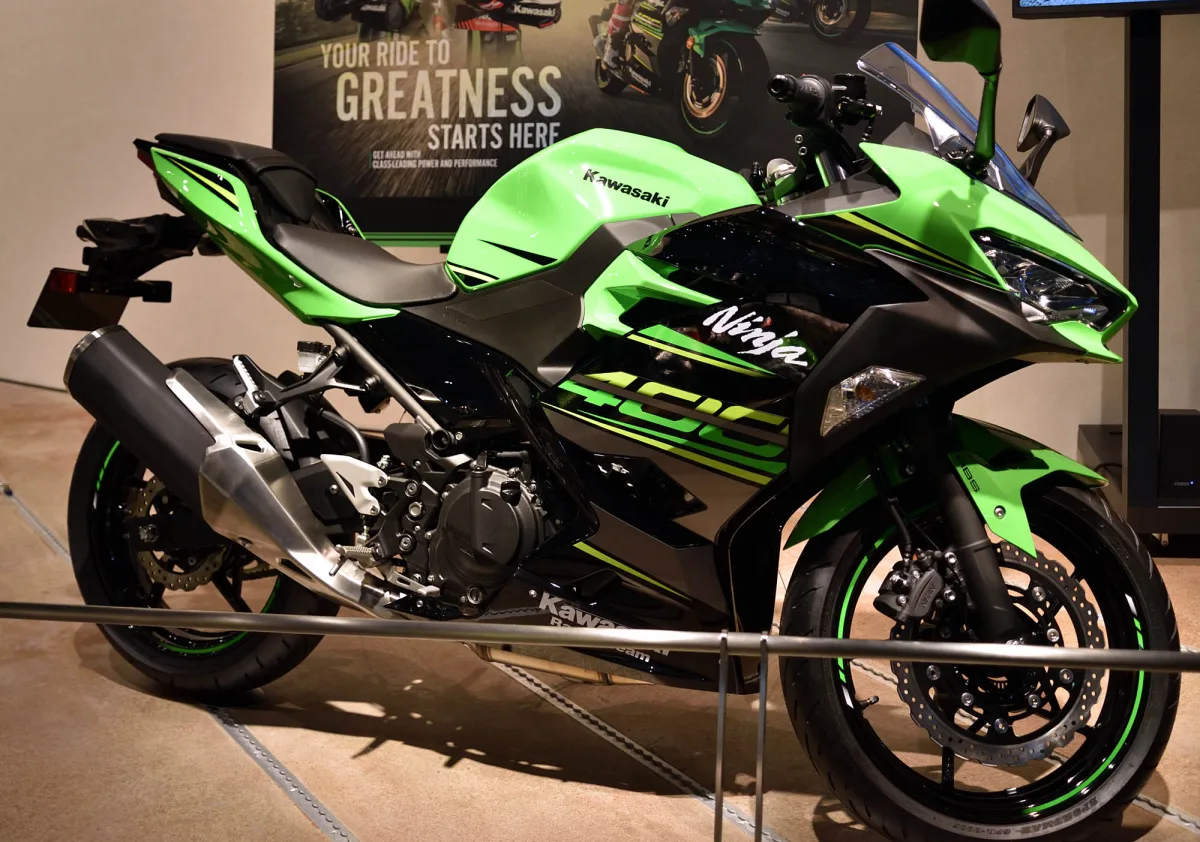
Kawasaki Ninja 400: A2 supersport, engine and what to check when buying
Kawasaki Ninja 400 — a compact sports bike produced since 2018 with a 399 cm³ parallel-twin engine, suitable for the A2 category. We look at the tech, versions, typical questions when buying a used bike, and what this model is good for.






Ninja 400 in brief
Ninja 400 — a lightweight, comfortable, and affordable sport-style bike that replaced the Ninja 300 in 2018. The engine puts out around 45 hp (33 kW), so it meets A2 category requirements and is one of the most popular choices for a first 'bigger' bike.
The model is praised for its light handling, clear and predictable behaviour, low weight, and fairly economical engine. It's great for city riding, commuting, and light track days. It's not ideal for long journeys, but it's more than adequate for short trips.
Versions and generations
The Ninja 400 has been one generation (since 2018), with versions mainly differing in colours and graphics. The base version and the 'KRT Edition' (with Kawasaki racing team colours) share the same tech.
More recent bikes might receive minor updates (colours, some equipment details), but the key components — the engine, frame, and suspension — remain the same. In the used market, you'll mostly find 2018–2022 examples.
Engine and transmission
Engine — 399 cm³ liquid-cooled twin-cylinder, producing around 45 hp and 38 Nm of torque. It performs best at mid to high revs and is fairly easy to handle.
The transmission is a six-speed manual with a slipper and assist clutch, reducing the risk of rear-wheel lockup during aggressive downshifts. European models come with ABS.
What to check when buying a used Ninja 400
This bike is often bought by beginners, so some have had their fair share of drops while learning. Inspect the plastics, handlebar ends, footpegs, brake pedals, and exhaust for signs of a crash, and check the frame and subframe for straightness.
Check the chain and sprockets, brake calipers and discs, tyres, subframe integrity, and coolant level. Ask for the service history and ensure the engine has no unusual noises or oil leaks.


Trims and versions
Ninja 400 versions mainly differ in appearance; the tech is the same.
Ninja 400
from 2018The base version comes in various colours.
- Often — ABS as standard
- Slipper and assist clutch
- Sporty bodywork
Ninja 400 KRT Edition
from 2018Version with Kawasaki racing team colours.
- Green and black graphics
- Same tech
- Often — higher demand due to styling
Naujesnių metų Ninja 400
later yearsUpdated colours and minor changes.
- Often — new colours
- Often — updated equipment
- Before buying, check the exact specification
Version comparison
| Ninja 400 | KRT Edition | Naujesni metai | |
|---|---|---|---|
| Who it suits | For your first sports bike | For style enthusiasts | For those seeking a newer motorcycle |
| Power | Around 45 hp (33 kW) | Around 45 hp (33 kW) | Around 45 hp (33 kW) |
| Styling | Standard | KRT colour | Updated |
| Price in the used market (relatively) | € | € | €€ |
Most buyers will be happy with any Ninja 400 version, as long as it's in good nick and hasn't been dropped. Colour choice is purely a matter of taste.
Pros
- Suitable for A2 category
- Light and predictable handling
- Low running costs
- Wide range of accessories and parts available
Cons
- Not enough comfort for long journeys
- Many bikes have had beginner's spills
- The engine isn't as sporty as those in larger models
Frequently asked questions
Is the Ninja 400 suitable for the A2 category?
Yes, the bike's power is around 45 hp (33 kW), so it meets A2 requirements. Still, double-check the specific bike's documents before buying.
How does the Ninja 400 differ from the Z400?
The Z400 is essentially the same technology as the Ninja 400 but without the fairing and bodywork, while the Ninja 400 comes with a sporty fairing. The engine and frame are very similar.
Is the Ninja 400 suitable for long journeys?
For short and medium trips, yes, but the upright seating position and limited comfort make long journeys tiring.
Updated 2026-10-21 · Trim levels and equipment vary by market and model year — check the equipment of the specific car. · Translated automatically


