 English
 Lietuvių
 Latviešu
 Eesti
 Polski
 Русский
 Українська
 Deutsch
 Nederlands
 Čeština
 Slovenčina
 Svenska
 Norsk
 Dansk
 Suomi


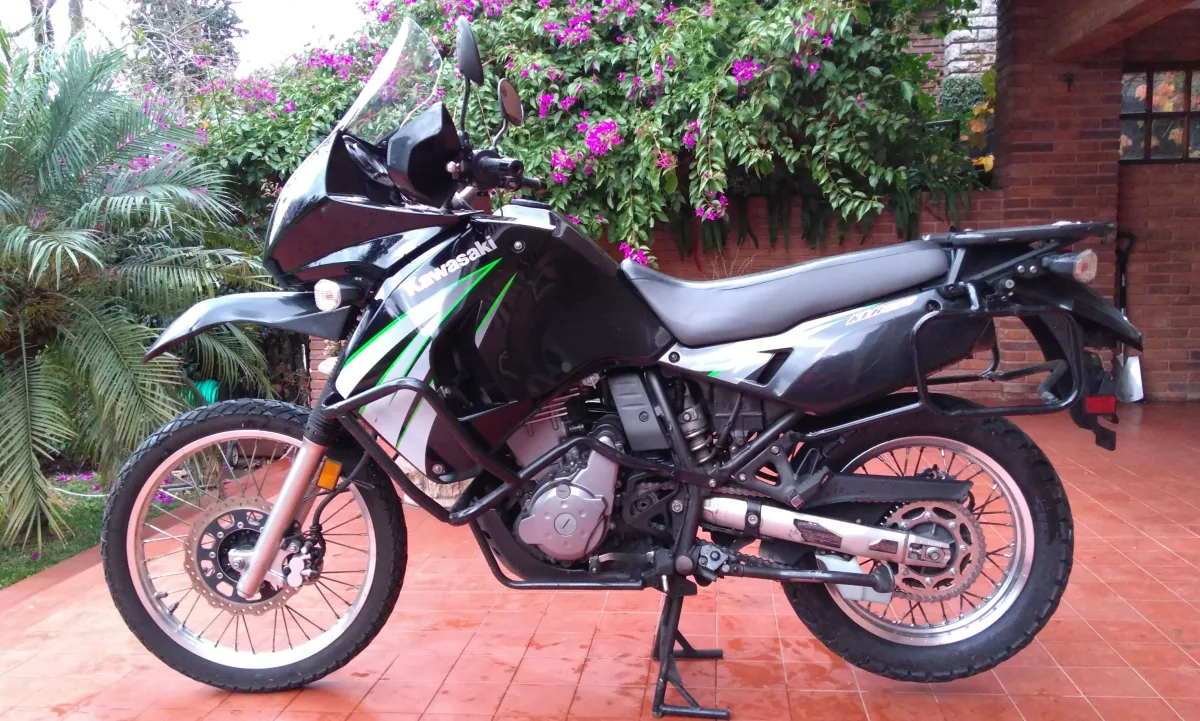
Kawasaki KLR 650: generations, engine and what to check when buying used
The Kawasaki KLR 650 is a single-cylinder 'dual-sport' motorcycle that has been in production since 1987 and has remained one of the simplest and most popular choices for adventurers for decades. We look at the generations, technology, and what to check when buying used.






KLR 650 in brief
The KLR 650 was designed as a simple, robust, and affordable motorcycle suitable for both asphalt and light off-roading. It's known for its large fuel tank, straightforward technology, and ease of maintenance, making it a favourite among long-distance travellers.
Thanks to its simple design and long production run, the KLR 650 has a wide range of parts and accessories available, along with plenty of community advice on how to improve and maintain it. It's not a fast or particularly light motorcycle, but it's incredibly versatile.
Generations — what's the difference
The first generation (1987–2007) was produced almost unchanged: carburettor engine, simple instrument cluster, and plenty of mechanical solutions. This is probably the most tested model, but many motorcycles already have high mileage and age.
The second generation (2008–2018) received an updated design, fairing, and improvements, but stuck with the same simple carburettor engine. Since 2022, a refreshed generation has appeared with fuel injection, a new instrument cluster, and the option to choose ABS.
Engine and transmission
The engine is a 651 cm³ liquid-cooled single-cylinder four-stroke. It's not particularly powerful, but it runs smoothly, has good torque at low revs, and is very economical.
Transmission — five-speed manual, drive — chain. Early-generation motorcycles have a carburetor that needs regular cleaning and tuning, while the latest generation has fuel injection.
What to check when buying a used KLR 650
First, ask if the engine balancing chain weight detail (the so-called “doohickey”) has been updated — this is a well-known weak spot of the KLR 650 that many owners replace with a stronger part. Also, check the cooling system and thermostat.
Inspect the frame, suspension, spokes, and bodywork for signs of a drop or off-road use, and the chain and sprockets for wear. Carbureted models should start easily and run smoothly. Check the valve clearances according to the service manual.


Trim levels
Trim names and equipment vary by year and market. We provide a general overview of each generation.
KLR 650 (pirmoji karta)
1987–2007A long-standing, straightforward trim.
- Carbureted engine
- Basic equipment
- Large fuel tank
KLR 650 (antroji karta)
2008–2018Updated design and equipment.
- New bodywork and instrument panel
- Carbureted engine
- Often — no ABS
KLR 650 (nuo 2022)
from 2022Latest generation with fuel injection.
- Fuel injection
- Often — ABS as an option
- A more modern instrument cluster
Comparison of generations
| 1987–2007 | 2008–2018 | Nuo 2022 | |
|---|---|---|---|
| Who it's for | Budget travel tech | For daily driving and road trips | Modern yet straightforward tech |
| Engine | 651 cm³, carburettor | 651 cm³, carburettor | 652 cm³, fuel injection |
| Fuel delivery | Carburettor | Carburettor | Fuel injection |
| Price in the used market (relatively) | € | €€ | €€€ |
A tidy older-generation KLR 650 is a solid budget choice for touring, provided you know the 'doohickey' part has been updated. The most modern option is the latest generation, but it comes at a higher price.
Pros
- Simple, robust technology
- Large fuel tank
- Easy to fix, plenty of parts and accessories
- Ideal for touring
Cons
- Limited power for motorway driving
- Quite heavy for off-roading
- Carburettor engine requires more maintenance
Frequently asked questions
What is the KLR 650 'doohickey'?
It's the balancing chain tensioner weight part of the engine, which can wear out and damage the engine in early KLR 650 models. Many owners replace it with a stronger one; check if this has been done.
Is the KLR 650 suitable for touring?
Yes, it's one of the most renowned touring bikes; large fuel tank, simple construction, and plenty of accessories. It can handle motorways, but with limited power.
Is the KLR 650 suitable for off-roading?
It's easy and handles well on light to medium terrain, but due to its weight, it's not suitable for serious off-roading.
Updated 2026-10-21 · Trim levels and equipment vary by market and model year — check the equipment of the specific car. · Translated automatically


