 English
 Lietuvių
 Latviešu
 Eesti
 Polski
 Русский
 Українська
 Deutsch
 Nederlands
 Čeština
 Slovenčina
 Svenska
 Norsk
 Dansk
 Suomi


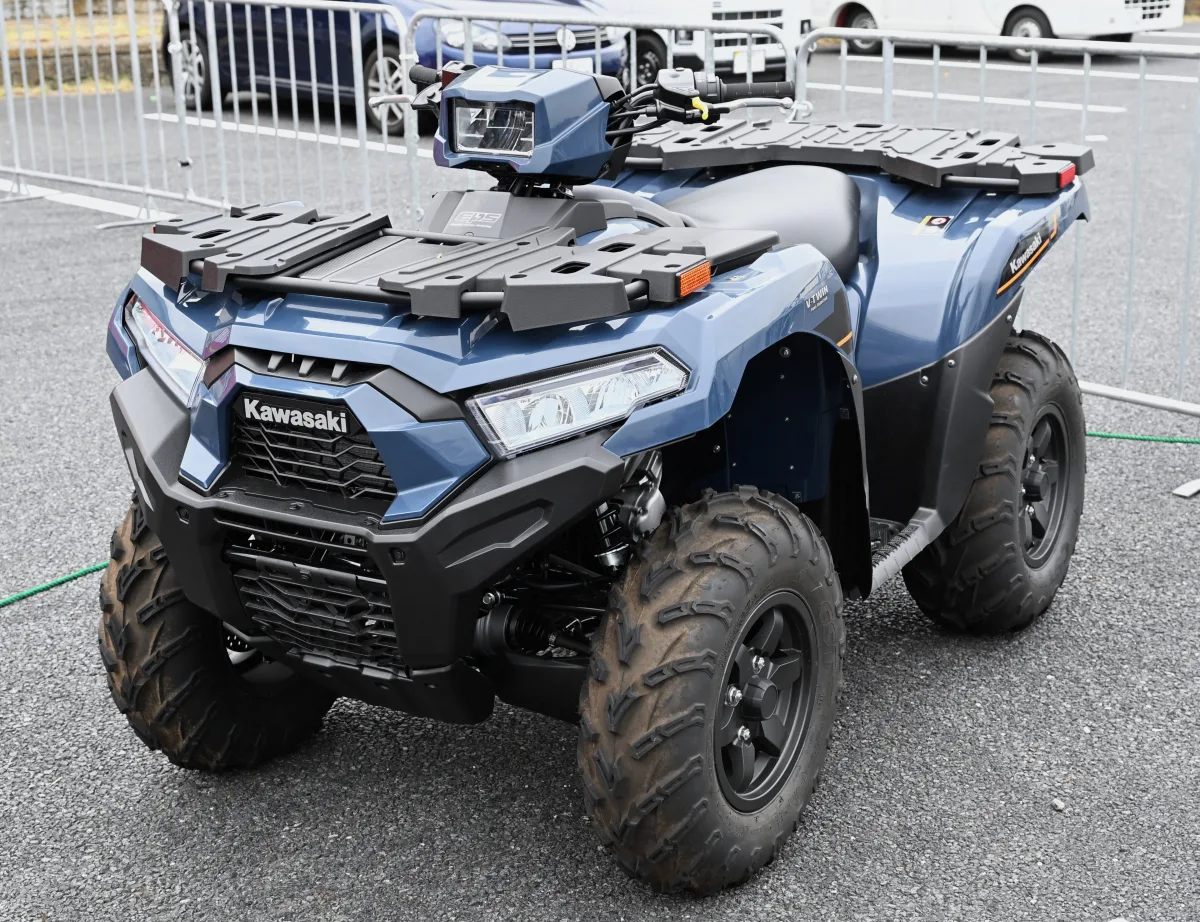
Kawasaki Brute Force 750: four-wheeler, engine and what to check when buying
Kawasaki Brute Force 750 — a four-wheeler (ATV) with a V-twin engine, designed for work, hunting and leisure. We look at the versions, tech and what to check when buying used.






Brute Force 750 in brief
The Brute Force 750 debuted in 2005 and was one of the most powerful Kawasaki four-wheelers. It has enough power for both off-roading and work — towing a trailer, plough or other equipment.
In Europe, many of these four-wheelers are registered as vehicles according to local regulations, so before buying, check the registration documents and category.
Versions — what's the difference
Since 2008, the Brute Force 750 has had a 4x4i system, and later versions came with electric power steering (EPS), making off-road handling easier. There are also special colour or trim versions.
Earlier models have a carburettor and simpler electronics. Later versions offer more comfort but are pricier in the used market.
Engine and transmission
The engine is a liquid-cooled 749 cm³ V-twin. It has enough power for heavy work and fast off-roading.
The transmission is an automatic (CVT) with high and low ranges plus reverse, with selectable 4x4 drive, and a lockable differential in some versions. This helps tackle tougher terrain.
What to check when buying a used Brute Force 750
Check the CVT belt and chain, and ensure the transmission works in all modes (2WD, 4WD, locked differential). Listen for any unusual noises from the wheels.
Inspect the suspension, steering rack, wheel bearings, and CV boots (rubber covers): leaks quickly ruin the mechanism. Check if the engine is leaking oil.
Ensure the 4x4 wasn't used in water or mud without maintenance: such use often leads to corrosion and worn-out bearings. Ask for the service history.


Trim levels and versions
Names and equipment vary by market and year; below are the main versions.
Brute Force 750 4x4
2005–2007Earlier version with a carburettor.
- Approximately 749 cm³ V-twin engine
- Simpler electronics
- Optional 4x4 transmission
Brute Force 750 4x4i
From 2008 onwardsVersion with fuel injection system.
- Fuel injection system, simpler starting
- Optional 4x4 transmission
- Often comes with a locked differential
Brute Force 750 4x4i EPS
Later yearsVersion with electric power steering.
- Electric power steering (EPS)
- Lighter handling off-road
- Often — a higher trim level
Brute Force 750 version comparison
| 4x4 | 4x4i | 4x4i EPS | |
|---|---|---|---|
| Who it's for | For budget off-roading | For work and play | For those who value lighter handling |
| Engine | Approximately 749 cm³ V-twin | Approximately 749 cm³ V-twin with injectors | Approximately 749 cm³ V-twin with injectors |
| Price in the used market (relatively) | € | €€ | €€€ |
For many buyers, the 4x4i version is the best choice. It's worth considering if you often drive over rough terrain or for long periods.
Pros
- A powerful and torquey engine
- Choose 4x4 drive and good ground clearance
- Suitable for both work and play
- Robust construction
Cons
- Large size and dimensions
- More expensive to maintain than smaller four-wheelers
- Registration rules depend on the country
Frequently asked questions
Can the Brute Force 750 be registered?
This depends on the model, year, and country's rules. Before buying, check if there are registration documents and what category it falls into.
What's the difference between the 4x4 and 4x4i versions?
The first has a carburettor, the second a fuel injection system. As a result, the 4x4i starts more easily and runs more reliably in various conditions.
Is the Brute Force 750 suitable for work?
Yes. It has enough power to tow a trailer and other equipment, and the 4x4 drive helps in challenging terrain.
Updated 2026-10-21 · Trim levels and equipment vary by market and model year — check the equipment of the specific car. · Translated automatically


