 English
 Lietuvių
 Latviešu
 Eesti
 Polski
 Русский
 Українська
 Deutsch
 Nederlands
 Čeština
 Slovenčina
 Svenska
 Norsk
 Dansk
 Suomi


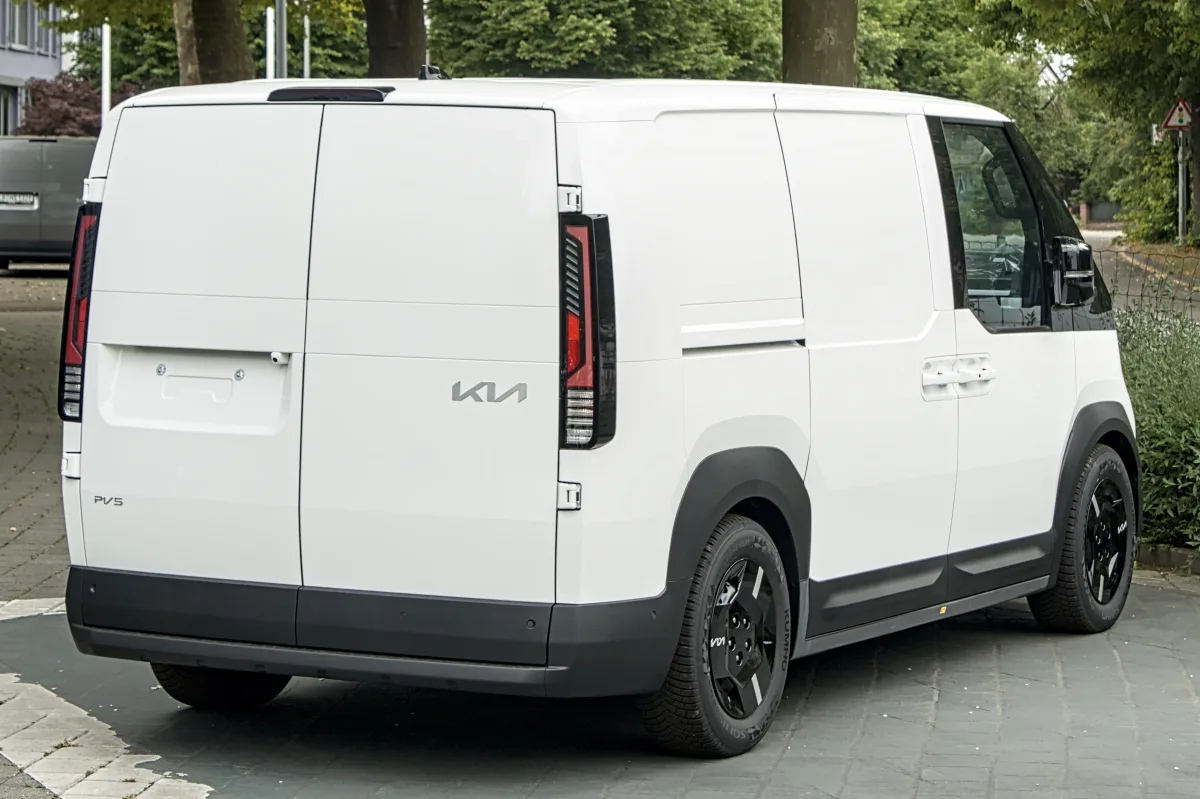
Kia PV5: electric van, battery and body versions
The Kia PV5 is the first electric van in the Kia 'PBV' family, unveiled in 2025. It's designed for small businesses, services, and passenger transport. We look at body versions, battery options, and what you need to know if you're considering buying or later searching for a used PV5.






PV5 in brief
The PV5 is designed as a modular electric vehicle that can be adapted to various needs: cargo van, passenger transport, wheelchair-accessible vehicle, or specialized chassis cab. It's a competitor to other manufacturers' electric commercial vans.
The car is manufactured in South Korea and sold in Europe. Since it's a very new model, there are very few used examples available so far.
Which version to choose
First, choose based on purpose: Cargo — cargo van, Passenger — passenger version with seats, WAV — adapted for wheelchair access, Chassis Cab — chassis with cab for a body.
The second decision is the battery. The smaller one is suited for city-based businesses, while the larger one offers more range for longer routes. You can also choose between a standard or high roof version.
Batteries, power, and charging
The PV5 is offered with two battery options: a smaller one (around 52 kWh) and a larger one (around 71 kWh). The motor is front-wheel drive, with around 163 hp (120 kW). The WLTP-declared range is approximately 280–300 km with the smaller battery and up to around 400 km with the larger battery.
There are AC and fast DC charging options. Exact charging power varies by battery variant, so check the specific vehicle's documents.
What to check when buying a used PV5
Request a battery condition report, check how many cycles it has endured, and if there is a manufacturer's warranty. Warranty conditions and allowed load may vary for commercial use.
Inspect the cargo area and side doors for wear, check the brakes and suspension, as vans typically work under load. Test all charging methods and software updates.


Trim levels
Commercial vehicle versions are named after the body type; specific names and equipment vary by country.
Cargo
2025–Cargo van for business.
- Enclosed cargo area
- Sliding side doors
- High-roof variant
Passenger
2025–Passenger version for family or services.
- Seats for passengers
- More interior comfort
- Suitable for taxis and families
WAV
2025–Adapted for disabled access.
- Access ramp
- Space for a wheelchair
- Special edition
Chassis Cab
2025–Pickup with a cab chassis.
- Designed for specialist bodies
- Cab for driver and passengers
- Manufacturer's chassis cab
Version comparison
| Cargo | Passenger | WAV | Chassis Cab | |
|---|---|---|---|---|
| Who it's for | For cargo | For passengers | For transporting disabled passengers | For bodies |
| Number of seats | 2–3 | Depends on the configuration | Depends on the configuration | 2–3 |
| Load area | Enclosed | Smaller | Suitable for a wheelchair | Open platform |
| Battery | 52 or 71 kWh | 52 or 71 kWh | Mostly 71 kWh | 52 or 71 kWh |
| Price in the used market (relatively) | €€ | €€ | €€€ | €€€ |
For most businesses, the Cargo with the larger battery is ideal. The Passenger is best for services and family use, while the WAV and Chassis Cab cater to specialist needs.
Pros
- Modular design for different needs
- Zero tailpipe emissions in the city
- Two battery options
- Sliding side doors and easy loading
Cons
- Used supply is still very limited
- New platform, long-term data is lacking
- Range decreases with a full load and in winter
Frequently asked questions
How far does the Kia PV5 go?
WLTP-rated range is roughly 280–300 km with the smaller battery and up to around 400 km with the larger one. Real-world range depends on load, speed, and weather conditions.
What are the PV5 variants?
Body styles include Cargo (van), Passenger (people carrier), WAV (wheelchair accessible) and Chassis Cab (for conversions). Different roof heights are also available.
Is it worth buying a used PV5?
The model is very new, so there are few used listings. If you find one, ask for a battery condition report, warranty details, and service history.
Updated 2026-10-14 · Trim levels and equipment vary by market and model year — check the equipment of the specific car. · Translated automatically


