 English
 Lietuvių
 Latviešu
 Eesti
 Polski
 Русский
 Українська
 Deutsch
 Nederlands
 Čeština
 Slovenčina
 Svenska
 Norsk
 Dansk
 Suomi


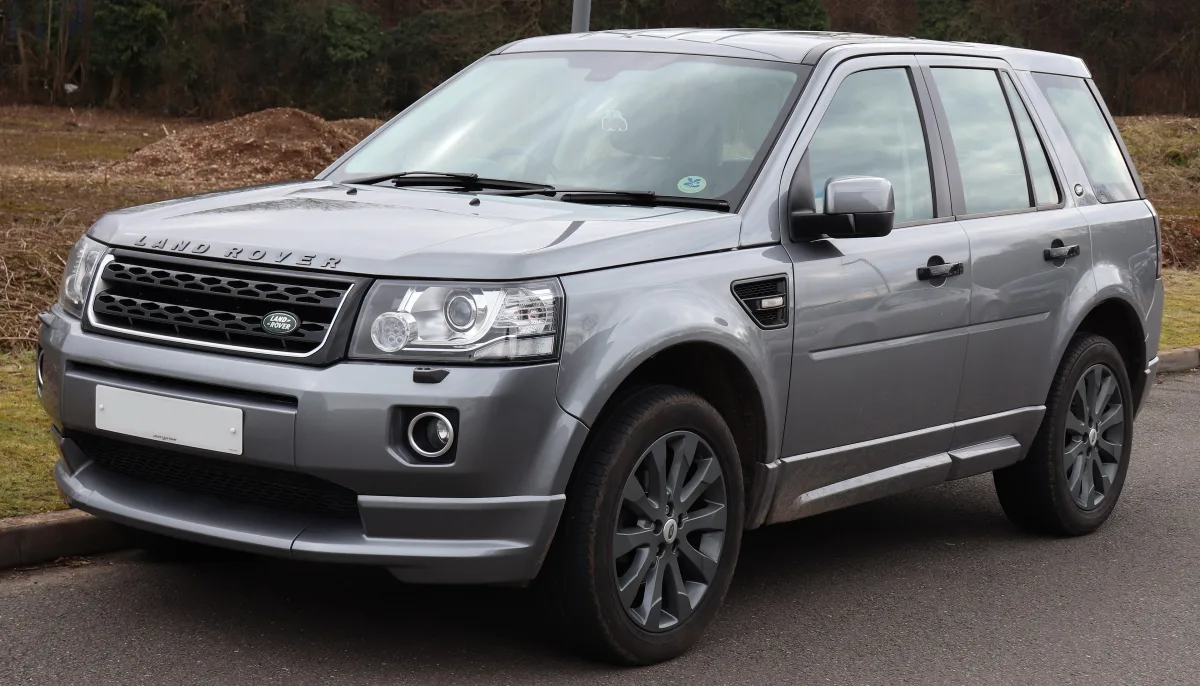
Land Rover Freelander: 1st and 2nd generations, engines and trims
The Land Rover Freelander is a compact SUV produced from 1997 to 2014, later replaced by the Discovery Sport. In Lithuania, the Freelander 2 with the 2.2-litre diesel engine is most commonly encountered. We look at how the two generations differ, which engines are the most popular, how the trims vary, and what to check before buying.






Freelander at a glance
The Freelander was produced in two generations. The first (1997–2006) was offered with a 3-door body, whose rear roof section could be removed, and a 5-door estate body. The second generation, the Freelander 2 (2006–2014), was produced only with a 5-door body and was significantly larger and more modern.
The Freelander was the first Land Rover with a unibody, frameless design, so it drives like a regular car on the road. Nevertheless, most of both generations' models feature all-wheel drive and hill descent control, while the Freelander 2 also has the Terrain Response system, allowing you to select a driving mode based on the terrain. Off-road, it outperforms most competitors in the same class.
Freelander 1 vs Freelander 2
The Freelander 1 is a simpler, smaller car, refreshed in 2003 with a new front end and interior. It was popular but had a reputation for poor reliability, and today most examples are old and high-mileage. It's worth buying only if you know the history and have assessed the cost of essential repairs.
The Freelander 2 was developed alongside Ford group models, so it shares some technology with contemporary Ford and Volvo cars. It's quieter, more refined, roomier and far more reliable than its predecessor. In 2010, diesel engines were updated and the front-wheel-drive eD4 version was introduced.
In 2012 (2013 model year), the Freelander 2 was refreshed again: it gained new front lights with LED elements, a new instrument cluster, a multimedia system and the 2.0 Si4 petrol engine. For many buyers, the best choice is a Freelander 2 from after 2010.
Engines and gearboxes
The Freelander 1 was offered with petrol engines of 1.8 (around 120 hp) and 2.5 V6 (around 177 hp), and diesel engines of 2.0 Di (around 98 hp) and, from 2001, the BMW-derived 2.0 Td4 (around 110 hp). The Td4 diesel is considered the most reliable.
The Freelander 2 is most commonly found with the 2.2 diesel engine: TD4 (around 150–160 hp), and from 2010, the more powerful SD4 (around 190 hp) and front-wheel-drive eD4 (around 150 hp). The petrol 3.2 i6 (around 233 hp) is quite rare, and in 2013 it was replaced by the 2.0 Si4 (around 240 hp).
The Freelander 2 has a six-speed manual or six-speed automatic gearbox. The four-wheel drive system is automatically engaged via Haldex, which transfers torque to the rear wheels when needed.
What to check when buying a used Freelander
Freelander 1's 1.8 petrol engines were notorious for head gasket failures — check if the engine hasn't been replaced and that there's no oil in the coolant. The transmission often suffers from issues with the intermediate gearbox (IRD) and the viscous coupling unit (VCU), especially if the car has been driven with mismatched tyres. All four tyres should be the same.
With the Freelander 2, the most important thing is the condition of the four-wheel drive system. Haldex pump or control unit failures aren't uncommon, so ask if the differential oil has been changed. Also, pay attention to any whining or grinding noises from the rear differential and the front transfer case.
For diesel cars that have done a lot of city driving, check the diesel particulate filter (DPF) and the EGR valve. Always check that all the electronics are working, compare the mileage with service records, and inspect the underbody for damage — some of these cars have clearly been off-roading.


Trim levels
Names and equipment vary by market and year; we list the most common Freelander 2 trims found in Europe.
S
Freelander 2The base trim is basic but comes with four-wheel drive and Terrain Response.
- Cloth seats
- Often — light-alloy wheels
- A more basic sound system
GS
Freelander 2A slightly better-equipped version for daily use.
- Often — automatic climate control
- Often — parking sensors
- Often — cruise control
XS / SE
Freelander 2The most popular choice — a good balance of price and equipment.
- Often — partially or fully leather seats
- Often — heated seats and front windscreen
- Larger alloy wheels
HSE
Freelander 1 and 2Top-spec trim with the most kit as standard.
- Single-tone seats
- Often — xenon headlights and sat-nav
- Often — premium sound system
Dynamic
Freelander 2, faceliftedSporty-looking version with dark trim details.
- Different bumpers and black grille
- Larger black alloy wheels
- Sportier interior trim
Freelander 2 trim comparison
| S | XS / SE | HSE | Dynamic | |
|---|---|---|---|---|
| Who it's for | For the best value | Family and daily driving | Comfort and long journeys | Styling |
| Most common wheels | 17 inch | 17–18 inch | 18–19 inch | 19 inch |
| Interior | Upholstery | Often – partial leather | Full leather, more kit | Sporty trim |
| Most common engine | 2.2 TD4, eD4 | 2.2 TD4 / SD4 | 2.2 SD4, 3.2 i6 | 2.2 SD4, 2.0 Si4 |
| Price in the used market (relatively) | Budget-friendly | Mid-range | Premium | Premium |
For most buyers, the best choice is the Freelander 2 in XS, SE, or HSE trim with the 2.2 TD4 or SD4 diesel engine and all-wheel drive. Before buying, it's crucial to check the drivetrain, not just the trim level.
Pros
- Solid off-road capabilities for its class
- High seating position and good visibility
- Comfortable ride
- The larger Freelander 2 offers plenty with diesel engines
Cons
- The Freelander 1 is notorious for its poor reliability
- Repairs to the all-wheel-drive system can be expensive
- A hefty weight means higher fuel consumption than many rivals
Frequently asked questions
Which Freelander to choose — 1 or 2?
For most buyers, the Freelander 2 is the better choice, especially post-2010. It's more reliable, better built, and roomier. The Freelander 1 is only worth buying if you know its history and a low price allows for necessary repairs.
Does the Freelander 2 eD4 have four-wheel drive?
No, the eD4 version is front-wheel drive. It's slightly more economical, but in winter and off-road, it falls short of the four-wheel-drive TD4 and SD4 versions.
Why are matching tyres important for the Freelander?
Tyres of different sizes or wear levels force the four-wheel-drive components to constantly work under load. This causes the Freelander 1's IRD and viscous coupling to wear out, and the Freelander 2's Haldex unit and other drivetrain parts.
Is the Freelander suitable for off-roading?
Yes, it handles off-road and forest trails better than most compact SUVs. However, it's not a Defender or Discovery — for serious off-roading, it lacks a low-range gearbox and approach angles.
Updated 2026-10-09 · Trim levels and equipment vary by market and model year — check the equipment of the specific car. · Translated automatically


