 English
 Lietuvių
 Latviešu
 Eesti
 Polski
 Русский
 Українська
 Deutsch
 Nederlands
 Čeština
 Slovenčina
 Svenska
 Norsk
 Dansk
 Suomi


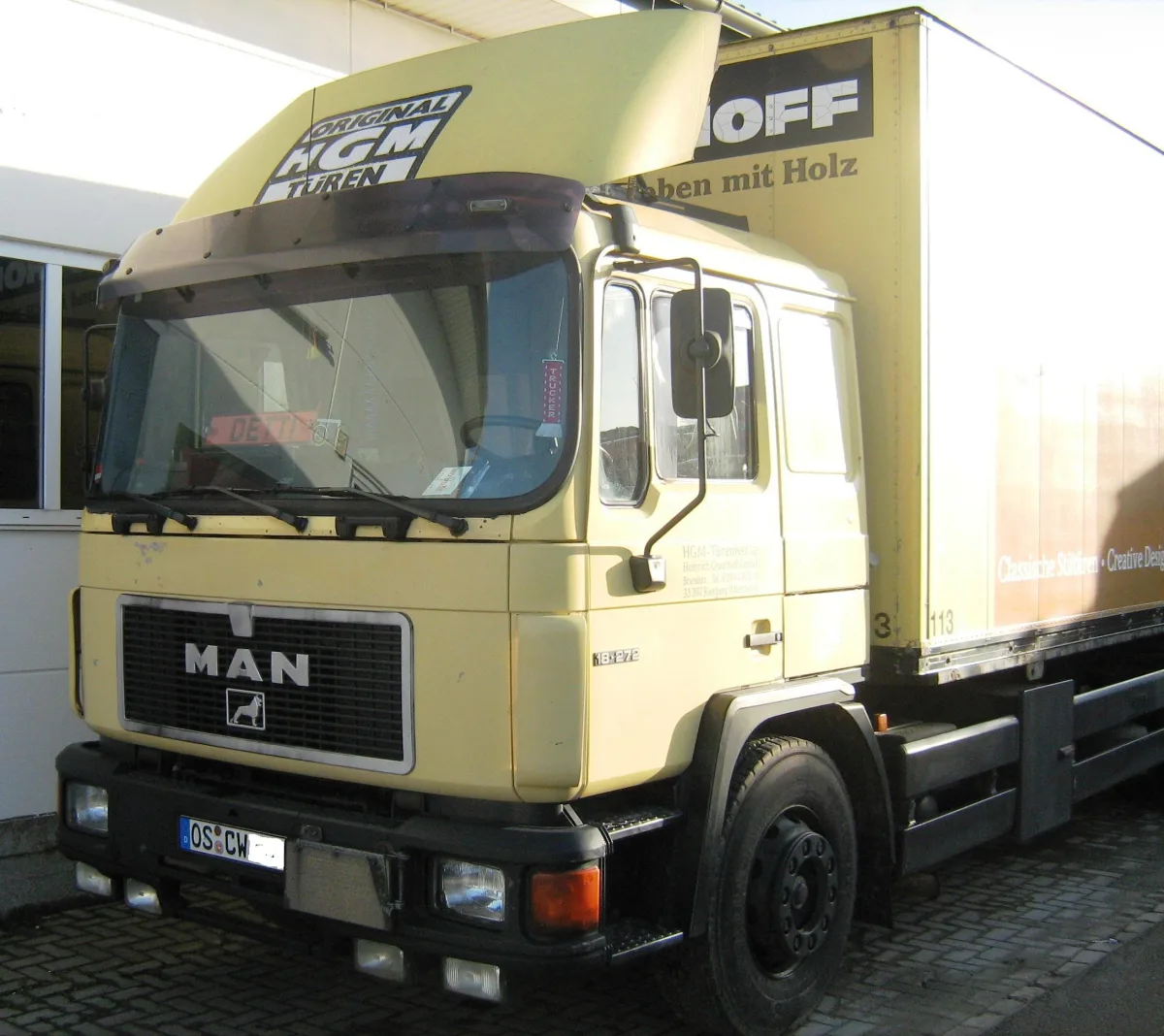
MAN F90: truck versions, engines and what to check when buying
MAN F90 — heavy-duty trucks produced from 1986 to 1994, which replaced the previous F8 series. We look at the badging, cabins, engines, and key points to check when buying such a vehicle.






MAN F90 in brief
MAN F90 — a series of heavy-duty trucks from Munich that gained popularity in Europe in the late 1980s and early 1990s. It was produced as a tractor unit, rigid truck, flatbed truck, or special-purpose vehicle.
Today, the F90 is often seen as a cheap, robust workhorse for construction and regional haulage. Some examples have become collector's items.
Badging and versions — what's the difference
In the MAN name, the first number indicates the permitted gross weight in tonnes, while the last three digits denote the engine power in horsepower. For example, 19.362 means approximately 19 tonnes gross weight and around 360 HP. This badging helps quickly understand the vehicle's class.
Versions were produced with several cab options — from a basic day cab to a high-sleeper, and with various axle configurations: 4x2 and 6x2 for tractors, 6x4 for rigid trucks and heavier duties.
From 1994, the F90 was replaced by the new-generation F2000, making the F90 the last representative of the traditional MAN truck line.
Engines and gearboxes
The F90 is built with MAN six-cylinder turbodiesels — usually around 12 litres in capacity. Power outputs varied by version, but typically ranged from a few hundred to over 400hp. Early examples don't meet any Euro standards, while later ones might comply with Euro 1.
Gearboxes are manual. Automated boxes are rare in this model, so the gearbox demands driver skill and its condition heavily depends on previous use.
What to check when buying a used MAN F90
First, inspect the cabin and chassis — corrosion is particularly dangerous in seams, floors, and at chassis joints. Check if the cabin lift works smoothly and if there are any gaps or mismatches indicating previous repairs.
The engine should start without prolonged cranking, not smoke, and not leak oil. Check the turbocharger, cooling system, injectors, and fuel pump. Ask when the oil and filters were last changed.
Test the suspension, gearbox, and braking and air systems. Compare the chassis and engine numbers with documents, and in the case of a special-purpose vehicle, check the cab and crane inspection documents.


Versions
Names and equipment vary by market and year; we list the most common variants found in Europe.
F90 vilkikas
1986–1994Typical version for long-haul trips and semi-trailers.
- Often a higher sleeper cab
- Mostly 4x2 or 6x2
- Manual gearbox
F90 savivartis
1986–1994For construction and quarry work.
- Often 6x4 or 8x4
- Reinforced chassis
- Cab-over design
F90 bortinis / su kranu
1986–1994For regional transport and construction.
- Often — a crane truck
- Shorter wheelbase
- Simpler cab
F90 specialios paskirties važiuoklė
1986–1994For tankers, municipal vehicles, and bodies.
- Additional equipment
- Often low mileage but high hours of operation
- Appropriate permits required
Comparison of the main F90 versions
| Vilkikas | Savivartis | Bortinis | |
|---|---|---|---|
| Who it's for | For long-haul journeys | For construction and quarry work | For regional transport |
| Wheel configuration (most common) | 4x2 or 6x2 | 6x4 or 8x4 | 4x2 |
| Cab | Often taller | Day cab | Day cab |
| Price in the used market (relatively) | € | € | € |
If you're after a cheap, straightforward workhorse, the F90 might be worth a look. The key is the condition of the cab, chassis, and engine, not the badge.
Pros
- Simple, robust technology
- Clear branding — the name tells you the weight and power
- Many versions and applications
- Cheap in the used market
Cons
- Old tech without modern aids
- Risk of corrosion to cab and chassis
- High fuel consumption compared to newer tractors
Frequently asked questions
What does the number in the MAN F90 designation mean?
The first number usually indicates the permitted total weight in tonnes, the last three digits indicate the horsepower. For example, 19.362 means approximately 19 tonnes and around 360 HP.
Is the MAN F90 suitable for long-distance journeys?
With a high cab and more powerful engine, yes, but comfort and fuel consumption differ from modern tractors. Prepare for higher operating costs.
Does the F90 meet Euro emission standards?
It depends on the year of manufacture. Earlier models may not meet Euro standards, later ones might meet Euro 1. The registration document provides the exact details.
Updated 2026-10-21 · Trim levels and equipment vary by market and model year — check the equipment of the specific car. · Translated automatically


