 English
 Lietuvių
 Latviešu
 Eesti
 Polski
 Русский
 Українська
 Deutsch
 Nederlands
 Čeština
 Slovenčina
 Svenska
 Norsk
 Dansk
 Suomi


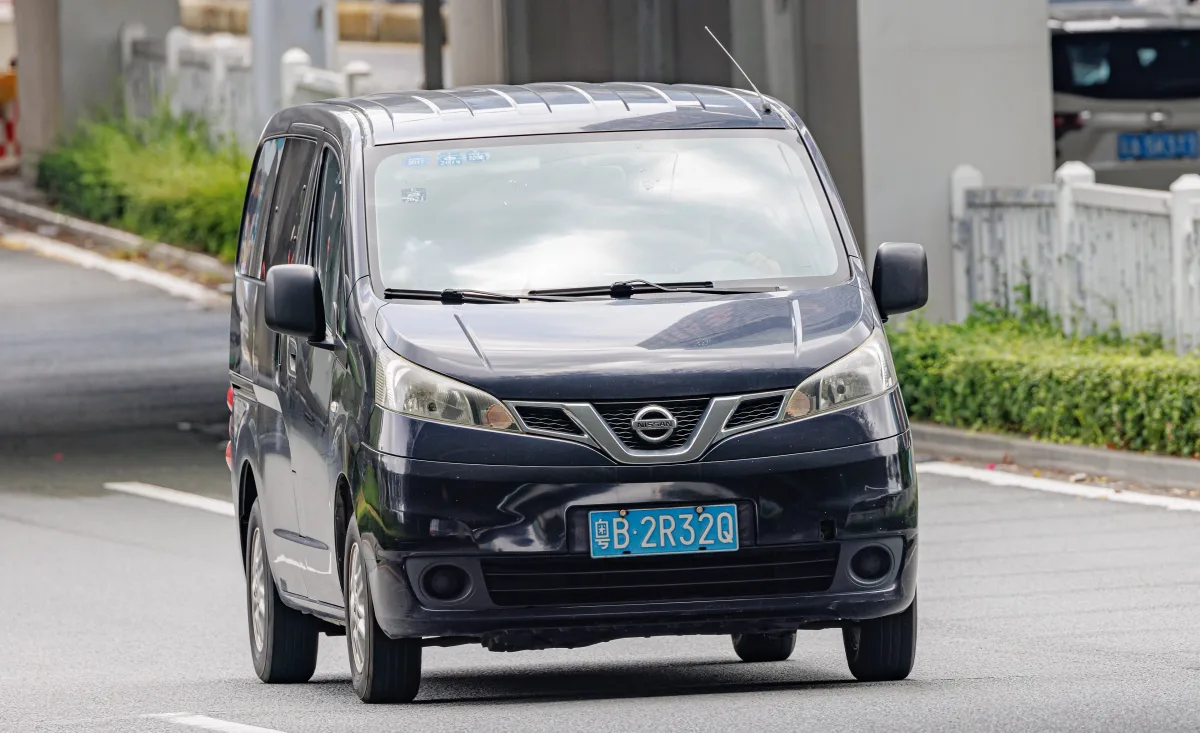
Nissan NV200: van, Evalia and e-NV200 — engines and trims
Nissan NV200 — a compact city van with two sliding doors, plus the passenger version Evalia and the electric e-NV200. We look at the trims, engines, battery and what to check when buying a used NV200.






NV200 in brief
The NV200 debuted in 2009 as a compact city van: small exterior size, but a spacious load area and sliding doors on both sides. In Europe, a passenger version called Evalia was also sold.
It's ideal for small businesses, tradespeople and city deliveries, while the passenger Evalia is perfect for families or taxis when plenty of space is needed in a compact body. The load area is wide enough to fit two European pallets.
Trims and the electric e-NV200
The van trim has a single row of seats and a large load area, the Combi has extra seats, and the Evalia offers 5 or 7 seating positions.
The electric e-NV200 was launched in 2014 and sold in Europe until around 2022. Early versions had a 24 kWh battery, while the updated model (from 2018) featured a 40 kWh battery and around 109 hp electric motor. In the used market, pay attention to the battery's condition.
Engines and gearboxes
The most common engine in Europe is the 1.5 dCi diesel, with various power outputs (up to around 110 hp in later models), and the 1.6 petrol engine. The gearbox is usually manual; automatics are less common.
Thanks to its light weight and compact size, the NV200 is economical in the city, but it's not the quietest or fastest on the motorway.
What to check when buying a used NV200
Check the body: sliding door seals, wheel arches and dents, as well as the cargo area floor — commercial vehicles are often heavily used.
For the diesel engine, check the DPF filter, EGR valve, injectors and turbo, especially if the vehicle has mostly been driven in the city. The engine should start without a long crank and shouldn't smoke.
For the e-NV200, you'll need a battery health report, a set of charging cables and a check if fast charging (CHAdeMO) works. Check the mileage against service records.


Trims and versions
Names vary by market; below are the most common versions in Europe.
Furgonas
All generationsBase version for deliveries and tradespeople.
- Single row of seats
- Large cargo area and sliding doors
- Often — partition between cabin and cargo area
Combi
All generationsVan with an additional row of seats.
- Second row of seats
- Narrow cargo area
- Often — side windows
Evalia 5 vietų
All generationsIdeal for families and taxis, with more cargo space.
- Five seats
- Spacious boot
- Higher quality interior than the van
Evalia 7 vietų
All generationsMore passengers in a compact body.
- Seven seats
- Smaller boot
- Often comes with an extra row of seats
e-NV200
From 2014Electric van or Evalia for city needs.
- 24 or 40 kWh battery
- Fast charging (CHAdeMO)
- No tailpipe emissions in the city
Comparison of NV200 versions
| Furgonas | Evalia | e-NV200 | |
|---|---|---|---|
| Who it suits | For delivery and work | For family and taxi use | For city business |
| Body style | Furgonas | 5 or 7 seats | Van or Evalia |
| Engine | 1.5 dCi, 1.6 petrol | 1.5 dCi, 1.6 petrol | Electric, around 109 hp |
| Price in the used market (relatively) | Budget | Mid-range | Mid-range |
For most tradespeople and small businesses, the best bet is a diesel van. The electric e-NV200 is only suitable when routes are short and there's convenient charging available.
Pros
- Compact yet spacious cargo area
- Sliding doors on both sides
- Economical in the city
- Electric version for urban needs
Cons
- Not the quietest or fastest on the highway
- Passenger versions have a small boot with 7 seats
- The condition of the e-NV200 battery can affect the car's value
Frequently asked questions
How does the Evalia differ from the NV200 van?
The Evalia is a passenger version with windows, 5 or 7 seats, and a higher trim level, while the van is designed for cargo and has a partition.
Is the e-NV200 suitable for daily use?
Yes, if your daily mileage is low and you have a place to charge. Before buying, check the battery's health and actual range.
Which engine to choose?
Most often, the 1.5 dCi diesel is economical and suitable for work, but if you mostly drive short distances in the city, consider a petrol engine or the electric version.
Updated 2026-10-21 · Trim levels and equipment vary by market and model year — check the equipment of the specific car. · Translated automatically


