 English
 Lietuvių
 Latviešu
 Eesti
 Polski
 Русский
 Українська
 Deutsch
 Nederlands
 Čeština
 Slovenčina
 Svenska
 Norsk
 Dansk
 Suomi


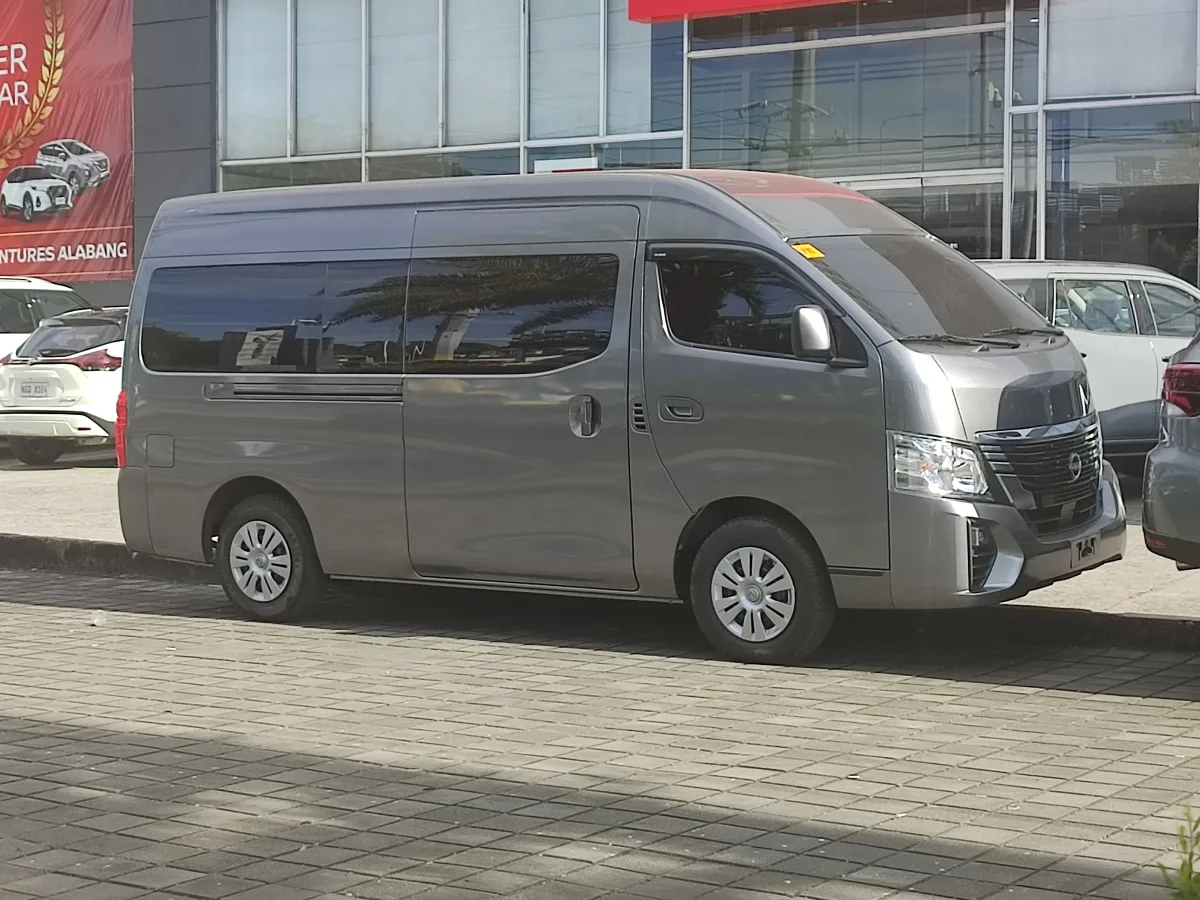
Nissan Urvan: van and minibus, generations and inspection
Nissan Urvan — a large van and minibus, produced since 1973 (in some markets known as Caravan). We look at how the generations differ, which engines and trims are available, and what to check before buying a used Urvan.






Urvan in brief
Urvan – Nissan’s large van, used for cargo and passenger transport. In different markets, it is known as Caravan, NV350, or Urvan.
It’s rarely seen in Lithuania, mostly as an imported vehicle. It’s a simple, sturdy, and spacious machine, suitable for business or passenger transport.
Generations — how they differ
The Urvan has seen several generations: E20 (1973), E23 (1980), E24 (1986–2001), E25 (2001–2012), and E26 (from 2012). Older generations are simpler and quite dated.
Newer generations (E25, E26) feature more modern technology, a more comfortable cabin, and better safety equipment. They are more common than earlier models, though still relatively rare.
Engines and transmissions
Engines vary by generation and market: you’ll find petrol and diesel options (typically around 2.0–3.0 litres). Newer generations often come with 2.5-litre engines.
The transmission is usually manual, less often automatic. Check the exact match against the documents.
What to check when buying a used Urvan
Firstly, check the body and chassis condition, as these vehicles are often used intensively. Inspect the floor, wheel arches, and the mechanism of the sliding doors.
Test the engine when it's cold and after it's been put under load. Check the gearbox, suspension and brakes, as well as the service history of the differential.
For imported cars, it's essential to check the documents and compliance with the mileage.


Trim levels
Urvan variants differ by market; the most common body and equipment versions are listed below.
Furgonas
All generationsClosed cargo van.
- Often — two seats up front
- Enclosed cargo compartment
- Sliding side doors
Mikroautobusas
All generationsPassenger version with more seats.
- Often — 12–15 seats
- Higher roof
- Suitable for passenger transport
Premium
E26Better-equipped version.
- Often — air conditioning
- Often — a more comfortable cabin
- More comfort features
Comparing versions
| Furgonas | Mikroautobusas | Premium | |
|---|---|---|---|
| Who it suits | For business, for cargo | For transporting passengers | For those wanting more comfort |
| Number of seats | 2–3 | Up to ~15 | Depends on the version |
| Price in the used market (relatively) | €€ | €€ | €€€ |
Choose according to your needs: a van for cargo, a minibus for passengers, or Premium for when comfort is key. The most important thing is the condition of the body and engine.
Pros
- Spacious and sturdy
- Wide range of body styles
- Simple technology
- Suitable for business and passenger transport
Cons
- Rare in Lithuania, limited parts availability
- Earlier models may have rust
- Large, harder to park
Frequently asked questions
Is the Urvan the same as the Caravan?
Yes, it's the same model, sold under different names in various markets.
What engines does the Urvan have?
It depends on the generation and market: you might find petrol and diesel options, usually around 2.0–3.0 L. Check the exact engine in the documents.
Is the Urvan suitable for passenger transport?
Yes, the minibus version is designed for passengers. Before using it for commercial purposes, check the licensing and category requirements.
Updated 2026-10-14 · Trim levels and equipment vary by market and model year — check the equipment of the specific car. · Translated automatically


