 English
 Lietuvių
 Latviešu
 Eesti
 Polski
 Русский
 Українська
 Deutsch
 Nederlands
 Čeština
 Slovenčina
 Svenska
 Norsk
 Dansk
 Suomi


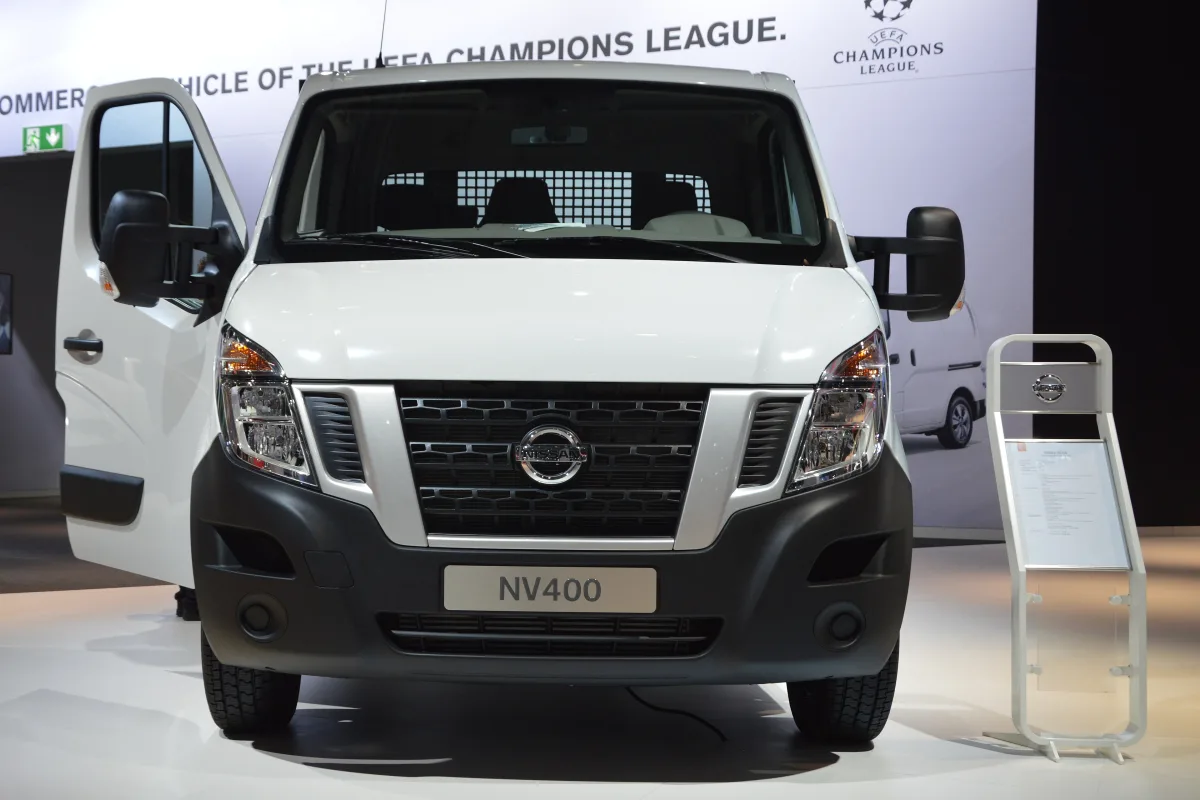
Nissan NV400: van and chassis cab, engines and trims
Nissan NV400 — a large van, produced from 2010–2021 alongside the Renault Master and Opel Movano. We look at the trims, engines, length and roof variants, drivetrain types and what to check when buying a used NV400.






NV400 in brief
NV400 — a large commercial vehicle that is essentially a cousin of the third-generation Renault Master. Available as a van, chassis cab, double cab and other trims, with several lengths and roof heights.
This is the choice for builders, delivery and haulage firms. The tech is similar to the Master, so parts and mechanics are plentiful.
Trims and drivetrain types
NV400 is available with front-wheel drive or rear-wheel drive (dual rear axle for heavier trims), several lengths (L1–L4) and roof heights (H1–H3). Gross vehicle weight rating — from around 2.8 t to 4.5 t.
Front-wheel drive is better for lighter vans and improved stability, while rear-wheel drive is for heavier loads and specialist bodies.
Engines and gearboxes
The most common engine is the 2.3-litre dCi diesel, offered in various power outputs (roughly from 100 to 170 hp), with some trims featuring twin turbos. Gearbox — manual or automated.
Thanks to its spacious interior and robust build, the NV400 is suited to long journeys and heavy loads.
What to check when buying a used NV400
Body: door sills, sills, wheel arches and load compartment floor. Commercial vehicles are often heavily used.
Check the diesel engine for injectors, turbo, DPF and EGR condition, and timing chain. Some 2.3 dCi engines suffer from head gasket issues, so oil change history is particularly important.
In the cabin, check the seats, air conditioning, electrical functions and doors. Inspect the ride based on service records.


Trim levels and versions
Trim names vary by market and year; below are the most common versions by purpose.
Furgonas (L2H2)
2010–2021The most popular length and roof height.
- Mid-length cargo area.
- Often — a higher roof.
- Often — a pair of sliding doors.
Furgonas (L3H2)
2010–2021More cargo space.
- Longer cargo area.
- A high roof is common.
- A larger turning circle.
Važiuoklė su kabina
2010–2021Designed for special bodies.
- Open rear section.
- Often — dual rear-wheel drive
- Essential cabin equipment
Dviguba kabina
2010–2021For cargo and crew.
- Two rows of seats
- Smaller cargo area
- Often — pickup body
NV400 variants compared
| Furgonas vidutinis | Furgonas ilgas | Važiuoklė | |
|---|---|---|---|
| Who it's for | For deliveries and work | More cargo space | For special bodies |
| Body | Van | Van | Open chassis |
| Engine | 2.3 dCi | 2.3 dCi | 2.3 dCi |
| Price in the used market (relatively) | €€ | €€ | €€ |
For most businesses, the best mid-size van with the 2.3 dCi. Choose a chassis cab for specialist bodies, or the rear-wheel-drive version for heavy loads.
Pros
- Large cargo area and a wide range of versions
- Master spares and specialists are plentiful
- Option to choose front or rear-wheel drive
- Holds its value well
Cons
- Older models — watch out for corrosion and high mileage
- DPF and EGR maintenance costs for diesels
- Less choice in the used market than Master
Frequently asked questions
Is the NV400 the same as the Renault Master?
Technically, they're very similar: the NV400 is built on the Master III platform, differing mainly in badging, some trim details, and equipment levels.
How does the NV400 differ from the Interstar?
The NV400 was produced from 2010–2021, while the Interstar name returned with the updated Master in 2022. The technology is similar, but the years and some details differ.
Which drivetrain to choose — front-wheel or rear-wheel?
Front-wheel drive is suitable for most vans, while rear-wheel or all-wheel drive is better for heavier loads and specialist bodies.
Updated 2026-10-21 · Trim levels and equipment vary by market and model year — check the equipment of the specific car. · Translated automatically


