 English
 Lietuvių
 Latviešu
 Eesti
 Polski
 Русский
 Українська
 Deutsch
 Nederlands
 Čeština
 Slovenčina
 Svenska
 Norsk
 Dansk
 Suomi


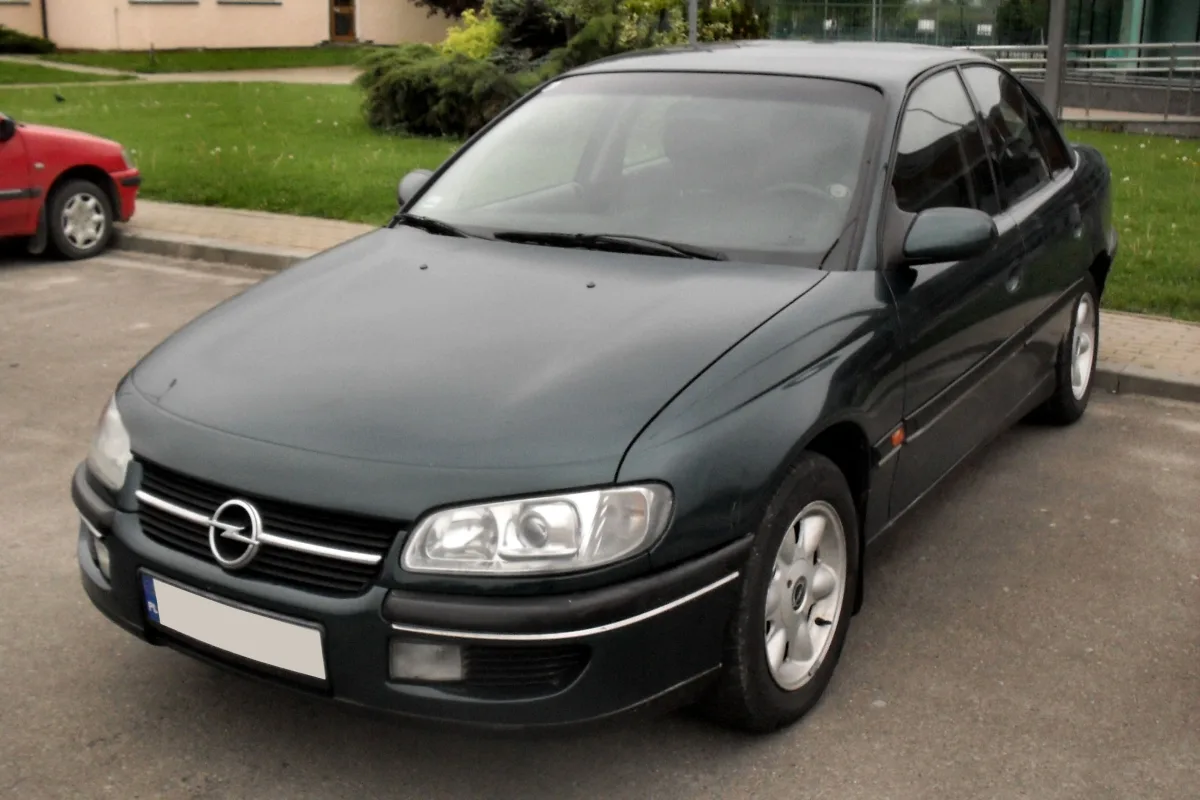
Opel Omega: A and B generations, engines and trims
The Opel Omega is a large rear-wheel-drive saloon and estate car produced from 1986 to 2003. Today, it's bought as an affordable and spacious car or as an increasingly sought-after classic by collectors. We look at the A and B generations, engines, trims, and what to check before buying.






Omega in brief
The Omega was produced in two generations: A (1986–1993), replacing the Rekord, and B (1994–2003). Both generations came with saloon and estate (Caravan) bodies and rear-wheel drive. The Omega A was named European Car of the Year in 1987, and the Lotus Omega was also based on it.
The Omega is valued for its spacious interior and boot, smooth ride, and rear-wheel drive. It had no direct successor—its place was partly taken by the Vectra C and Signum. Most surviving cars are quite old, so condition is more important than age or trim level.
A and B generations — what's the difference
The Omega A (1986–1993) is a straightforward, aerodynamic car that's rarely seen today. Many surviving examples are in collectors' hands, so their value depends largely on originality and body condition.
The Omega B (1994–2003) is larger, more modern, and safer, so it's more commonly found in the used market. In 1999, it was updated with new headlights, bumpers, and interior, improved equipment, and new engines. Updated cars are often referred to as the Omega B2.
For most buyers, the most sensible choice is the refreshed 1999–2003 Omega B. When shopping around, consider not just the engine but also the amount of rust — it's often the rust that makes repairing these cars no longer worthwhile.
Engines and gearboxes
Omega B petrol engines come in four-cylinder 2.0 and 2.2 (around 115–145 hp) and V6: 2.5, 2.6, 3.0 and 3.2 (around 170–218 hp). V6 engines are smooth and pleasant, but they guzzle fuel and are more expensive to maintain.
Diesels include the BMW-derived 2.5 TD (around 130 hp), later the 2.5 DTI (around 150 hp), as well as Opel's 2.0 and 2.2 DTI (around 100–120 hp). Diesels are more economical, but due to their age, repairing their fuel systems and turbos can be costly.
The Omega A had 1.8–2.4-litre four-cylinder and 2.6–3.0-litre six-cylinder petrol engines, plus 2.3-litre diesels. Gearboxes in both generations were five-speed manuals or four-speed automatics.
What to check when buying a used Omega
The Omega's biggest enemy is corrosion. Thoroughly inspect the wheel arches, sills, door and boot lid undersides, and the underside. If rust has compromised the structural body parts, repairs often aren't worth it.
In V6 engines, check if there's oil in the coolant expansion tank — a common cause is a faulty oil cooler intercooler. Ask when the timing belt was last changed, as replacing it in a V6 engine is complex and expensive.
2.0 and 2.2 DTI diesels often suffer from high-pressure fuel pumps, so the engine should start easily and run smoothly. Also, check the rear suspension mounts, steering mechanism, automatic transmission operation, and electronics. Inspect the bodywork carefully — due to its age, the history often isn't complete.


Trim levels
Trim names varied by market and year; we list the most commonly found trims in Europe.
GL
Omega A, BBase trim with basic equipment.
- Often — steel wheels
- Cloth-upholstered seats
- Often — no air conditioning or basic air conditioning
CD
Omega A, BBetter equipped and popular version.
- Often — alloy wheels
- Often — climate control and electric windows
- More comfortable interior trim
CDX
Omega BThe most luxurious Omega B trim.
- Often — leather interior
- Often — heated seats and a trip computer
- More comfort features
MV6
Omega BA sportier version with a V6 engine
- V6 petrol engine
- Often — sportier suspension and larger wheels
- Often — sport seats
Lotus Omega
Omega A, 1990–1992A very rare and powerful version, today — a collector's car
- A 3.6-litre six-cylinder engine with twin turbos
- Around 377 hp
- Very few were made
Omega B trim comparison
| GL | CD | CDX | MV6 | |
|---|---|---|---|---|
| Who it suits | For the most spacious car on a budget | For everyday driving | For comfort lovers | For driving pleasure |
| Interior | Upholstery | Upholstery, better trim | Often leather | Often sport seats |
| Engine (most common) | Four-cylinder petrols and diesels | Various | V6 or 2.5-litre diesels | V6 |
| Price in the used market (relatively) | € | € | €€ | €€ |
Most buyers opt for the CD with the 2.2-litre petrol or diesel engine – it's the simplest route to a spacious and affordable car. The CDX and MV6 are more interesting for enthusiasts, but the value of any version is primarily determined by the condition of the body.
Pros
- Very spacious interior and large boot, especially the Caravan
- Rear-wheel drive and smooth ride
- Smooth V6 engines
- Low purchase price
Cons
- Tendency to rust
- High fuel consumption for V6 engines
- Fewer cars in good condition remain
Frequently asked questions
Which Omega generation is better – A or B?
For daily use, it's better to choose the Omega B, especially the refreshed 1999–2003 version: it's safer, more comfortable and more commonly found. The Omega A is more of a collector's item and appeals to classic car enthusiasts today.
Which Omega engine is the most reliable?
The simplest and cheapest to maintain are the four-cylinder 2.0 and 2.2 petrol engines. The V6s are smooth and pleasant, but more expensive to maintain, while diesels are economical, although repairing their fuel systems can be costly.
Is the Omega suitable for daily use today?
Yes, if the car is in good condition and free from major rust – it's spacious, comfortable and of simple construction. However, you need to be prepared for more frequent repairs and higher fuel consumption than modern cars.
Updated 2026-10-09 · Trim levels and equipment vary by market and model year — check the equipment of the specific car. · Translated automatically


