 English
 Lietuvių
 Latviešu
 Eesti
 Polski
 Русский
 Українська
 Deutsch
 Nederlands
 Čeština
 Slovenčina
 Svenska
 Norsk
 Dansk
 Suomi


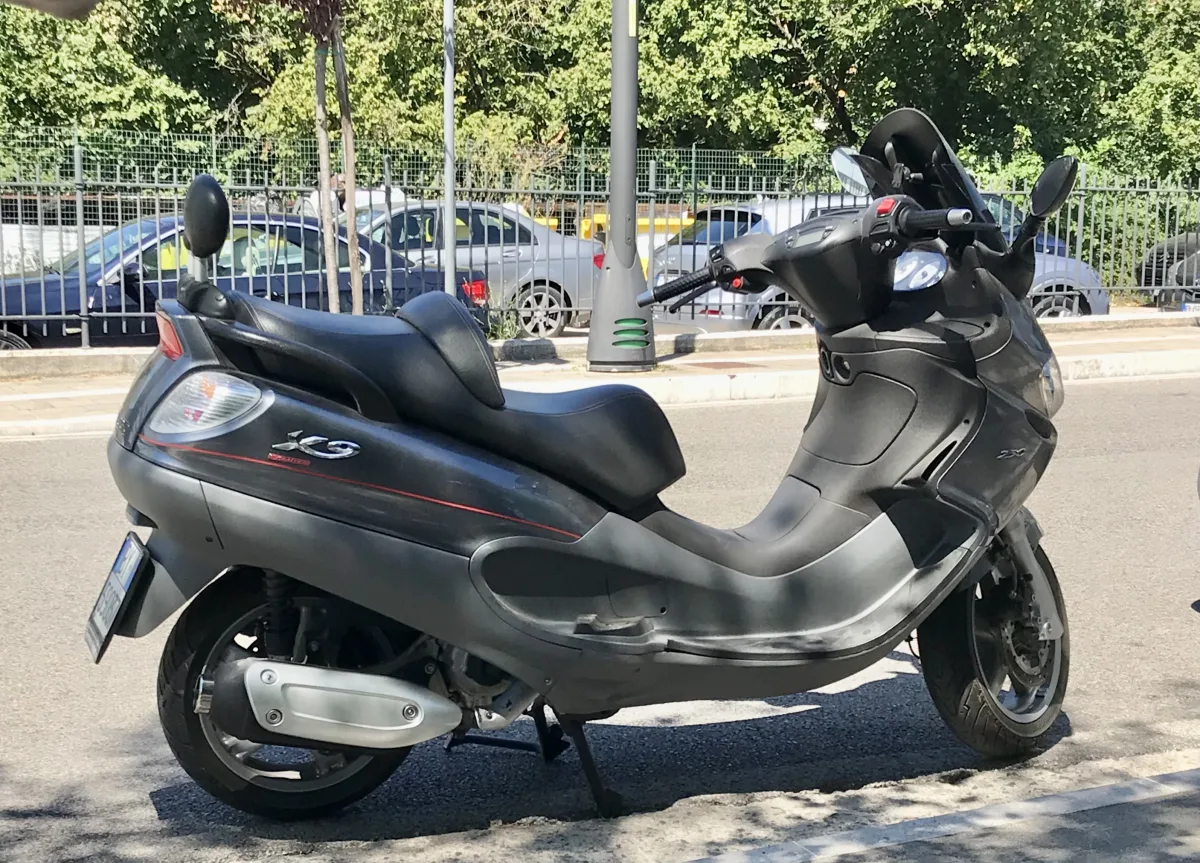
Piaggio X9: maxi-scooter, generations and what to check when buying
Piaggio X9 — the Italian maxi-scooter, produced from 2000–2008, popular for its comfort and large under-seat storage. We look at the generations, engines, and what to check when buying a used scooter.






X9 in brief
The X9 is a large, comfortable urban and touring scooter with a low seat height and plenty of room under the seat. It's designed for those who need comfort and practicality, rather than sporty riding.
The model is offered with several engines — from 125 to 500 cm³ — so you can find both city-friendly and highway-ready options.
Generations — what's the difference?
The first-generation X9 has a simpler design and different engines — usually 125, 180, 250, or 500 cm³. Later came the X9 Evolution with updated engines and styling.
Larger-displacement versions have more power and are suited to the highway, while smaller ones are better for the city and suburbs. Check which displacement scooter is being offered.
Engine and transmission
The engine is a single-cylinder, liquid-cooled four-stroke, and the transmission is an automatic belt-driven CVT (variator). Larger variants are faster and better for two-up riding.
The variator belt and pulleys are wear items, and the transmission oil must be changed according to the manufacturer's guidelines.
What to check when buying a used X9
Check the variator — the scooter should move smoothly, without hesitation or noise. Ask when the belt and pulleys were last changed.
Check the plastic parts for any cracks, inspect the cooling system, battery, and lights. Ensure the engine starts when cold.
Inspect the brakes, shock absorbers, and tyre treads. Ask for the service book and check the documents.


Trim levels and versions
Trim levels vary by market and year; below are the main versions.
X9 125–200
2000–2008Smaller engine versions for city driving.
- Suitable for city and suburban use
- Lower running costs
- Often — A1 category
X9 250
2000–2008Mid-size engine version.
- Better performance
- Suitable for motorway driving
- Requires A2 or A category
X9 500
2000–2008The largest variant.
- More power
- Ideal for long journeys
- Higher maintenance costs
X9 Evolution
Later yearsUpdated version.
- Updated engines
- Refreshed styling
- Often — more comfortable equipment
X9 version comparison
| 125–200 | 250 | 500 | |
|---|---|---|---|
| Who it's for | City driving | For commuting | For long journeys |
| Motorway | Limited | Yes | Comfortable |
| Category | A1 | A2 or A | A |
| Running costs | Small | Medium | Larger |
| Price in the used market (relatively) | € | €€ | €€ |
In the city, smaller versions will suffice, but if you often drive on the motorway, opt for the 250 or 500 cm³.
Pros
- Comfortable seating and low height
- Spacious boot
- A wide range of engines
- Practical for everyday use
Cons
- Old model
- Transmission maintenance
- Sluggish performance in lower trims
Frequently asked questions
Which X9 version is the best?
Most will find the 250 cm³ just right, as it handles both city and highway driving.
Is it suitable for long trips?
Yes, especially the versions with larger engines.
How often should you change the transmission?
According to the manufacturer's intervals; when buying, ask about the service history.
Updated 2026-10-21 · Trim levels and equipment vary by market and model year — check the equipment of the specific car. · Translated automatically


