 English
 Lietuvių
 Latviešu
 Eesti
 Polski
 Русский
 Українська
 Deutsch
 Nederlands
 Čeština
 Slovenčina
 Svenska
 Norsk
 Dansk
 Suomi


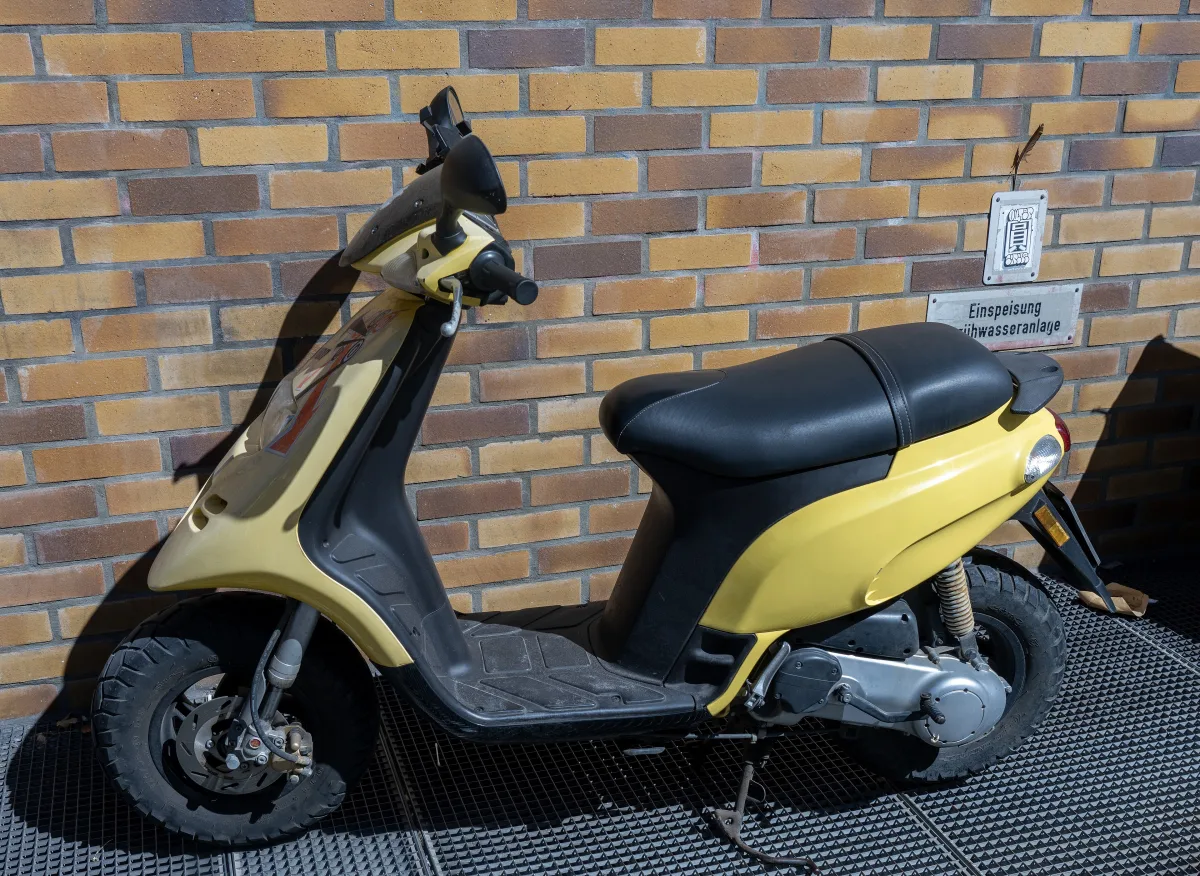
Piaggio Typhoon: urban scooter, versions and what to check
Piaggio Typhoon — a compact urban scooter produced since 1993 with 50 and 125 cm³ engines. We look at the versions, engine and what's important to check when buying a used scooter.






Typhoon in brief
Typhoon — a lightweight, simple and economical scooter for short urban trips. It's particularly popular among young riders and those needing affordable daily transport.
This model has been around for a while, so there are different generations on the market — from the oldest two-strokes to newer four-strokes.
Versions — what's the difference
Older versions usually have a 50 cm³ two-stroke engine, which is dynamic but less eco-friendly and economical. Newer versions have four-stroke engines with 50 and 125 cm³ capacities.
50 cm³ versions are suitable for AM category, while 125 cm³ is for A1 category and better for faster riding.
Engine and transmission
The two-stroke engine requires an oil and fuel mixture or oil injection, while the four-stroke is simpler and more economical. The transmission is automatic and belt-driven.
The variator belt and pulleys are wearing parts, so it's important to stick to service intervals.
What to check when buying a used Typhoon
Check the engine operation — a cold engine should start easily, and the two-stroke shouldn't smoke too much. Check the variator — the scooter should move smoothly.
Inspect the plastics, lights, turn signals and battery. Check the brakes and tyre condition.
Check for any illegal modifications, especially in the 50 cm³ versions, which are often 'sleeve-cut'. Check the documents.


Trim levels and versions
Trim levels vary by year and market; below are the main versions.
Typhoon 50 (dvitaktis)
From 1993 onwardsAn older version with a two-stroke engine.
- 50 cm³ two-stroke engine
- Dynamic, but less economical
- Suitable for the AM category
Typhoon 50 (keturtaktis)
Later yearsA more eco-friendly version.
- 50 cm³ four-stroke engine
- Lower running costs
- Suitable for the AM category
Typhoon 125
Later yearsA larger-displacement version.
- 125 cm³ four-stroke engine
- Better performance
- Category A1
Su priedais
By ownerOptional extras
- Often — tailgate
- Often — windscreen
- Often — safety features
Typhoon versions compared
| 50 (2T) | 50 (4T) | 125 | |
|---|---|---|---|
| Who it's for | For new drivers | For the city | For faster driving |
| Engine | Two-stroke | Four-stroke | Four-stroke |
| Category | AM | AM | A1 |
| Fuel consumption | Higher | Small | Small |
| Price in the used market (relatively) | € | € | €€ |
For the tightest budgets, go for a 50cc, but if you're after economy and agility, opt for the four-stroke or 125cc version.
Pros
- Light and nimble
- Economical
- Simple design
- Low maintenance costs
Cons
- Not suited to long journeys
- Less passenger comfort
- Earlier versions are more polluting
Frequently asked questions
Is it suitable for a beginner?
Yes, it's easy and simple to handle.
Two-stroke or four-stroke?
The four-stroke is more economical and eco-friendly, the two-stroke is more powerful, but requires oil.
Is the 125 cm³ version suitable for the motorway?
Only for short stretches, as it's an urban scooter.
Updated 2026-10-21 · Trim levels and equipment vary by market and model year — check the equipment of the specific car. · Translated automatically


