 English
 Lietuvių
 Latviešu
 Eesti
 Polski
 Русский
 Українська
 Deutsch
 Nederlands
 Čeština
 Slovenčina
 Svenska
 Norsk
 Dansk
 Suomi


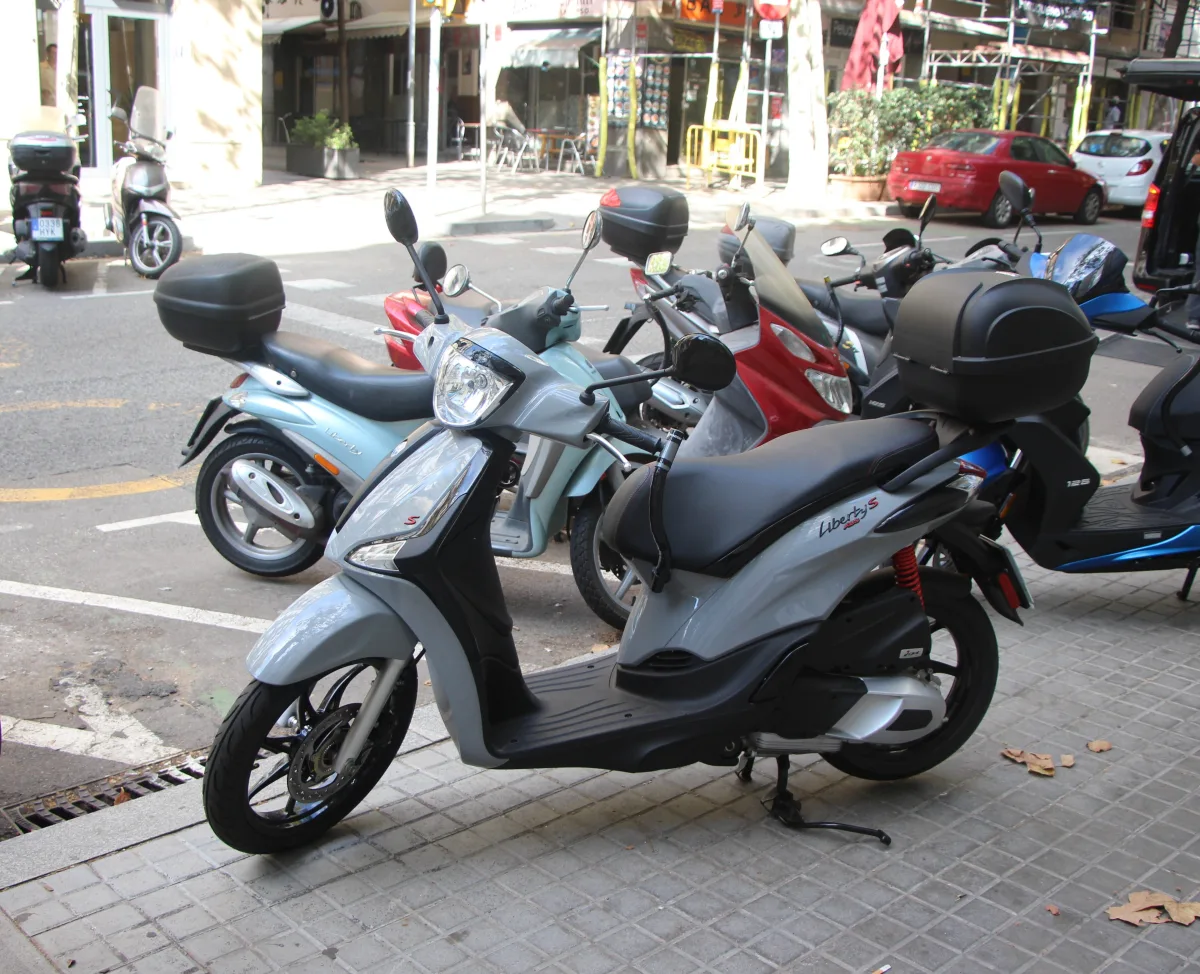
Piaggio Liberty: a large-wheeled scooter for the city and what to check on a used one
Piaggio Liberty (from 1997) — a large-wheeled city scooter, popular in Europe for its stability and comfort. We look at the versions and what to check when buying a used one.






Liberty in brief
The Liberty debuted in 1997 as a city scooter with larger wheels than usual for its size. The larger wheels provide stability and comfort on uneven roads, making the Liberty praised for its comfort.
This is a practical daily scooter, perfect for the city and short trips, with ample storage under the seat and a smooth, comfortable ride.
Versions — what's different
Over time, the Liberty has been sold with 50, 125, and 150 cm³ engines, and previously with a 200 cm³. The 50 cm³ is suitable for the AM category, and the 125 for A1. Older versions had a two-stroke 50 cm³ engine, later a four-stroke.
Newer versions feature fuel injection and more economical engines. Alongside the standard version, a sportier S version is also available.
Engine and transmission
The engine is single-cylinder, with power transmitted via an automatic CVT. The newer 125 and 150 cm³ engines are air-cooled four-strokes with fuel injection and a three-valve head.
The engine is smooth and economical, ideal for city driving. It's not the best choice for the motorway, though.
What to check when buying a used Liberty
Test the CVT: movement should be smooth, without juddering or vibration. Ask when the belt and rollers were last changed.
Check the plastics, bodywork, brakes, tyres and suspension. Ensure there's no oil leakage and that all lights are working.
For older two-strokes, check the oil delivery system and whether the engine hasn't been 'swapped'. Ask about the service history.


Versions
Names and equipment vary by market and year; we list the versions most commonly found in Europe.
Liberty 50
from 1997The base version.
- Suitable for the AM category
- Older ones have a two-stroke engine
- Cheap to run
Liberty 125
various yearsThe most popular version.
- Suitable for the A1 category
- Often comes with a catalytic converter
- Ideal for city driving
Liberty 150
various yearsThe more powerful version.
- Better acceleration
- Often comes with a catalytic converter
- Requires a higher category
Liberty S
Later yearsSportier version.
- Sportier styling
- Additional features
- Check the trim
Compare versions
| 50 | 125 | 150 | |
|---|---|---|---|
| Who it's for | Ideal for young city drivers | City and highway | For active driving |
| Category | AM | A1 | Wider than the A1 |
| Engine | ~50 cm³ | ~125 cm³ | ~150 cm³ |
| Price in the used market (relatively) | € | €€ | €€ |
Most will find the Liberty 125 strikes a balance between power and price. The 50 cm³ is ideal for young drivers, while the 150 cm³ is better for more spirited riding.
Pros
- Large wheels provide stability
- Comfortable for city driving
- Spacious under-seat storage
- Economical
Cons
- Not well-suited to highways
- Earlier versions are more basic
- It's not sporty in character
Frequently asked questions
Is the Liberty suitable for beginners?
Yes, it's stable and easy to handle.
How does the Liberty differ from other scooters?
Larger wheels, which provide stability and comfort.
Is the Liberty suitable for daily use?
Yes, it's a practical city scooter.
Updated 2026-10-21 · Trim levels and equipment vary by market and model year — check the equipment of the specific car. · Translated automatically


