 English
 Lietuvių
 Latviešu
 Eesti
 Polski
 Русский
 Українська
 Deutsch
 Nederlands
 Čeština
 Slovenčina
 Svenska
 Norsk
 Dansk
 Suomi


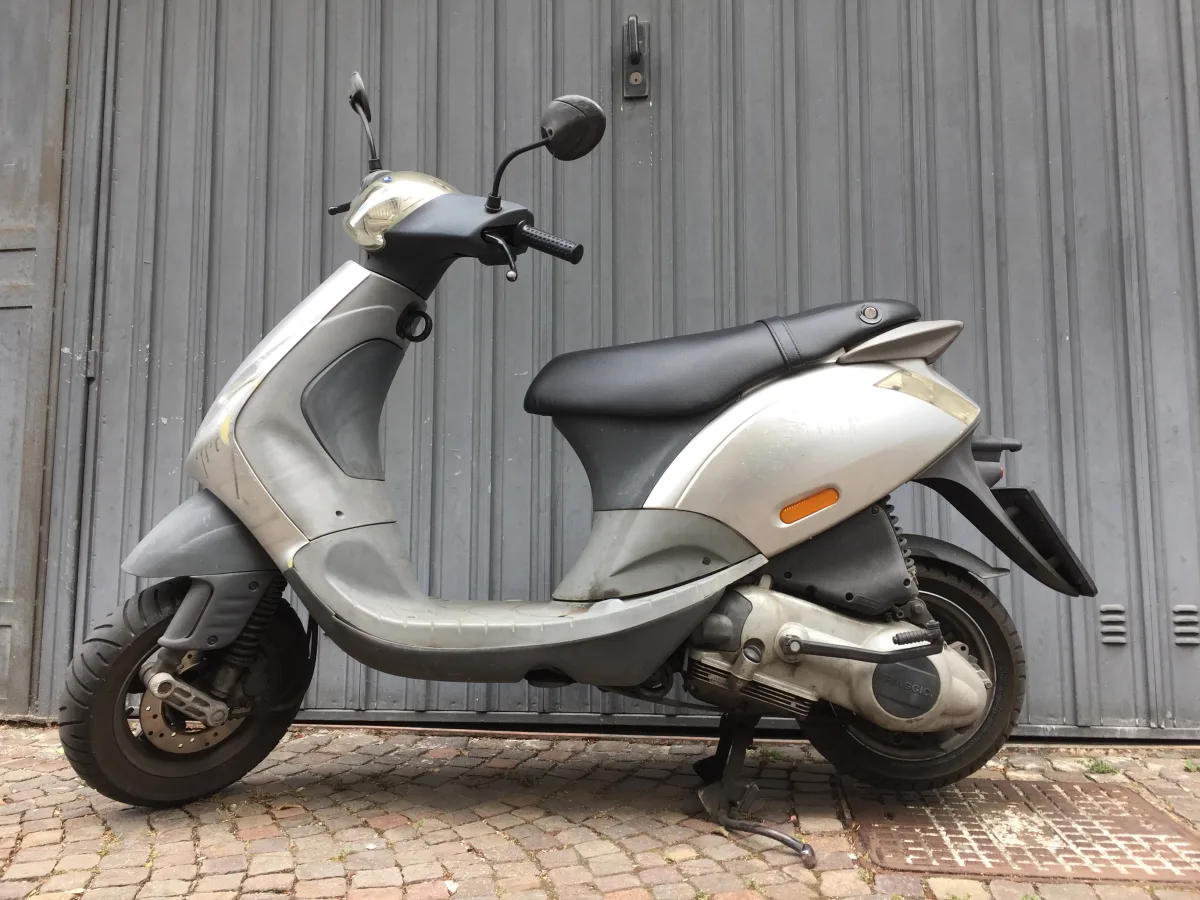
Piaggio Zip: a small city scooter and what to check when buying used
Piaggio Zip (from 1992) — a small and lightweight city scooter, popular among young drivers. We look at the versions and what's important to check when buying used.






Zip in brief
The Zip debuted in 1992 as a compact, affordable, and lightweight scooter designed for the city. Its small size and light weight make it very easy to handle and park.
Thanks to its simple design and low costs, the Zip became one of the most popular scooters among young drivers. It's often used as a first mode of transport.
Versions — what's the difference
The Zip is mainly sold in the 50 cm³ version — both with a two-stroke and a four-stroke engine. There were also larger versions, for example, 125 cm³ four-strokes. The 50 cm³ is suitable for the AM category, the 125 for A1.
The main differences between versions are the engine type (two-stroke or four-stroke), equipment, and appearance. Two-strokes are faster and simpler, four-strokes are quieter and more economical.
Engine and transmission
The two-stroke engine has an oil delivery system, while the four-stroke has a constant oil level in the crankcase. In both cases, power is transmitted via an automatic variator.
The low-power engine is perfect for the city but not for the motorway. A low-power scooter is easy to maintain, and parts are widely available.
What to check when buying a used Zip
Check if the engine hasn't been 'modified' — these scooters are often tuned for more speed, which may not comply with category requirements.
Test the gearbox, brakes, and tyres. Check the plastics, bodywork, and for any oil leaks. Ensure all lights work and the engine starts without issues.
Check the oil supply system and condition of the pushrods on two-stroke engines. Ask about service history and documentation.


Versions
Names and equipment vary by market and year; we list the versions most commonly found in Europe.
Zip 50 (dvitaktis)
from 1992Classic version.
- Suitable for AM category
- Simple construction
- Often refined
Zip 50 (keturtaktis)
later yearsMore economical version.
- Quieter engine
- Lower fuel consumption
- Better environmental impact
Zip 125
later yearsLarger version.
- Suitable for Category A
- Four-stroke engine
- More power
Zip su priedais
Various yearsCustom-built examples.
- Often — another disposal
- Often — additional trim
- Check for authenticity
Version comparison
| 50 dvitaktis | 50 keturtaktis | 125 | |
|---|---|---|---|
| Who it's for | For the young driver | For the economical city dweller | For city and road |
| Category | AM | AM | A1 |
| Engine | Two-stroke | Four-stroke | Four-stroke |
| Price in the used market (relatively) | € | € | €€ |
Most will find the Zip 50 four-stroke appealing for its quietness and fuel efficiency. The 125 version is ideal for those needing more power.
Pros
- Very light and compact
- Low running costs
- Parts are widely available
- Easy to handle
Cons
- Low power, suitable for city driving only
- Frequently updated and "tweaked"
- Lacks comfort for longer journeys
Frequently asked questions
Is the Zip suitable for beginners?
Yes, it's easy and straightforward.
How do the two-stroke and four-stroke Zip models differ?
The two-stroke is simpler and faster, while the four-stroke is quieter and more economical.
Is the Zip good for long trips?
No, it's designed for city use and short distances.
Updated 2026-10-21 · Trim levels and equipment vary by market and model year — check the equipment of the specific car. · Translated automatically


