 English
 Lietuvių
 Latviešu
 Eesti
 Polski
 Русский
 Українська
 Deutsch
 Nederlands
 Čeština
 Slovenčina
 Svenska
 Norsk
 Dansk
 Suomi


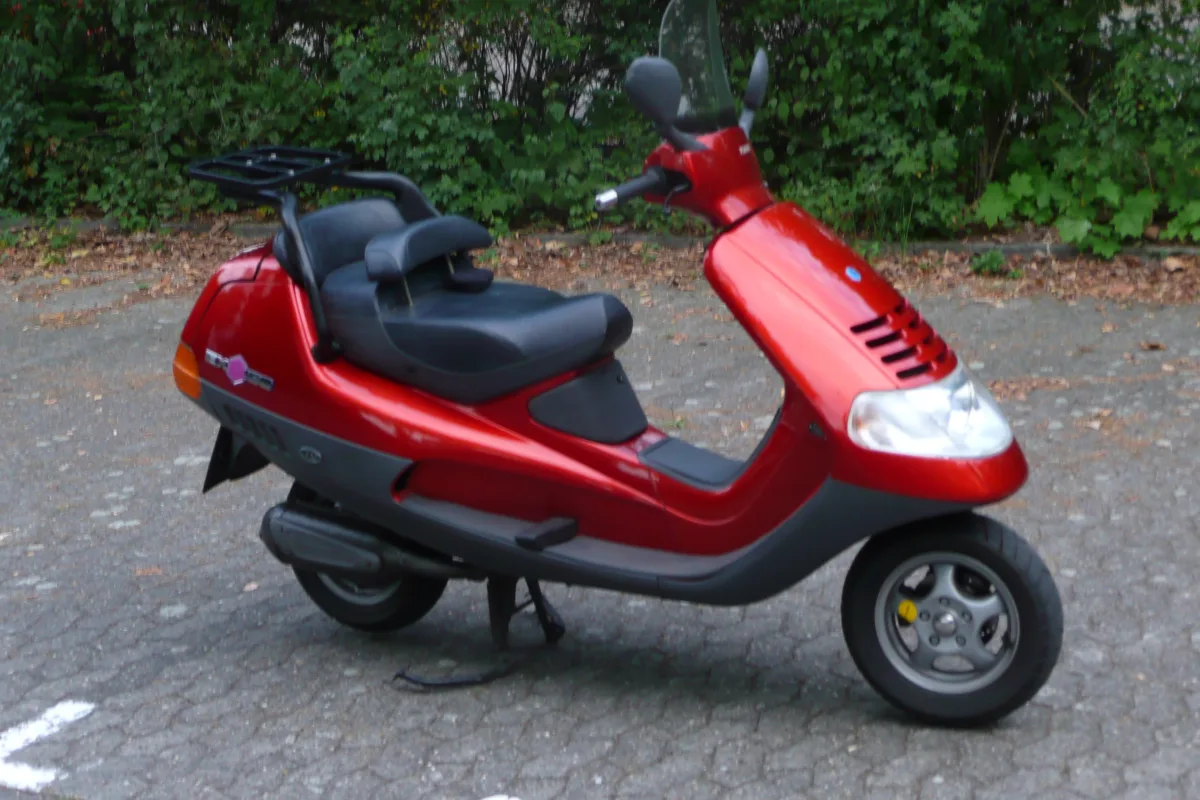
Piaggio Hexagon: a maxi scooter from the 1990s, what to check
Piaggio Hexagon — a maxi scooter produced from 1994 to 2001 with large wheels and a comfortable ride. We look at its versions and what to check when buying an older scooter like this.






Hexagon in brief
Hexagon was one of the first Piaggio maxi scooters, designed not just for the city but also for longer journeys. It stands out with its large wheels, wide seat, and comfortable riding position.
Today, this is quite an old model, so when buying, the most important thing is the technical condition and whether the vehicle has all its documents in order.
Versions
Hexagon was offered with 125, 150, and 180 cm³ engines and different names such as EX, EXV, LX, LXT, and GTX. They differed in equipment and design.
Identify the specific engine and trim by the engine number and documents, as names may have varied across markets and years.
Engine and transmission
Hexagon uses single-cylinder engines: early models often had two-stroke engines, later ones four-stroke. The transmission is an automatic belt-driven CVT.
Due to its age, the condition of all Hexagon engines and transmissions can vary greatly, so it's important to test-ride the scooter.
What to check when buying a used Hexagon
Check the engine and variator: starting should be easy, acceleration smooth, with no vibration. In two-stroke versions, check the piston and cylinder condition as well as oil supply.
Check the plastic, frame, and body for corrosion or dents, as well as the brakes, tyres, suspension, and electrical equipment. It's worth finding out about parts accessibility in advance.


Versions and trims
Names and equipment vary by market and year; here we cover the main versions.
Hexagon EX / EXV
Mid-1990sEarly versions with smaller displacement.
- 125–150 cm³ class
- Large wheels
- Simpler equipment
Hexagon LX / LXT
Late 1990sLarger displacement and more travel-friendly versions.
- Up to 180 cm³ class
- More comfort
- Often — a larger seat
Hexagon GTX
Later yearsLater version with updated technology.
- Four-stroke engine (if applicable)
- More modern equipment
- Check by engine number
Hexagon version comparison
| EX / EXV | LX / LXT | GTX | |
|---|---|---|---|
| Who it's for | City driving | City and motorway | City and motorway |
| Engine class | 125–150 cm³ | Up to 180 cm³ | By version |
| Comfort | Good | Higher | Higher |
| Age | Oldest | Mid-range | Newest |
| Price in the used market (relatively) | € | € | €€ |
The Hexagon is perfect for enthusiasts and those needing an affordable maxi scooter. First, assess the condition, and check the availability of parts before buying.
Pros
- Large wheels and stable ride
- Wide and comfortable seat
- Simple construction
- Cheap to buy
Cons
- Very old model — many examples are worn out
- Parts may be hard to come by
- No modern safety systems
Frequently asked questions
Is the Hexagon suitable for daily use?
Yes, if the example is well-maintained. Due to its age, expect more frequent repairs.
What engines does the Hexagon have?
Mostly single-cylinder engines in the 125–180 cm³ class. Identify the specific engine by its number and documentation.
Is it hard to find Hexagon parts?
Due to the model's age, some parts might take longer to find. Check before buying.
Updated 2026-10-21 · Trim levels and equipment vary by market and model year — check the equipment of the specific car. · Translated automatically


